
Did you know that each country has its own FIA colour scheme for international racing? You probably knew without realizing it. When you see a red car, you automatically associate it with Italy, as the traditional “Rosso Corsa” colour is practically a trademark for high-performance Italian cars.


There’s also “British Racing Green” that has the name of the country in the colour. There’s also Bleu de France, and German Silver which are are still used today by Renault and Mercedes, even though the FIA abandoned national colours in place of sponsorship liveries in 1968. And Japanese teams often use a white body and red disk as a national symbol, and perfect product placement! (There’s a colourful four-part series on ‘The Classic Machines‘ that delves into this subject in detail.)


Demaras Racing is currently working with C17 Media to create a new for 2024 livery for Daniel Demaras’ Formula 1200 car. We’ve been looking for inspiration in the national racing colours of Greece (dad), Denmark (mom) and Canada (birthplace) as these 3 countries make up Daniel’s heritage.
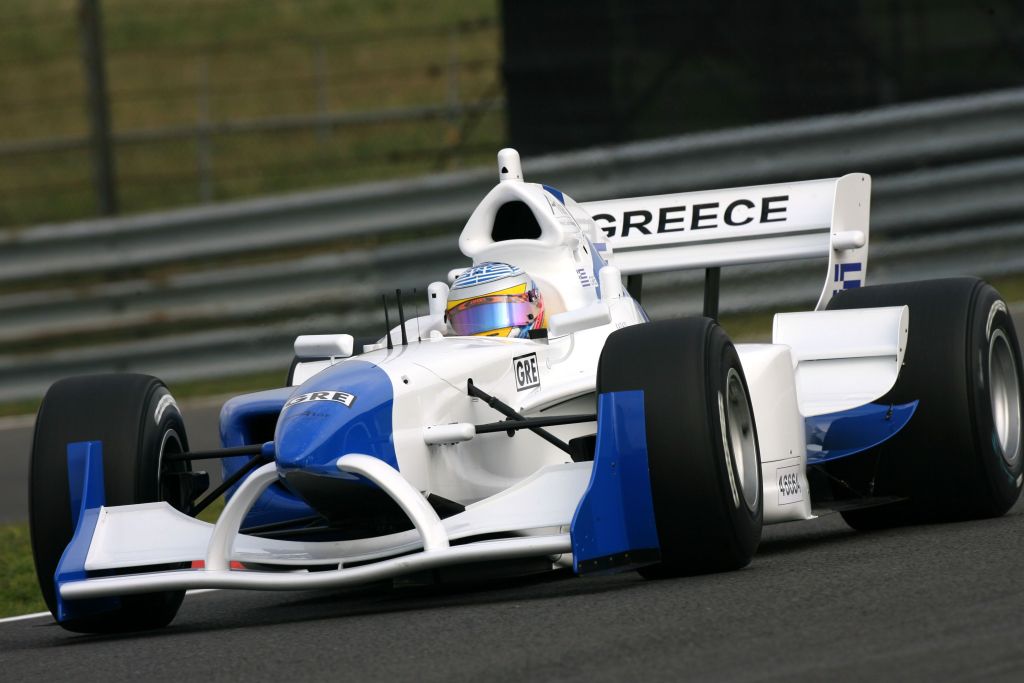
GREECE (Ελλάδα)
The FIA colour scheme is pale blue, with two white stopes on the hood. This flag-inspired livery certainly ties back to the old country. However, modern interpretations of Greece’s colour scheme, such as in this A1GP “World Cup of Motorsports” race car could be assumed to be a car from Argentina or Uruguay.
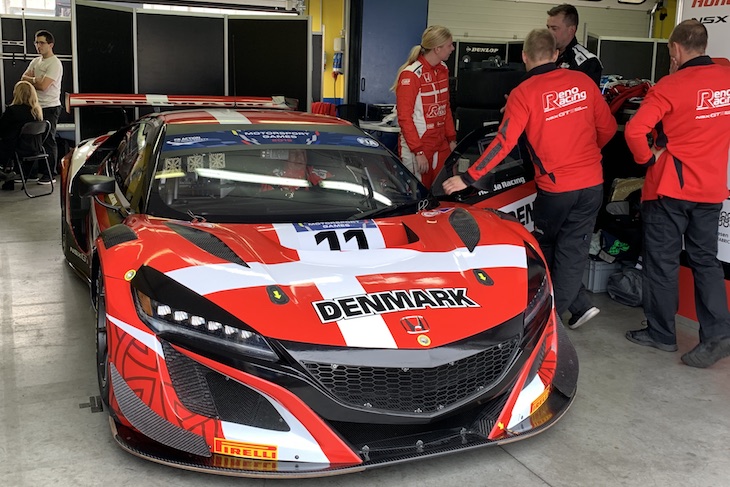
DENMARK (Danmark)
If there’s one thing Danes are proud of, it’s their flag! They even have an myth about it. During a battle in 1219, the Danes were losing ground, when suddenly a red banner with a white cross descended from the heavens. The battle turned, the Danish army won, and the nation had its flag. It’s no surprise that the FIA colour scheme is a Danish flag, oriented lengthwise, as a stripe on the hood. Christina Neilsen’s GT car is a modern interpretation.
CANADA
When the ‘new’ Canadian flag was unveiled in 1965, the FIA modified the national livery to red with wide white stripes running lengthwise over the hood. However, in the old days, the traditional Canadian racing colour was British Racing Green with two white parallel stripes. The Chevelle (pictured below) was also sold as a Canada-only model called the Pontiac Beaumont.

While researching this article, we found a list of FIA colours for many countries. Let’s just say that the “good stuff” was taken early on. Late-comers to international racing had to make due with whatever was left overs. Here’s some favourites:
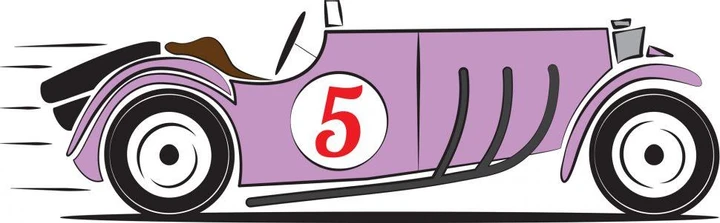
EGYPT
How…gentle. Pale violet paint. The number is red on a white background.
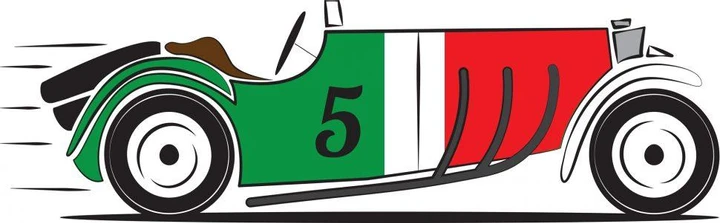
HUNGARY
White car, with green and hood is red, mimicking the flag. Black number.
LITHUANIA
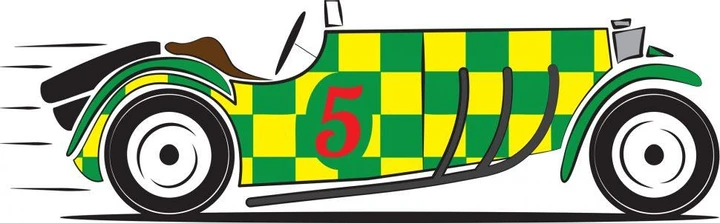
Good golly! Yellow and green checker-board body and hood. Red number
SPAIN
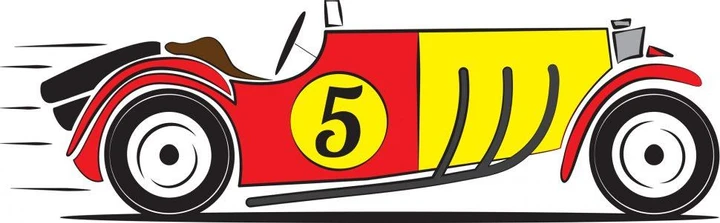
Tries to hard to match the flag. Red car, yellow hood, black number on yellow disc. Ugh,
SWEDEN
Lower body in blue, upper body in yellow, blue stripes on hood. No missing this one!

A racing livery can be patriotic, personal or even commercial. The best ones are aesthetically beautiful, and easily identifiable. Decals, stripes and graphics can help to promote a brand, but the overall look should be harmonious and accentuate the shape of the car.
“danmark” lol. Clever. Fun post. And I’ll admit I do like that gentle Egypt livery.
I don’t know why, but in English its Denmark yet in Danish it’s Danmark. Go figure? Guess thats why they’re Danes not Dens.
Oh I thought that was your clever play on it. But yes that does make sense that they are not “dens!”
Ha! I wish I was that clever.
And I cannot believe you like Egypts colours! I picked it for this article because Inthought everyone would giggle at it.
.
A lilac pastel race car. Ha!
Well of course it’s not a manly man car color but can I help it if I like pretty things??
I also liked the Egyptian livery.
Really cool post, with a lot of info that I didn’t know.
Am I crazy? Thats 2 people ehonliked the lilac purple thing from Egypt.
.
I was sure everyone would make fun of it!
.
And Rubens, I basically copied your article and threw in some pictures. So if you foind something ‘new’ in there, I must havr done well!