Cult classic ‘To Live and Die in L.A.‘ stars a young Willem Dafoe as a counterfeit artist, and William L. Petersen as the good-cop-going-bad trying to catch him. The film presents Los Angeles as a ‘counterfeit world’ which extends beyond funny money to phony characters and artificial relationships. On the surface, there’s a conventional relationship between Petersen’s misogynist cop character Richard Chance and his girlfriend Ruth Lanier. In reality, she’s an informant out on parole, and so long as she feeds him information gleaned at the strip club she works at, he won’t bust her. The glossy, stylized appearance of L.A. masks it’s seedy underside.


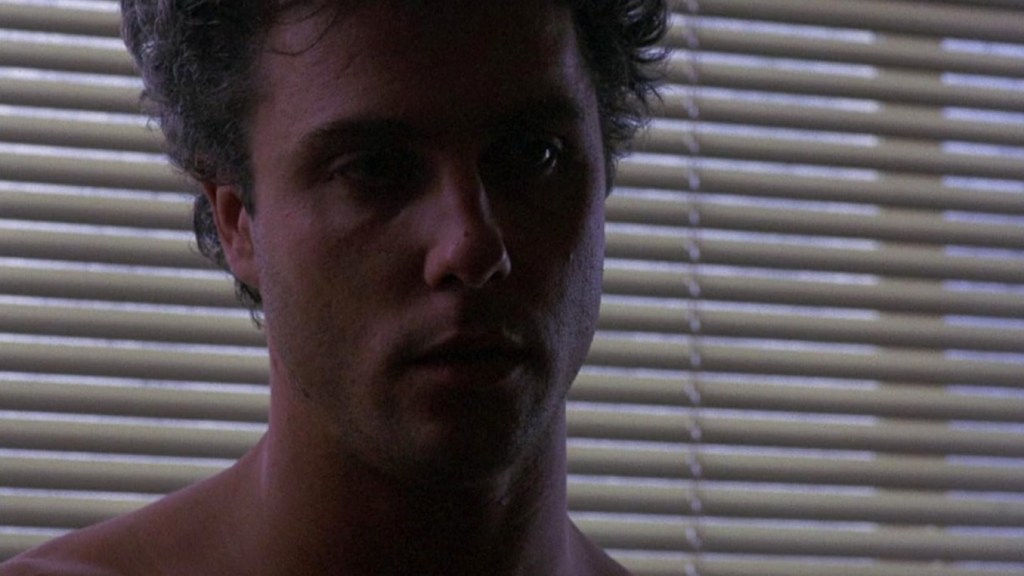
In 1974, director William Friedkin shot what has been called the greatest car chase in film history with ‘The French Connection‘. When given a fresh canvas in 1985 he was determined to one-up himself with ‘To Live and Die in L.A.‘ and this film is kind of like a 1970’s cop drama painted with a neon Miami Vice brush. Vibrant colours, modern architecture, a New Wave soundtrack, and period-correct venetian blinds casting metaphorical lines of guilt across morally questionable characters faces.
Secret Service agent Richard Chance and his partner Jimmy Hart are on the trail of a counterfeiter. Days away from retirement, veteran cop Hart goes out to the desert alone to chase down a lead, and is ruthlessly gunned down. A tired old trope to provides the motivation for Chance and his new partner Vukovich to capture bad guy Rick Masters by any means necessary.
Masters is an artist who uses his skills to print counterfeit US currency, supporting his artistic endeavours. Ironically, Masters burns his paintings upon their completion. Its like a young woman stripping to pay her tuition, then dropping out of college. Masters has a cool 1984 Ferrari 308 to complete the 1980s Magnum PI look.


To catch Masters in a sting operation, loose-cannon Chance and straight-laced Vukovich pose as Palm Springs money men. They hire Masters to print up a million in cash, but need $50,000 buy-in money. So, the cops rip off a jeweler dealing in stolen stones, but he’s accidentally shot and killed. Turns out the jeweler is an undercover FBI agent, and the gunmen shooting at them are feds!
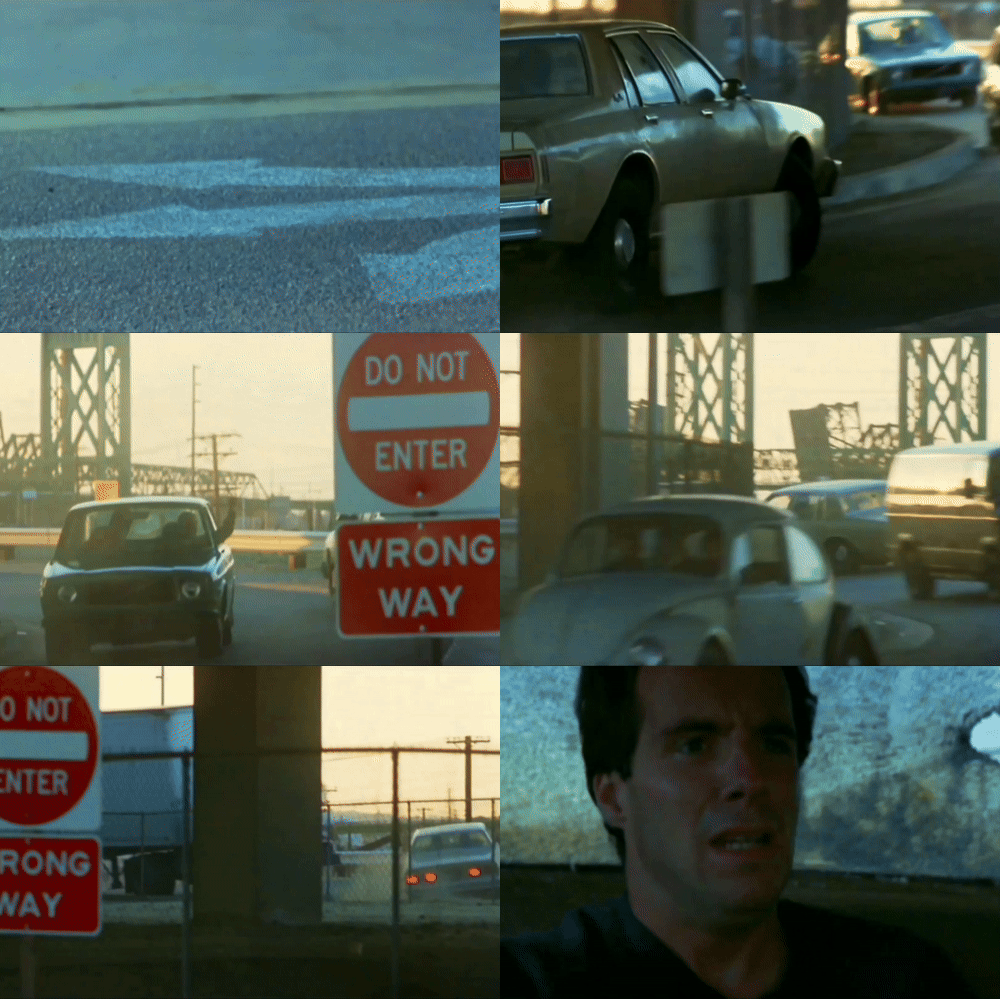
Desperate to keep from getting caught, the protagonists take off in their unmarked cop car. Turning the car chase trope in its head, cops Chance and Vukovich are being chased by other lawmen. They absolutely cannot get caught, so the heroes drive head on against traffic on an L.A. expressway, endangering everyone around them. Definitely a Friedkin movie when the good guys aren’t even good any longer.


But despite how stylish the movie is, the vehicle’s in the chase scene aren’t sexy sports cars, just beige Chevy Impalas. Instead of exotic locations, the chase takes place in the L.A. River which looks like an oversized gutter.
What makes the chase scene great is the cinematography and shooting techniques. POV shots immerse the audience in the chase, a camera mounted on the hood of the Chevy gives shows how manic Chance has become, and the claustrophobic camera staffed in the back seat with Vukovich communicates the heightened sense of danger, ramping up the tension and chaos throughout the scene.
It’s worth noting that Friedkin put the big chase scene at the tail end of the filming schedule. Odds were high that a disaster could occur while shooting the dangerous stunts. So even if an actor got hurt, Friedkin would already have the rest of the movie in the can. That’s how how risky the car chase scene was.