An Enduro Elite race weekend is not really a weekend. It is a 60-hour test of machinery, patience, sleep deprivation and how many gas-station sandwiches one human body can safely absorb. The process starts Friday at noon, when equipment is packed, cars are loaded, and the long haul to the track begins. By Friday night, the race cars and safety gear have gone through tech inspection, the drivers have checked into the hotel, and everyone pretends they are going to get a restful sleep before the mandatory 7:00 am driver’s meeting.
After a full day of racing on Saturday, the drivers did enjoy a quiet night at the Holiday Inn. Behind the scenes, however, one DriveTeq team principal was making an overnight run back to the team’s headquarters at Mosport for spare parts. At first light, mechanical wonder-kid Luca was already back in the paddock repairing cars, installing fresh brake pads and tires, and giving the drivers every possible shot at victory. Because apparently sleep is optional when race cars are involved.


To keep everyone sharp, or possibly just to make sure nobody got too comfortable, organizers changed the track layout for Sunday. Saturday’s race had been run on Shannonville’s 14-turn, 4.0 km ‘Long Track’, the configuration used for major championships. Sunday switched to the 2.5 km ‘Pro Track’, a shorter nine-turn layout used more often for regional events. The change made the circuit feel flatter, tighter and almost oval-like compared with the previous day’s course. That did not exactly play to the strengths of DriveTeq’s BMW 128i race cars, which usually shine under braking and through the corners. The No. 822 ‘Marilyn’ began the race in GT2, but early in the opening stint it became clear that something did not add up. The lap charts told the story better than any frustrated person on pit wall could. Marilyn was not running at GT2 pace. Her times were consistently beyond the GT3 breakout marker and matched the lower class far more accurately than the GT2 label printed beside the team’s name on the timing screen.
As DriveTeq’s No. 822 and sister car No. 821 slipped further down the order, Daniel’s stint approached with the usual mix of anticipation and grim arithmetic. Looking at the timing sheets, Daniel calculated that even if he hit the target pace lap after lap, the podium was nearly out of reach unless several competitors ahead suffered disaster, mechanical failure or divine intervention. Preferably all three, just to be safe. That raised the obvious question: why was the car still classed in GT2 if it was not running GT2 times? Normally, the opening laps of an Enduro Elite race help determine where a car belongs. In this case, the No. 822 had finished second in GT2 on Saturday, which automatically placed it in that category again for Sunday. But Sunday’s race was being run on a completely different track configuration, and the numbers no longer supported the classification. This was not wishful thinking. This was math. Annoying, inconvenient math, but math all the same.


Rather than pretend the timing screen was lying, DriveTeq brought the data to race officials. The request was not for a favour, a shortcut, or a magic wand waved over a rough opening stint. It was a straightforward classification review based on actual lap times. Officials looked at the numbers and agreed to move the No. 822 into GT3, but not without consequence. Marilyn would take a one-lap penalty as part of the reclassification. No free lunch. No backroom deal. No suspicious envelope full of toonies changing hands behind the timing tower. On paper, changing classes mid-race might sound questionable. In practice, it was the opposite. The team showed the data, accepted the penalty, and raced from there. Once the change was made, the other competitors in the lower half of the GT2 field were also reclassified, turning what had looked like a lost afternoon into a legitimate GT3 fight.
That left Daniel with a difficult assignment: serve the penalty, climb back into contention, and make the most of his remaining two-hour stint. Daniel is quick at Shannonville, with previous wins at the track in both Formula 1200 and sports cars, but this race required more than raw speed. He had to drive to a number, going as fast as possible without breaking through the GT3 limit and undoing the entire strategy. It was a balancing act of pace, patience, traffic management and passing efficiently without getting greedy. Daniel delivered exactly what was needed, running fast, consistent, almost metronomic laps and dragging Marilyn back into the fight.


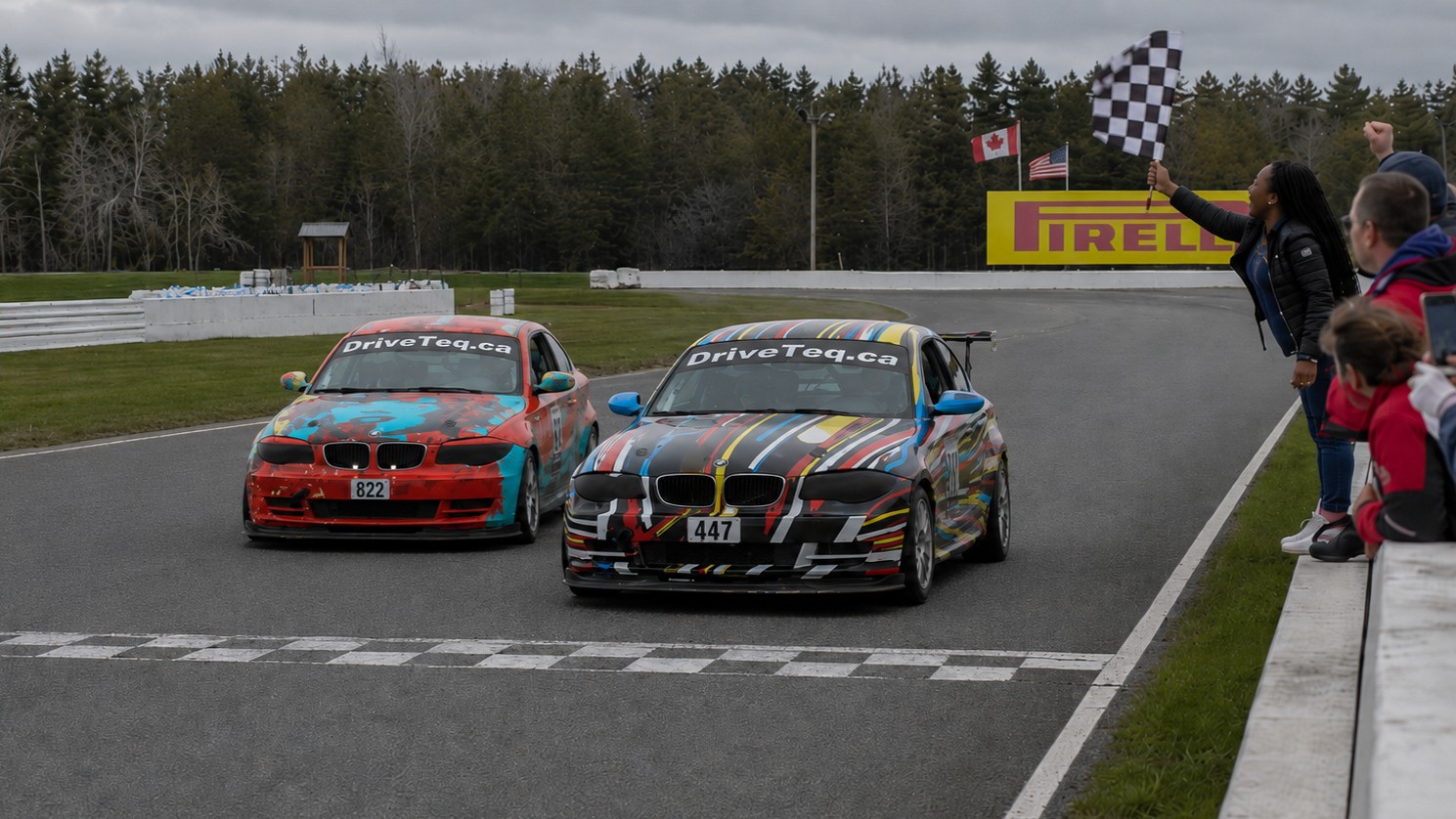
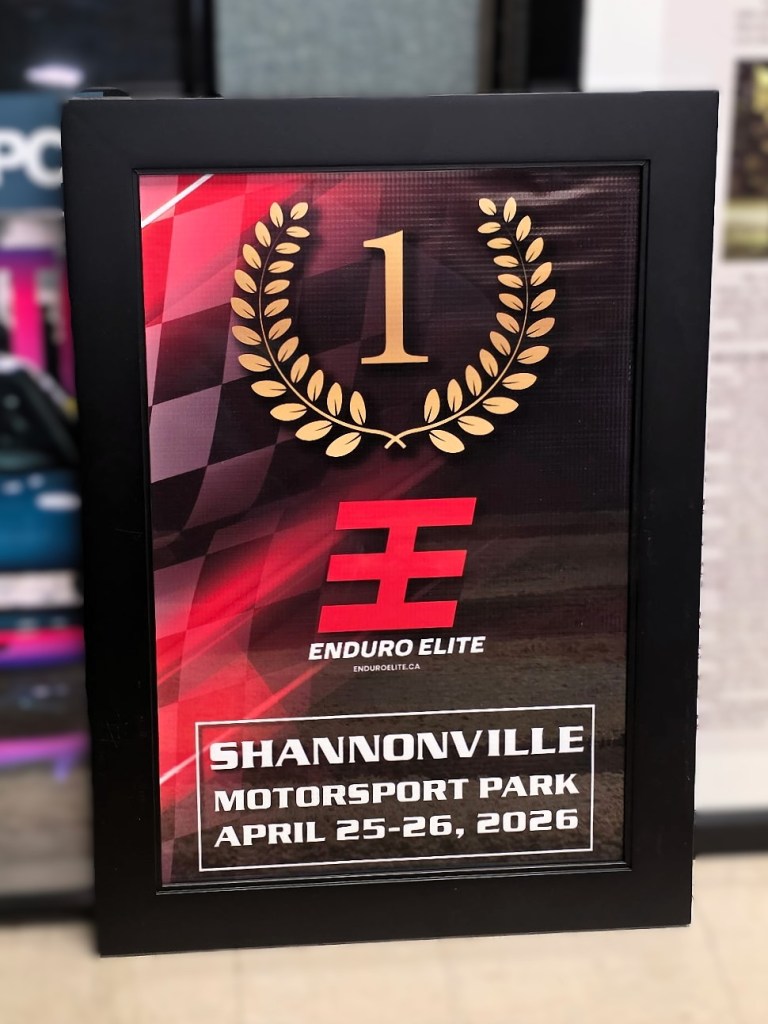
In the end it came down to a near photo finish, with Daniel bringing the DriveTeq No. 822 home first in GT3 and the sister No. 821 finishing second. After the frustration of Saturday, and the heartbreak of watching another lead disappear at Shannonville, Sunday finally gave DriveTeq the ending it wanted: two BMWs, one-two in class, and a very good reason to keep believing in endurance racing, despite its ongoing efforts to ruin everyone’s blood pressure.
We’ve received all the onboard footage of the event from Tim at DataTeq. Due to the length of the race, it’s been broken into three parts, which you can find on Demaras Racing’s YouTube channel.