Norway’s beloved stop-motion classic ‘The Pinchcliffe Grand Prix’ was released in August 1975 and became nothing less than a national treasure. Known as ‘Bjergkøbing Grand Prix’ in Denmark and ‘The Great Race’ in Russia, and even dubbed into English at a studio in Montreal in 1981—the film travelled far beyond its tiny mountain village setting. In Norway, it reportedly sold around five million tickets, roughly equal to the country’s entire population! In Russia was also a massive hit, selling nearly thirty million more tickets.
Not bad for a movie about a bicycle repairman, a nervous hedgehog, a bold bird, and one completely outrageous race car.


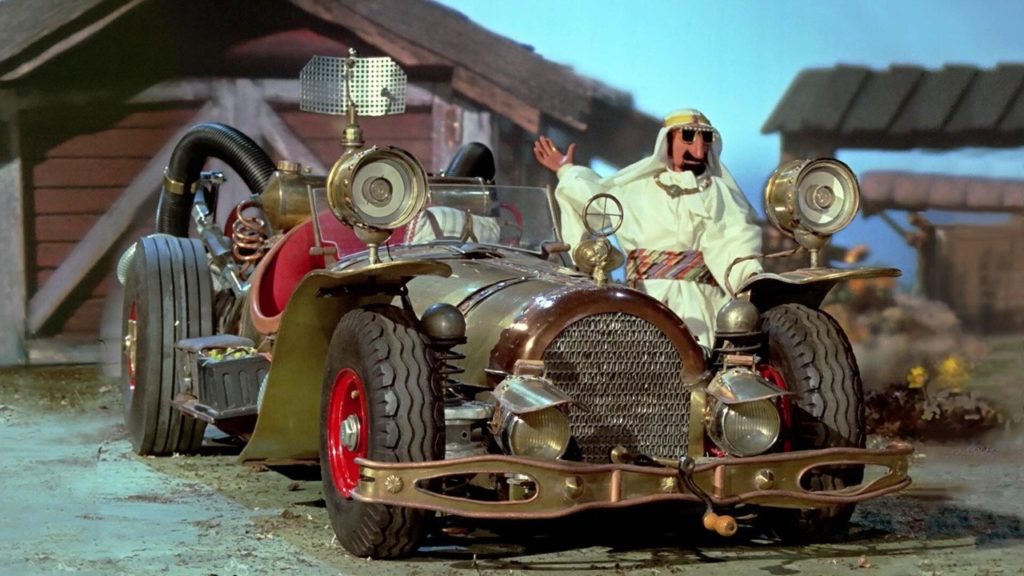
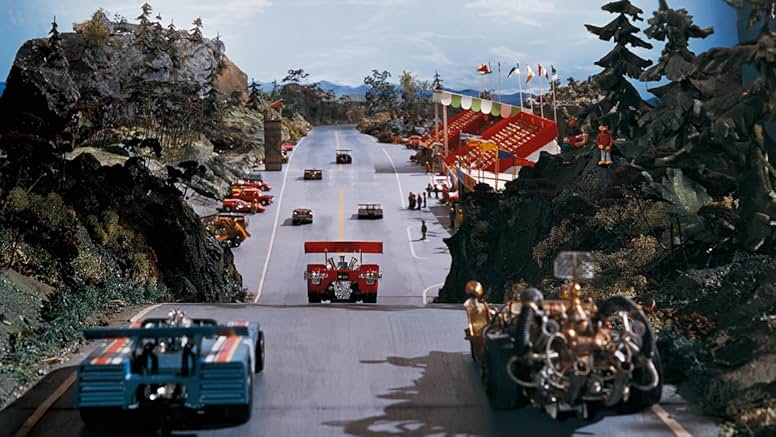
The story is simple, but perfect. Theodore Rimspoke is an eccentric inventor living in the village of Pinchcliffe with his two animal companions, cautious Lambert and confident Sonny. When they discover that Theodore’s former assistant, Rudolph Gore-Slimey, has stolen his race-engine design and become a famous driver, Sonny pushes Theodore to fight back. With financial help from oil sheik Abdul Ben Bonanza, they build the monstrous Il Tempo Gigante and enter the Grand Prix to defeat the cheating rival on track.
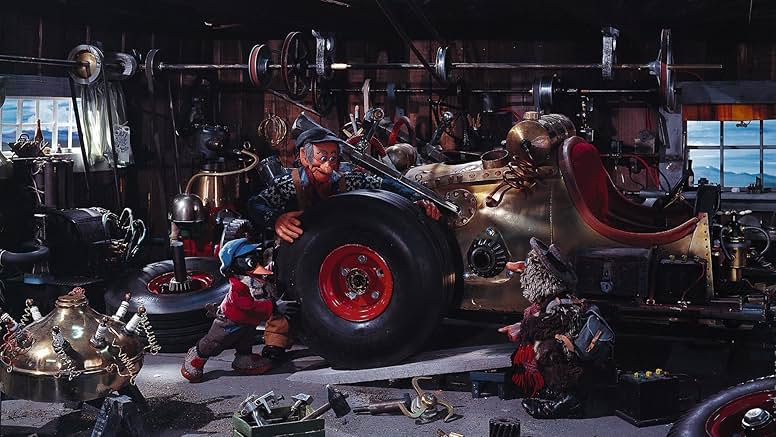
What makes ‘The Pinchcliffe Grand Prix’ so memorable is not just the story, but the craftsmanship. The scale models are astonishingly detailed. The cars, workshops, tools, levers, gauges, suspension pieces and tiny mechanical bits all look like they were built by people who genuinely loved machinery. Il Tempo Gigante does not feel like a cartoon car. It feels like something eccentric Scandinavians could actually build in a barn after too much coffee.


Due to its immense success, Norwegian TV stations began the ritual of broadcasting the film every year on Christmas Eve when families are gathered together, and that tradition continues into the present day. Canadians seeing the film for the first time will understand the nostalgia Europeans have felt for those little puppet characters. They have the same charm and handmade qualities as the Rankin/Bass puppets from those Christmas specials. They are slightly strange, yet somehow more alive because of it.
Over at Demaras Racing HQ, team mom Alice never grew up with Rankin/Bass and has no patience for the el-cheapo animations. But she clearly remembers seeing the Pinchcliffe Grand Prix as a child. Alice’s grandfather was a farmer, and during the harvest he’s use his modern combine to help his neighbours harvest their crops. Afterwards, the whole village would get together and put on a big feast. The adults would eat, drink and celebrate to music—one farmer even played the saw with a violin bow. Then the hay bails were arranged in a semi-circle resembling theater seats, and the Pinchcliffe Grand Prix was loaded into the movie projector and shown on a screen on the side of a barn. More than a movie, it was a ritual.


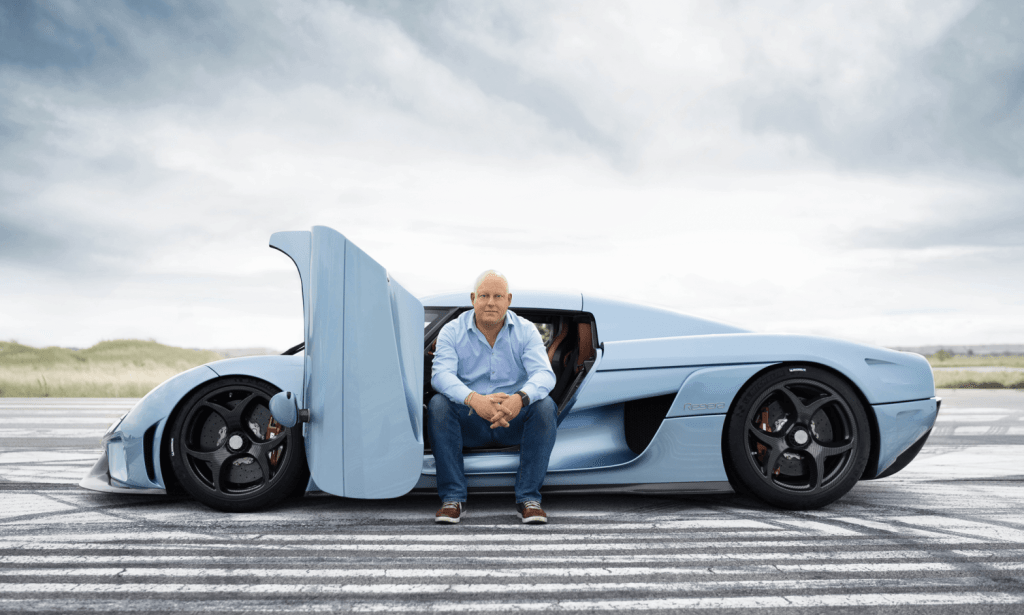
That is the real power of ‘The Pinchcliffe Grand Prix’. It created memories, inspired communities, and the intricate models even helped spark young Christian von Koenigsegg’s dream of building supercars, which eventually became Koenigsegg Automotive AB who’s cars hold the record for fastest production cars on earth. Not bad for a puppet movie about a bicycle repairman.