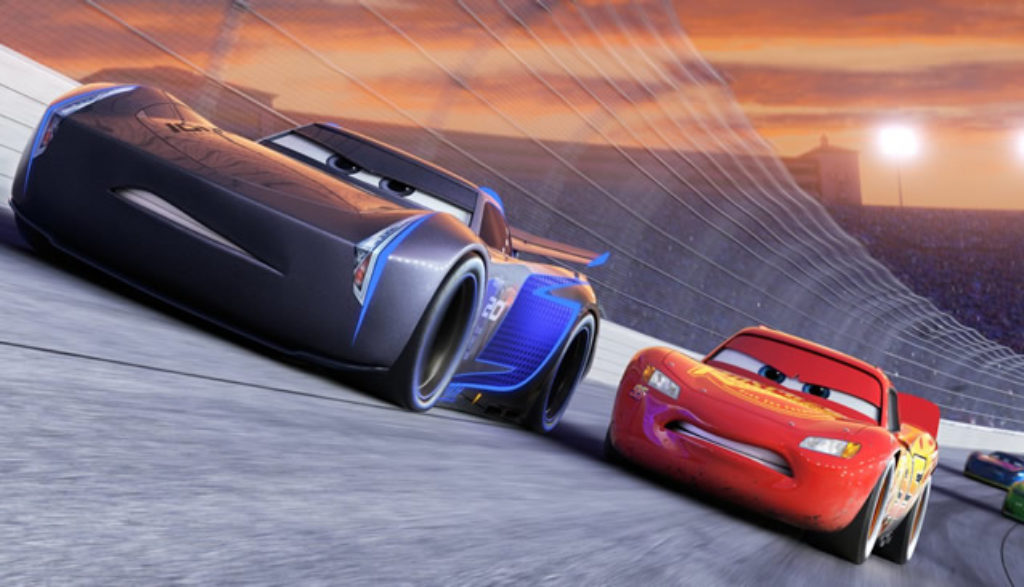
After the globe-trotting spy-movie insanity of ‘Cars 2’, the third entry in PIXAR’s racing franchise wisely returns to Radiator Springs and the emotional heart of the series. Gone are the international conspiracies and exploding gadgets. ‘Cars 3’ is a quieter, more thoughtful film about aging, mentorship and what happens when an athlete realizes the sport is beginning to move on without him.
Lightning McQueen is no longer the young hotshot rookie from the original movie. He is now a legendary veteran race car, respected by fans but increasingly outmatched by a new generation of technologically advanced racers led by the sleek, arrogant Jackson Storm. Faster, younger and trained using advanced simulation technology, Storm represents everything Lightning fears most: irrelevance.


After a devastating crash leaves him questioning his future, Lightning is pushed into an uncomfortable attempt to reinvent himself. Assigned a relentlessly upbeat young trainer named Cruz Ramirez, he struggles through high-tech training routines that feel sterile and disconnected from the soul of racing itself. Eventually, frustrated by simulations and corporate racing programs, Lightning and Cruz hit the road in search of something more authentic.
That journey leads them to one of the most powerful moments in the entire franchise.

At a small-town saloon, Lightning meets Smokey and several of Doc Hudson’s old racing friends. What follows is not just fan service or nostalgia bait. Through old stories and letters sent from Doc Hudson to Smokey, Lightning discovers how deeply his arrival in Radiator Springs changed Doc’s life. The grumpy, isolated old racer who had withdrawn from the world after his own career-ending crash rediscovered purpose, pride and happiness through mentoring a young rookie.
It is an emotional gut-punch of a scene, and one that resonates far beyond animation or motorsports. Anyone who has spent time around racing understands that tracks are not just places where trophies are won. They are places where generations connect. Crew chiefs become father figures. Rivals become lifelong friends. Veterans pass down knowledge to kids who do not yet realize how important those lessons will become.
That idea sits at the centre of ‘Cars 3’.


The earlier films celebrated the spectacle of racing culture: packed grandstands, exotic locations and the excitement of competition. ‘Cars 3’ digs deeper into what racing actually means to the people involved. Lightning’s relationship with Cruz mirrors the mentorship Doc once gave him. By helping Cruz believe in herself and pursue her own dream of becoming a racer, Lightning discovers a way to keep his competitive spirit alive even as his own career changes direction.
When Lightning pulls into pit lane during the final race and allows Cruz to take over, it completes the emotional cycle that began in the original film. Rather than desperately clinging to glory, he chooses to pass the opportunity forward.
That decision is what separates Lightning from Jackson Storm.

Storm immediately became one of the franchise’s most effective villains because he represents the cold, impersonal side of modern sports. Like Mason “The Line” Dixon in ‘Rocky Balboa’, he is the younger, faster and more technologically refined athlete who forces an aging champion to confront reality. But unlike Rocky, Lightning does not need one last miracle victory to prove his worth.
Instead, he learns the lesson Doc Hudson and Tex Dinoco tried teaching him all along: there is more to racing than winning.
In the end, ‘Cars 3’ is not really about getting old. It is about learning that legacy matters more than trophies, and that the greatest champions are often remembered not for the races they won, but for the people they inspired afterward.
1 thought on “Last Lap: “CARS 3” (2017)”