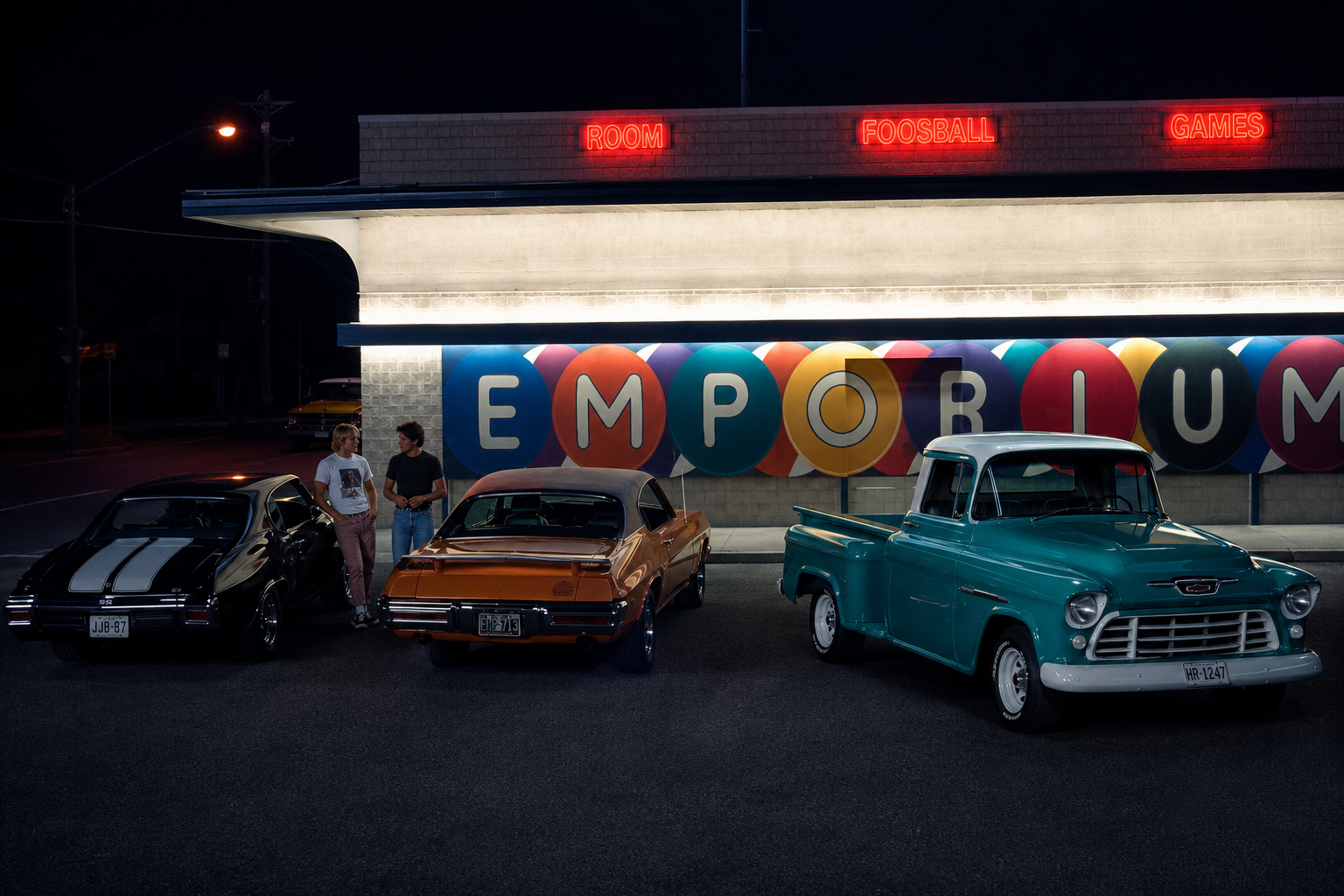
Set in the ’70s and filmed in the ’90s, Richard Linklater’s Dazed and Confused has been called a stoner movie, a coming-of-age movie, and a Gen-X nostalgia trip. But the opening shot tells the truth. As Aerosmith’s “Sweet Emotion” starts to creep out of the speakers, an Orbit Orange 1970 Pontiac GTO Judge rolls through a high school parking lot wearing pink and blue Judge stripes, a black vinyl roof, and the kind of attitude modern cars can only fake with drive modes. That is not just an opening shot. That is a thesis statement.
The movie takes place on the last day of school in May 1976, in a small Texas town where everyone seems to be either hazing freshmen, avoiding responsibility, chasing a party, or trying to decide what kind of person they want to become. Pink Floyd is the closest thing the film has to a central character, and his refusal to sign the football team’s morality pledge shows what the movie is really about: conformity, identity, and the quiet terror of having adults tell you who you are supposed to become.
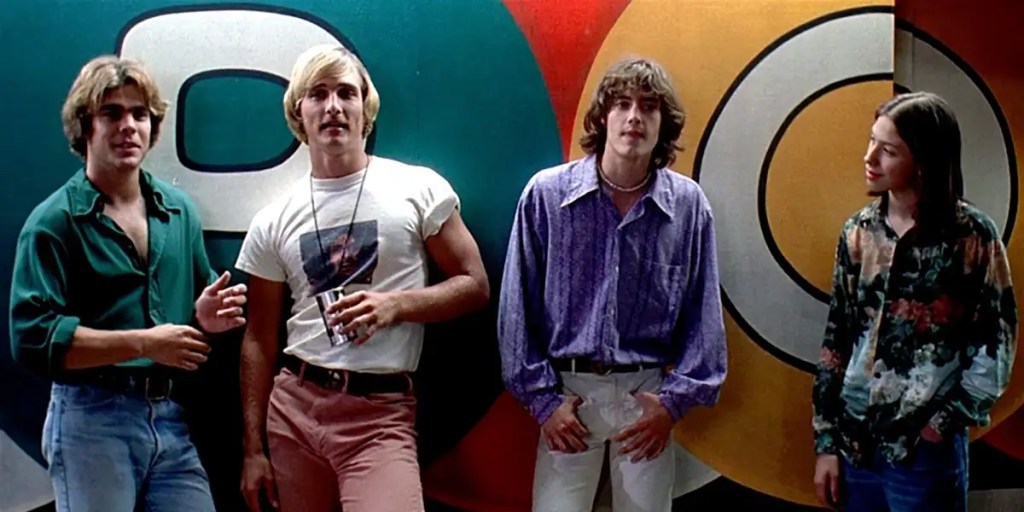
In Dazed and Confused, the cars are not background props. They are rolling biographies. Every vehicle tells you something about the kid behind the wheel, or the adult who never quite left the parking lot.
For teenagers in a small town, the car means freedom. Full stop. The car gets you out of the house, takes you to the party, hides the beer, carries the stereo, and provides a place to talk, flirt, smoke, argue, and figure out where everyone is going next. In modern terms, these cars are a group chat on wheels.
The movie owes an obvious debt to American Graffiti, and Linklater tips his hat with a yellow ’50s hot rod cruising the strip, a visual wink toward John Milner’s Deuce Coupe. But Dazed and Confused is not just copying George Lucas. It is showing a later moment in car culture, when the muscle cars of the late ’60s and early ’70s were no longer sacred collector pieces. In 1976, they were used cars. Cheap, loud, thirsty, dented, modified, and exactly the kind of machinery a high school kid could dream of owning.
1970 Chevrolet Chevelle SS 454

Wooderson’s black 1970 Chevelle SS 454, nicknamed “Melba Toast,” is the movie’s alpha predator. Black paint, white stripes, big-block power, and a driver who seems to have graduated from high school emotionally but never geographically.
Wooderson describes Melba Toast with the reverence of a man listing holy relics: 4.11 Positraction out back, a 750 double-pumper carb, Edelbrock intake, .030-over bore, 11:1 pistons, and a claimed 390 horsepower from the Turbo-Jet 454. Whether every detail would survive scrutiny is beside the point. Wooderson is not reciting a factory brochure. He is preaching.
The name “Melba Toast” is the funny part. It sounds plain, dry, harmless. This car is none of those things. That contrast is what makes it work. Calling a black SS 454 “Melba Toast” is an act of reverse bragging. The name is an inside joke that makes the car feel even more personal.
And that is Wooderson. He is charming, dangerous, funny, pathetic, and cool, often in the same scene. The Chevelle makes him look heroic, but it also traps him in time. He is still cruising the same town, still chasing the same girls, still playing the same role. Melba Toast is his crown and his cage.
1976 Chevrolet El Camino Conquista
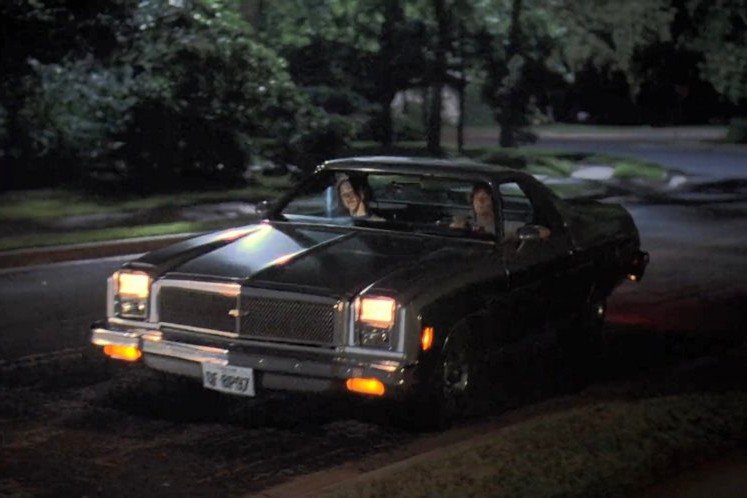
Randall “Pink” Floyd’s El Camino might be the perfect car for the movie’s most conflicted character. It is half car, half truck, which means it belongs to two worlds without fully committing to either one. That is Pink.
Some online car detectives identify the stacked-headlight El Camino as a 1977, but that misses an important detail: certain 1976 El Camino Classic models already had the formal front end with rectangular stacked headlights. The Conquista package added special two-tone paint and bright trim, giving Chevy’s car-truck hybrid a more upscale look.
That matters, because Pink is not driving a beater. He is the quarterback, the hometown hero, the kid every social group seems willing to accept. He sits in class with the nerds, hangs out with the jocks, protects the freshmen, and is somehow cool enough to be sympatico with Wooderson. If any character’s proud parents were going to buy him a brand-new 1976 El Camino Conquista, it would be Pink Floyd.
He is a football player, but he does not want to be owned by the team. He is popular, but he is not cruel. He runs with the jocks, but he refuses to blindly follow their rituals. He is not trying to burn the system down. He just does not want Coach Conrad deciding what kind of man he is supposed to be.
The El Camino says all of that without a speech. It has enough style to belong in the parking lot with the muscle cars, but it is more relaxed than Wooderson’s Chevelle or Pickford’s Judge. It is useful, but not boring. Cool, but not peacocking. The Conquista trim gives it that slightly dressed-up, personal-luxury flavour that fits Pink perfectly: he wants freedom, but he is not trying to be the loudest guy in town.
The El Camino is the automotive version of Pink’s personality. It does not pick a lane because it does not have to.
1972 Chevrolet C-10 Cheyenne

Benny O’Donnell’s black C-10 Cheyenne is not exotic, but it might be one of the most believable vehicles in the whole movie. In a Texas high school parking lot in 1976, a four-year-old Chevy pickup makes perfect sense.
Benny is a football guy, a working-class small-town guy, and a practical member of the group. His truck is not a fantasy object like the Judge or Chevelle. It is something a kid might actually drive because someone in the family already owned it, or because a teenage boy with a job could just about afford it.
The C-10 gives Benny weight. It makes him feel grounded. There is nothing delicate about it. It is square-shouldered, blunt, useful, and confident without trying too hard. It fits the character because Benny is not performing cool in the same theatrical way Wooderson is. Benny’s cool is simpler: he has the truck, he has the friends, he has a place in the social order.
Every high school parking lot needed one of these. The guy with the pickup always mattered.
1973 Plymouth Duster

Fred O’Bannion’s Plymouth Duster is perfect because it looks like a bad decision with wheels. Primer grey, hood scoop, rough attitude, and a driver who failed senior year but somehow came back for another season of bullying freshmen.
The car looks unfinished because O’Bannion is unfinished. It is aggressive, but not impressive in the way he thinks it is. It is trying very hard to look mean. That is O’Bannion in sheet metal.
The Duster was Mopar’s compact muscle option, smaller and lighter than the big-block bruisers, with real performance potential in the right configuration. But by 1973, the muscle era was already getting strangled by emissions rules, insurance costs, and changing tastes. That makes O’Bannion’s car feel a little desperate. It is hanging onto an older kind of toughness, just like he is hanging onto high school authority after he has already been left behind.
1970 Pontiac GTO Judge

Kevin Pickford’s stunning Orbit Orange GTO Judge is the first car we really see, and it sets the whole movie on fire. Bright paint, cartoonish decals, rear spoiler, hood tach, black vinyl roof. It is factory rebellion with a warranty.
The Judge is the perfect car for Pickford because he is the guy who is supposed to host the big party. He is not the loudest character, but the entire night bends around his cancelled plans. When his parents find out about the party and shut it down, the social structure collapses. Everyone scatters into cars and starts hunting for the next place to be.
That makes the GTO feel like a rolling party invitation. It is not subtle. It does not want to be subtle. It arrives already dressed for the night that should have happened.
There is also something funny about the black vinyl roof. It adds a thin layer of grown-up respectability to a car that is otherwise screaming through a megaphone. That fits Pickford too. He is the long-haired stoner with the muscle car, but he still lives under his parents’ roof. The Judge looks free, but it still has to go home eventually.
1974 Pontiac Firebird Trans Am SD-455

Clint Bruno’s white Trans Am SD-455, known as “White Lightning,” is pure intimidation theatre.
By 1974, the glory days of the muscle car were fading fast, but the Super Duty 455 Trans Am was one of the last great holdouts. Big displacement, serious torque, shaker-scoop attitude, and a giant hood bird that announced itself before the driver even opened his mouth. Which is perfect, because Clint opens his mouth plenty.
The Trans Am is aggressive, flashy, and confrontational. It is not charming like the GTO or mythic like the Chevelle. It is a challenge. Clint is the kind of guy who turns every interaction into a contest, and the car reflects that. It is not just transportation. It is a threat display.
If Wooderson’s Chevelle says, “I am still the king,” Clint’s Trans Am says, “Don’t mess with me.”
1965 Volkswagen Beetle Convertible

Jodi Kramer’s Beetle Convertible is not a muscle car, and that is exactly why it matters.
In a movie full of Chevelles, GTOs, pickups, and Trans Ams, the Beetle is personality cool instead of horsepower cool. It is small, friendly, open, and independent. It does not need a hood scoop or a big-block V8 to make an impression.
That fits Jodi. She moves between social groups more gracefully than most of the characters. She is part of the senior world, but she also tries to protect her brother Mitch from the worst of the hazing. She is not outside the system, but she is not swallowed by it either.
The Beetle is the anti-muscle car, but not an uncool car. It says Jodi has her own rhythm. She does not need to win a stoplight race to have presence.
1972 Dodge Monaco Station Wagon

Then there is the nerd wagon. Cynthia, Tony, and Mike do not cruise around in a Chevelle, a Judge, or a Trans Am. They get what appears to be a 1972 Dodge Monaco station wagon, a full-size Mopar family hauler with the emotional temperature of a school guidance office and the turning radius of a municipal bus. And that is exactly why it works.
Some online car-spotting sites have identified the nerd wagon as a Volvo 245, but the film never gives us a clean exterior shot. Every useful view is from inside the car, which means the clues are in the details: the chunky rectangular chrome side mirror, the heavy brightwork around the windows, the broad brown cabin, the door trim, and the upright American dashboard shape. None of that feels like a Swedish safety brick. It feels like a Dodge Monaco wagon.
The interior colour is perfect too. To any Canadian raised on Tim Hortons, that cabin is double-double coffee coloured. Coffee with two creams. Spill one in there and nobody would ever know.The Monaco says the nerds are not car people. More importantly, it says they are probably borrowing the family car. This is not a personalized teenage identity machine. It is Mom and Dad’s wagon, drafted into service for one strange night of freedom. But that makes it more interesting, not less.
The Dodge represents a different kind of rebellion. Cynthia, Tony, and Mike are not trying to dominate the parking lot. They are thinking, questioning, overanalyzing, talking politics, and trying to understand the world before it swallows them whole. The muscle-car kids are circling the town. The kids in the Monaco might actually leave. There is something perfect about that. The least exciting car in the movie may belong to the characters with the strongest exit strategy.
The nerd-mobile is not a Swedish safety brick after all. It is a Mopar living room with whitewalls.
The genius of Dazed and Confused is that the cars do not just decorate the movie. They explain it.

Wooderson’s Chevelle is arrested development with a big-block. Pink’s El Camino is indecision with bucket seats. Benny’s C-10 is small-town credibility. O’Bannion’s Duster is insecurity in primer. Pickford’s GTO is the party that almost happened. Clint’s Trans Am is ego with a shaker scoop. Jodi’s Beetle is independent cool. The nerds’ Volvo is borrowed freedom with seatbelts.
The movie may be about the last day of school, but the cars tell us what everyone is really chasing. Status. Escape. Identity. Friendship. Trouble. A place to belong.
Or at the very least, a place to crank the stereo and drive around until something happens.