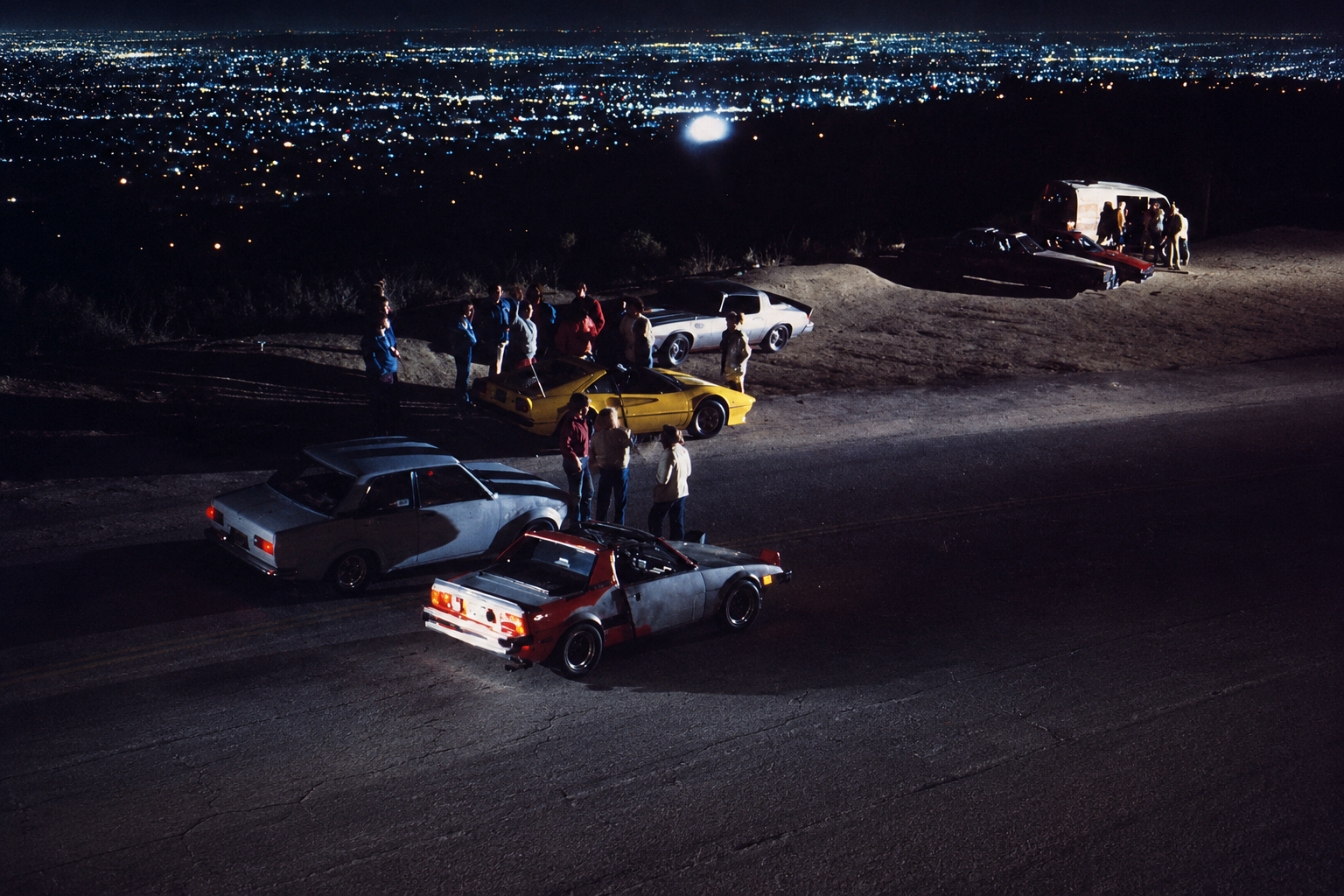
I watched King of the Mountain again last night, and it was better than I remembered. Released in 1981, the film is a fictionalized look at the real street racers who used Mulholland Drive in Los Angeles as their private racetrack. The road was narrow, dark, twisty, and short on guardrails, which made it a terrible idea for racing and therefore irresistible to gearheads.
The movie has record-company fingerprints all over it. It came from PolyGram Pictures, with Universal distributing, and you can feel the music business elbowing its way into a car movie. There is a full subplot about recording studios, smoky vocals and Harry Hamlin’s character falling for a brunette singer played by Deborah Van Valkenburgh, better known to many as Jackie from Too Close for Comfort. She never looked better.


But the real stars are the cars. Los Angeles glows in the background like a busted neon jukebox, giving the film an early-’80s night-stalker mood. The story is thin, the box office was no victory lap, but from a gearhead’s perspective, King of the Mountain delivers: three proper race sequences, a hero who works at a Porsche shop, and enough weird metal to make the movie worth revisiting.
Steve’s Porsche 356 Speedster
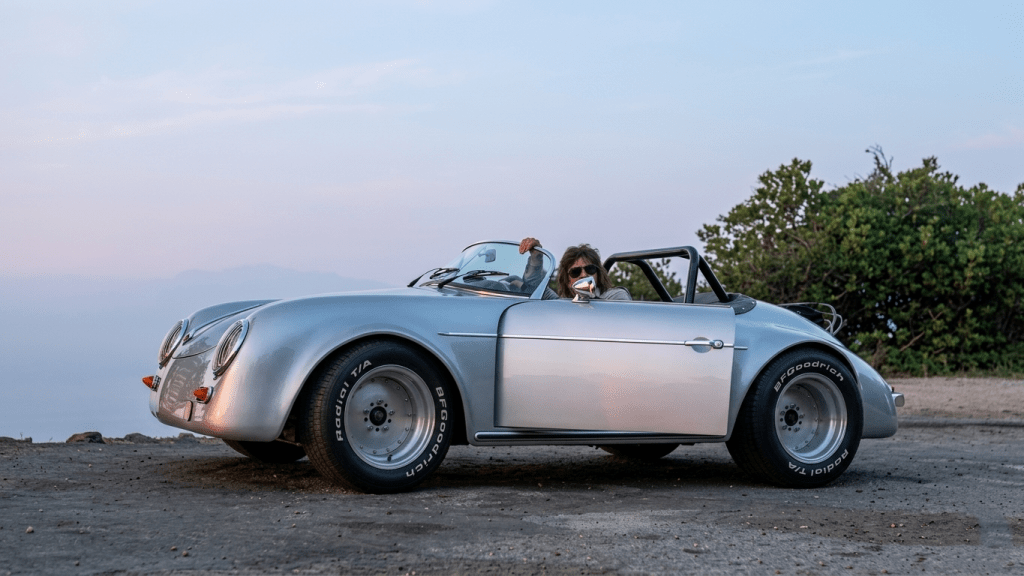
Harry Hamlin plays Steve, the current King of the Mountain and a mechanic at a Porsche repair shop. Steve is loosely inspired by real Mulholland racer Chris Banning, though the movie swaps the real-world Porsche 911 mythology for something more theatrical. His silver “Porsche 356 Speedster” looks perfect for canyon carving: low, simple, flared, and all business. Except it is not actually a Porsche. The movie car was a Volkswagen Beetle-based kit car dressed up to look like a vintage 356. That suits the film. Steve’s car is a beautiful fake built for abuse, a prop car with enough attitude to become the hero machine anyway.
Cal’s Chevrolet Corvette Sting Ray
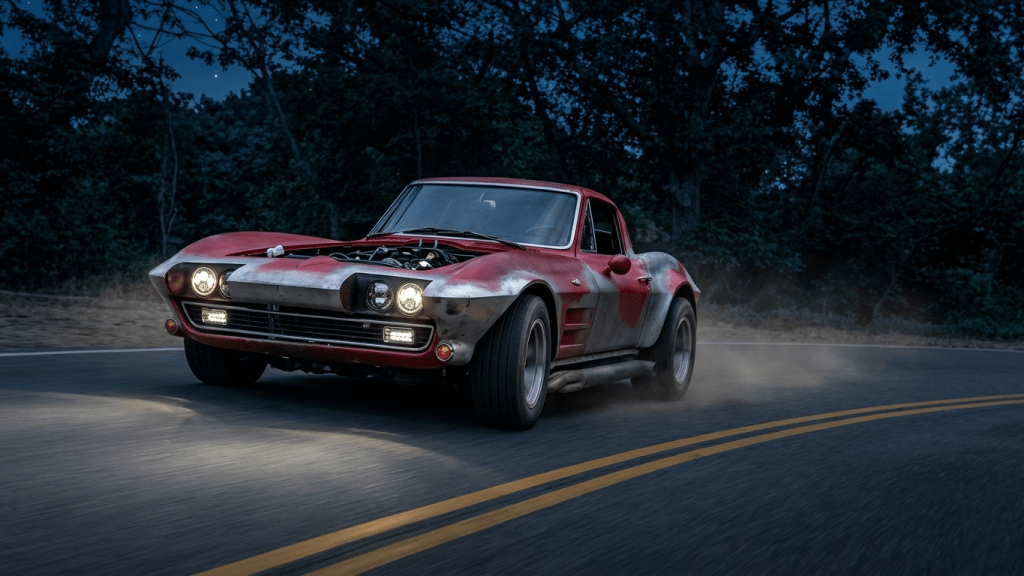
Dennis Hopper plays Cal, the former King of the Mountain, and he brings full cracked-bell energy to the role. Cal was inspired by Charles “Crazy Charley” Woit, one of the real legends of the Mulholland scene. His car is a 1967 Chevrolet Corvette Sting Ray, and it looks absolutely feral. Not restored. Not pretty. Not some waxed-up weekend toy parked beside a lawn chair. This Corvette looks like it was assembled from primer, rage and unpaid parking tickets. Wide tires, rough bodywork and bad intentions make it the perfect car for Cal, a man trying to outrun age, regret and common sense.
Tina’s Citroën DS
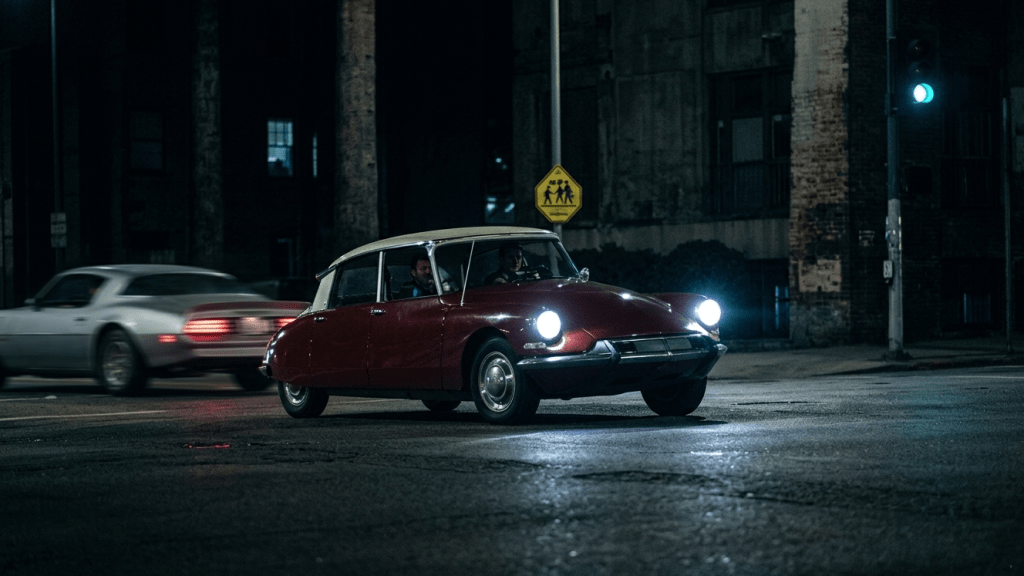
Tina, played by Deborah Van Valkenburgh, is not one of the racers, but her Citroën DS deserves a spot because it is so wonderfully out of place. While the boys are playing king-of-the-hill with Porsches, Corvettes and muscle cars, Tina glides through Los Angeles in a French spaceship with hydraulic suspension and nightclub energy. There is even a scene where she drives Steve home while drinking Jack Daniel’s from a bottle hidden in the glovebox. The column shifter appears to be in park, which makes the whole thing even more charmingly ridiculous. The DS is not fast in this context, but it tells us exactly who Tina is: stylish, slippery and not impressed.
Buddy’s Jaguar E-Type
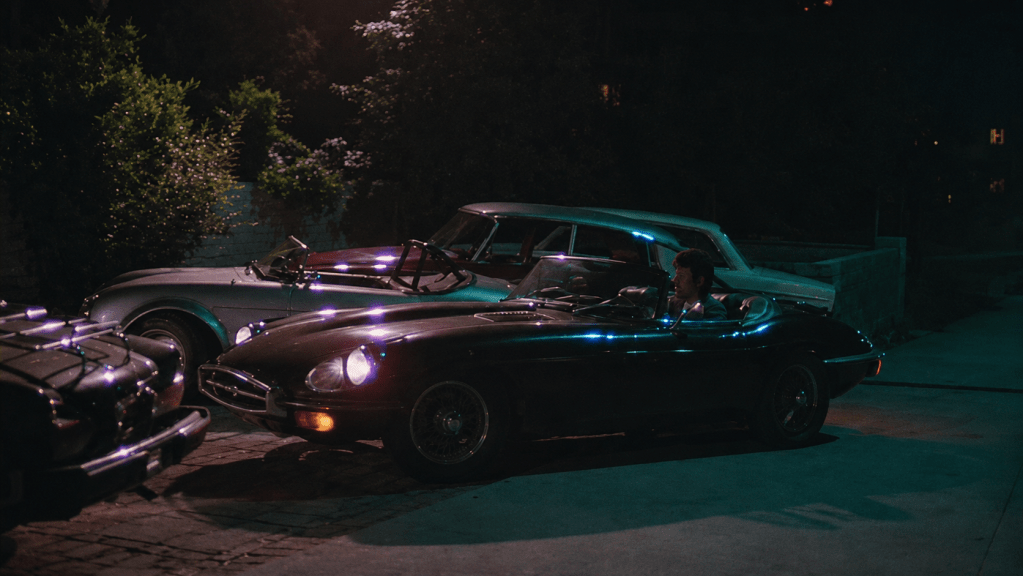
Buddy’s Jaguar E-Type adds old-world class to the Mulholland circus. Where Steve’s fake Speedster is a weaponized kit car and Cal’s Corvette is a rolling warning label, the Jaguar is elegant, long-hooded and almost too pretty for the scene. It may even be a quiet nod to Steve McQueen’s 1956 Jaguar XKSS called “Green Rat” he reportedly ran in the hills above Los Angeles. The Mulholland crowd was not just cheap hot rods and backyard bravery. It was homebuilt specials, European sports cars and Hollywood royalty, all coming out after dark to see who really had nerve.
Buddy’s Mustang GT
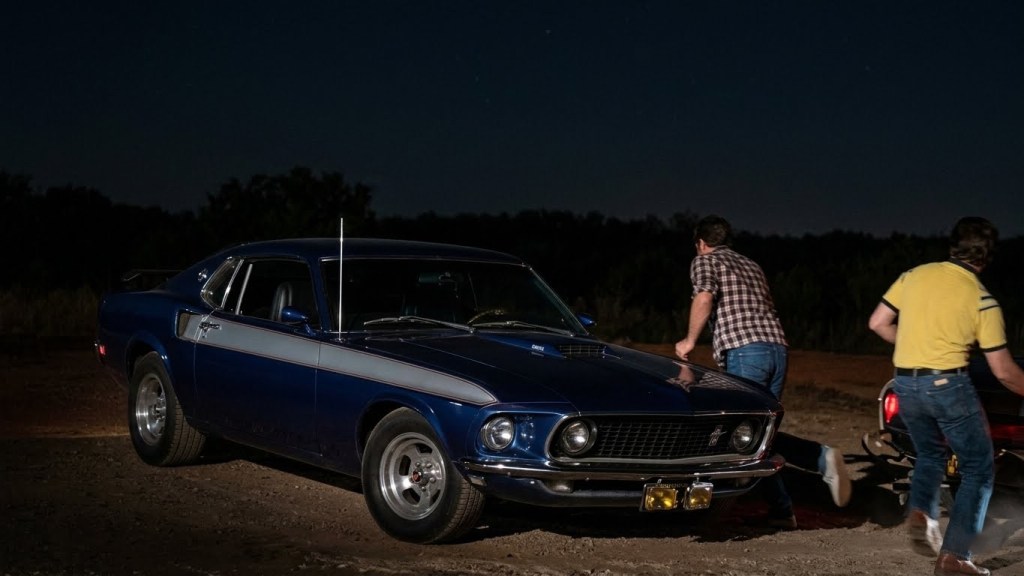
The Mustang may not get the same glamour as Steve’s Speedster or Cal’s Corvette, but it plays an important role in the movie’s darker side. During a race against Cal, Buddy dies in a Mustang, and the crash changes the tone of the film. Until then, the Mulholland racing feels dangerous but seductive. Afterward, the mountain is exposed as something harsher. This is not just boys being boys with loud engines and empty roads. The Mustang becomes proof that the game can collect payment. For a car movie, that matters. The danger feels real enough that the final showdown carries weight.
King of the Mountain was not a commercial hit, and it is easy to see why. It is too strange to be a mainstream racing movie and too car-obsessed to be a normal drama.
But for people who care about obscure automotive cinema, it has aged into something special.


It captures a lost Los Angeles car scene, gives Dennis Hopper a psychotic Corvette, puts Harry Hamlin in a fake Porsche, and lets Mulholland Drive play the villain. That is more than enough reason to crown it a cult car movie.