In 1971, Car and Driver writer Brock Yates created the ‘Cannonball Baker’ Trophy Dash to
In 1971, Car and Driver writer Brock Yates created the ‘Cannonball Baker’ Trophy Dash to prove a point. He believed the American Interstate system could be used for high-speed, long-distance travel the way Germans used the Autobahn. Solid cars, good drivers, open roads and less regulation. The race was also a reaction to the mood of the times. The era was full of safety panic, speed restriction talk and the joyless bureaucratic strangulation of driving. America had built the Interstate system, then seemed determined to tell everyone to crawl across it.

The first Cannonball left New York shortly after midnight on November 15, 1971. Eight vehicles headed west for Redondo Beach, California. Brock Yates and Dan Gurney won in a Ferrari Daytona, crossing the country in 35 hours and 54 minutes. Outlaw folklore was born, and Hollywood could smell the gasoline.
The races ran again in 1972 and 1975, but the world was changing. The 1973 oil crisis had led to the national 55 MPH speed limit in 1974. Gas lines, fuel saving and lower speed limits took a crowbar to the American road-trip fantasy. Road movies were popular because the road meant freedom: truck stops, neon signs, weird diners and the belief that beyond the next state line, life might get interesting. That is the world the 1976 movie Cannonball! tapped into. The movie is not about motorsport. It is about rebellion. It is about mashing the gas pedal when the government is telling motorists to slow down.
New World Pictures and Roger Corman got the ball rolling. With Paul Bartel directing and David Carradine starring, Cannonball! was positioned to beat rival movie The Gumball Rally to theatres with classic Corman efficiency. Let the big-money Warner Bros. picture do the advertising, then ride the wave. Cannonball! screened in Minneapolis, Cincinnati, Louisville and Columbus on July 21, 1976, before The Gumball Rally had its July 28 premiere. Warner Bros. had the better. New World Pictures got there first.

The plot is simple enough to fit on a speeding ticket. Coy “Cannonball” Buckman is a fallen racing driver, recently out of prison, who enters an illegal race from the Santa Monica Pier to New York City. There is a $100,000 prize, a racing contract, a violent rival, a corrupt brother and a field of competitors assembled from a casting office, a truck stop and a police lineup.
But the real stars are the cars.
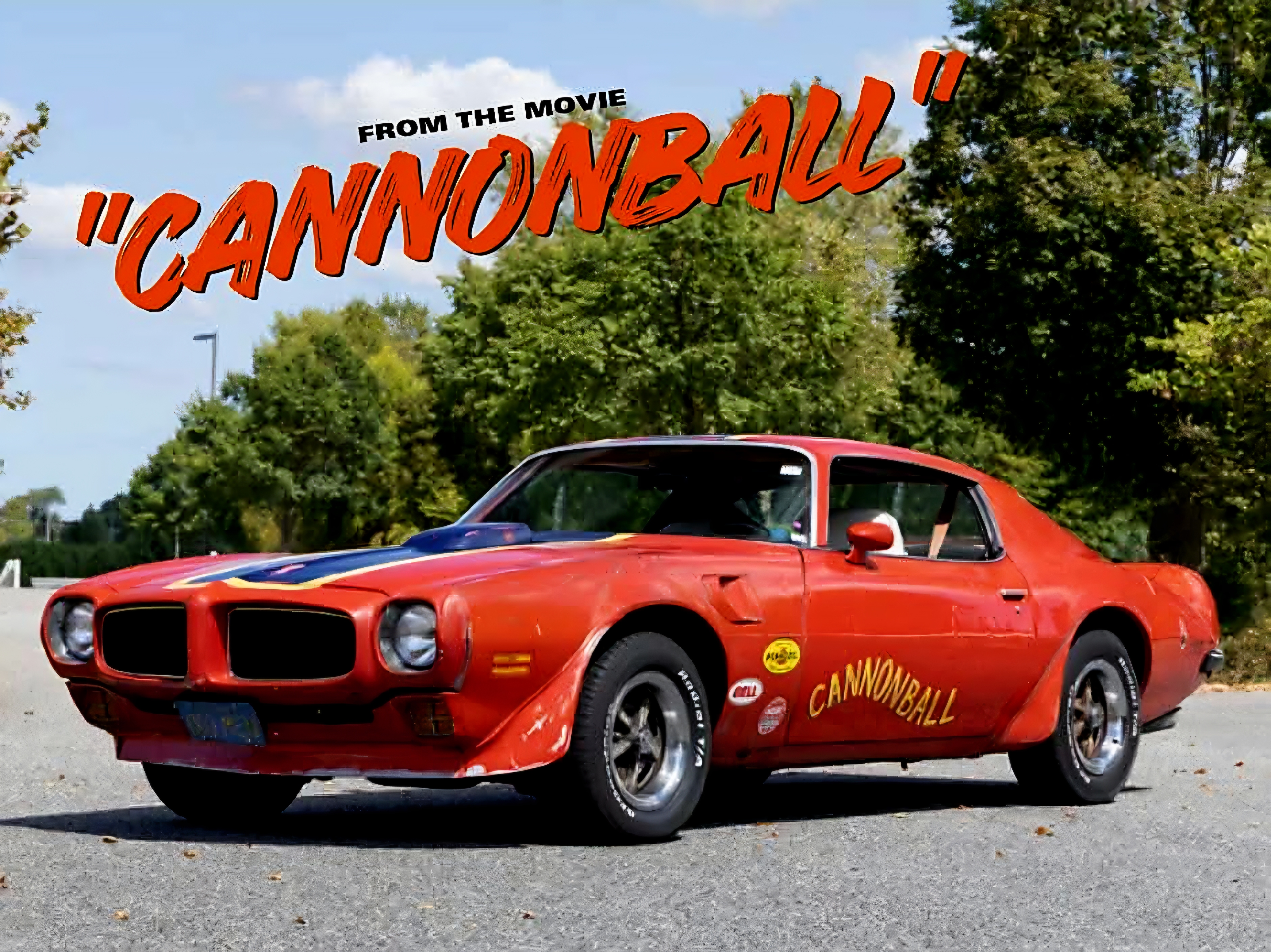
Pontiac Firebird Trans Am

David Carradine’s Coy Buckman drives the red Pontiac Firebird Trans Am, and the car fits him perfectly. It is loud, low, angry and American.
The Trans Am had already become a symbol of blue-collar performance. In Cannonball!, it looks like something a real person might have owned, modified, abused and loved. Coy is the movie’s lone gunslinger, and his Trans Am gives him the right outlaw shape.
De Tomaso Pantera

James Keach’s Wolfe Messer drives the De Tomaso Pantera, the exotic of the pack. Italian styling, mid-engine layout, Ford V8 power and a name that still sounds expensive when parked outside a gas station.
The Pantera is sleeker than the Detroit metal around it, but not too precious. It is a European suit with a Ford heartbeat.
Chevrolet Corvette

Robert Carradine’s Jim Crandell and Belinda Balaski’s Maryann drive her father’s Chevrolet Corvette. Not some millionaire’s race entry. Dad’s car, borrowed for bad decisions.
The C3 Corvette was America’s sports car in its disco-era shark suit: long hood, low roof, flared attitude. Every young man’s fantasy and every father’s nightmare.
Dodge Charger

Bill McKinney’s Cade Redman drives the 1968 Dodge Charger, and he is not one of the charming competitors. He is mean, unstable and dangerous. His car reflects that perfectly.
The Charger is one of the best-looking muscle cars ever built, but here it becomes a weapon. Auxiliary lights, decals, rear wing and street-machine menace make it look like a bar fight with wheels.
Chevrolet Sportvan

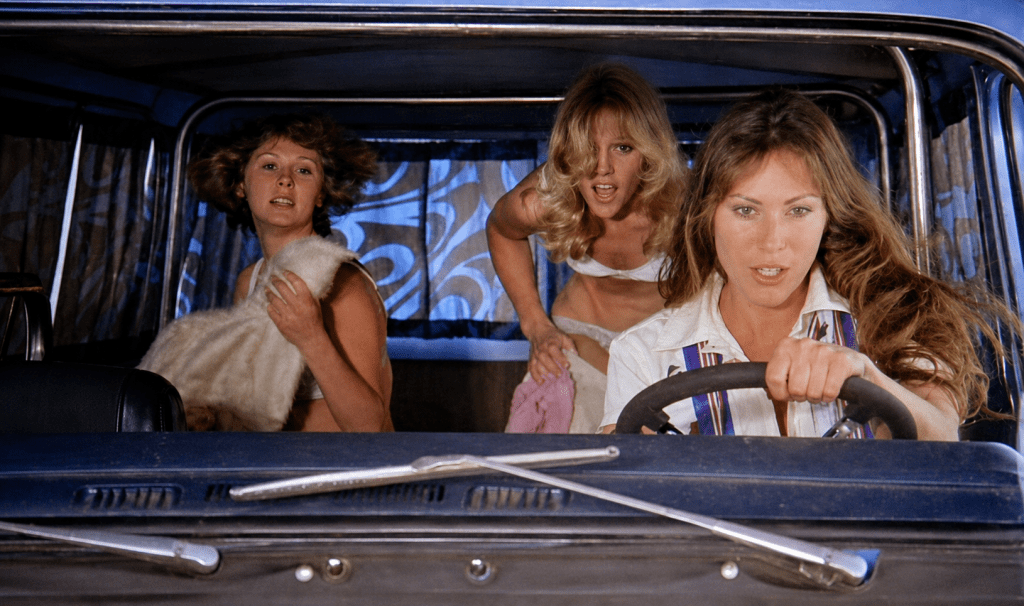
The 1968 Chevrolet Sportvan is driven by the three waitresses: Sandy, Ginny and Wendy. This is peak 1970s van culture. Not a minivan. Not a family hauler. A real custom van from the era when shag carpet, CB radios and questionable life choices all lived in the same rolling box.
The van should not be competitive, yet it belongs in the race anyway. Cannonball! knows American car culture includes vans, wagons, beaters, sleepers and weirdos.
Ford Mustang
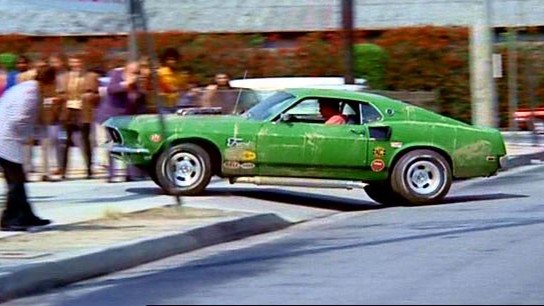
When Coy’s Trans Am gets knocked out, he ends up in a 1969 Ford Mustang. It is not a concours queen. It looks like a local hot rod hanging around behind a service station waiting for its moment.
The Mustang turns Coy’s comeback into something scrappier. He loses the hero car, grabs another piece of American performance mythology and keeps going.
Lincoln Continental

Beutell Morris drives a 1969 Lincoln Continental Mark III, borrowed from an elderly couple who expect it to arrive safely in New York. Naturally, it does not.
The Lincoln is the funniest entry because it is the opposite of a race car. Long, plush, formal and heavy, it was built for quiet highways, not outlaw competition. But even 1970s luxury cars had presence. Big engines. Big chrome. Big arrogance.
What makes Cannonball! so interesting are the attainable cars on screen: machines people would recognize from their own streets. With the exception of the Pantera, these were not fantasy cars. They were the cars people saw, wanted, bought, crashed, repaired and bragged about. Compared to The Gumball Rally and its high-dollar machines, Cannonball! feels more authentic. Era-correct performance cars. Street machines. Daily drivers pressed into bad decisions. Not museum pieces.
Cannonball! came from an era when the American road was changing. The government wanted lower speeds. The oil crisis wanted smaller appetites. Safety advocates wanted restraint. But car people still wanted noise, distance, speed and the freedom to aim the hood ornament at the horizon.
So Paul Bartel, Roger Corman and New World Pictures gave them the fantasy. A bad idea, maybe—but a great car movie.