At the Altar of Speed
~ by Daniel Demaras
There are certain places you simply have to see when travelling through Europe. The Eiffel Tower. The Brandenburg Gate. The Colosseum. The Parthenon. But when I mapped my route across the continent, there was one place beyond the usual tourist trail that felt every bit as essential.


A bus ride from Modena, through the hot and dusty Italian countryside, lies Maranello, an unassuming industrial town whose identity is inseparable from Ferrari. You can feel that history from blocks away. The Prancing Horse stands in the central roundabout, cafés display models of Italian roadsters, and shops are packed with decades of Ferrari memorabilia. At the centre of it all is a place no Tifoso should travel to Italy without visiting: the Museo Ferrari Maranello.
Walking past Michael Schumacher’s 1997 Ferrari, encased in steel outside the entrance, I stepped into a building that felt downright magical.

Upstairs, visitors are greeted by some of Ferrari’s more recent experiments in automotive technology. Among them are the 599 GTB Fiorano HY-KERS prototype, unveiled in 2010 using technology developed from Formula One’s KERS systems, and the retro-futuristic Monza SP2. Yet even surrounded by machines as legendary as the F40, I could barely stop myself from darting toward the next room, knowing what was waiting inside.
There stood the culmination of so much of Ferrari’s Formula One history, including the cars that formed some of my earliest sporting memories.


Michael Schumacher’s championship-winning F1-2000 sat alongside the dominant F2002 and F2004, as well as Kimi Räikkönen’s F2007, the car that delivered Ferrari’s most recent Drivers’ Championship. Nearby were more pieces from the Schumacher and Sebastian Vettel eras, along with Ferrari’s 126 C lineage, forever associated with the great Canadian Gilles Villeneuve.

Across the room was a breathtaking wall of trophies, the accumulated glory of Formula One’s most successful team. These were prizes earned across eras defined by drivers such as Fernando Alonso, Nigel Mansell and Alain Prost. Of all the museums in Italy, few could match the sheer density of greatness collected inside that single room.
Growing up, my sporting heroes were never the stick-and-ball headline grabbers playing for Toronto’s various professional franchises. It was the drivers in the red Ferraris who defined my sporting fantasies and captured my imagination.


I can still remember the soaring high of Kimi Räikkönen winning the 2007 World Championship against the odds in Brazil. I remember Felipe Massa’s mastery of Istanbul Park, Fernando Alonso charging from 11th to victory in Valencia in 2012, and Charles Leclerc announcing a new era for the Scuderia with victory at Spa in 2019.
I remember the lows as well. Brazil in 2008. Abu Dhabi in 2010. When the team I had learned to believe in came up short, it felt as though some small part of my own dream had been denied too.
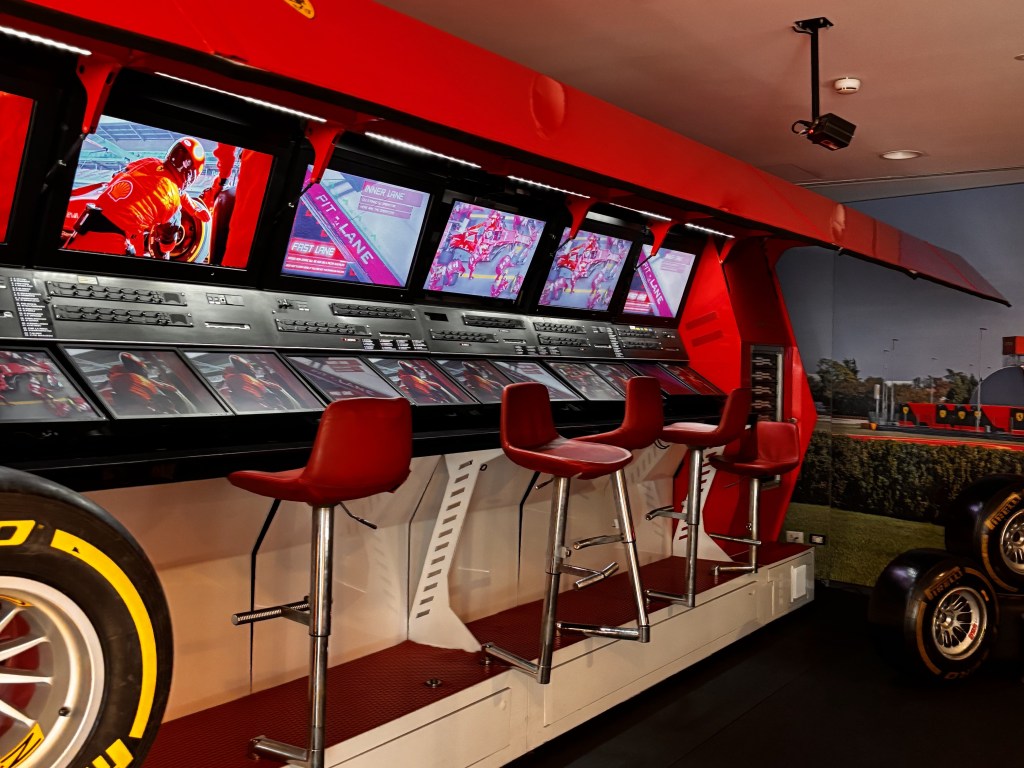
Even as a young boy, watching Massa stand with pride after winning his home race but narrowly losing the championship taught me something that has stayed with me. It showed me what it means to carry yourself with dignity when the result has broken your heart.
The museum contained more remarkable artefacts from Ferrari’s road-racing history, including cars from the Mille Miglia and the early days of endurance competition. There was also the 499P Hypercar, which returned Ferrari to the top class of endurance racing in 2023 and won the 24 Hours of Le Mans after the company had spent half a century away.


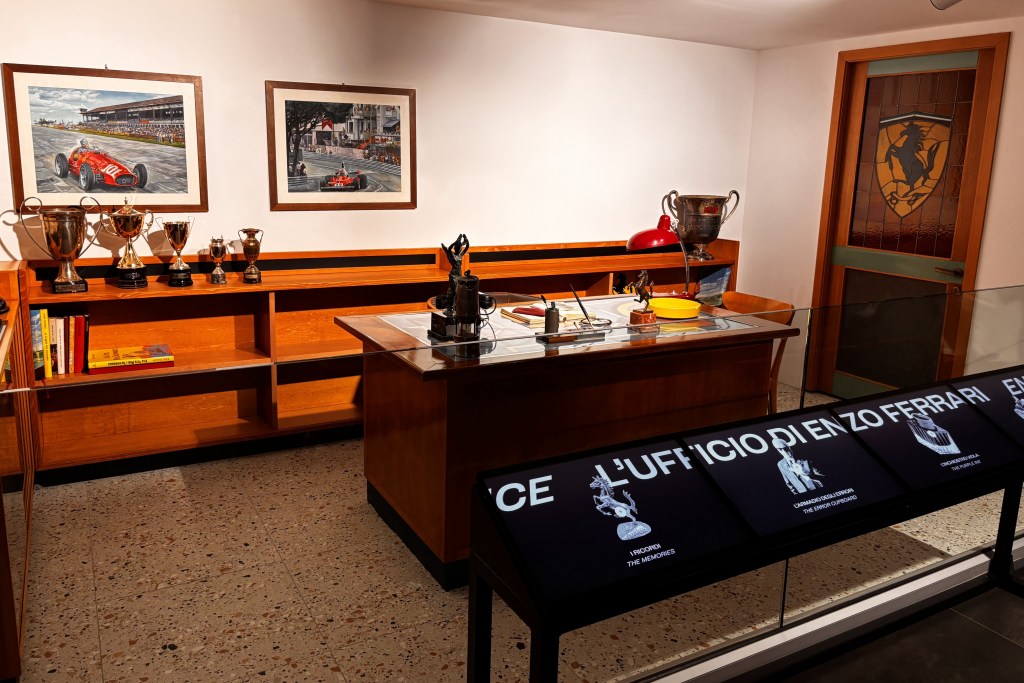
Perhaps what struck me most, however, was the reconstruction of Enzo Ferrari’s office. After walking through rooms filled with priceless machinery, championships and trophies, it was remarkable to see the comparatively humble surroundings from which this empire grew.
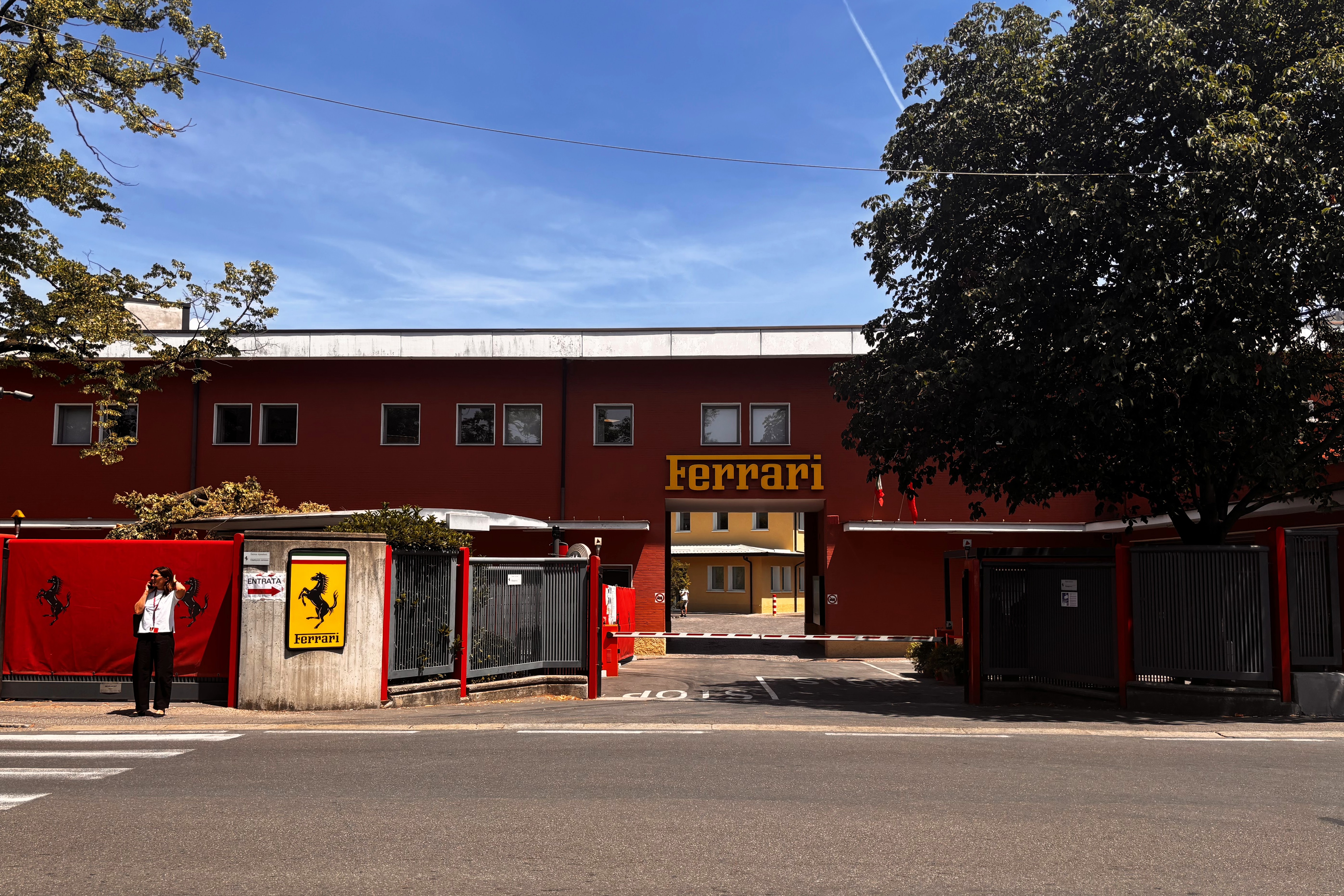
Down the street, I was reminded of those beginnings again at the famous entrance to the Maranello factory, behind which so many legendary machines have been built. The complex sits only a short distance from the Fiorano test circuit, where Michael Schumacher and Rubens Barrichello once spent long days developing the cars that would dominate Formula One.
Back in Modena, I visited the other half of the Ferrari story at the Museo Enzo Ferrari. The preserved birthplace and workshop contain Enzo Ferrari’s first office and trace his journey from racing driver and team founder to automobile manufacturer.


The contrast between the company’s beginnings and what followed is striking. Alfa Romeo racing cars from Scuderia Ferrari’s earliest years share the story with the F2003-GA, one of the machines from the height of the Schumacher era. The neighbouring gallery offered another view of Ferrari, presenting the cars not only as feats of engineering, but as cultural objects associated with names such as John Lennon and Mick Jagger. The Modena museum was created around Enzo Ferrari’s birthplace and now uses its exhibitions to explore both his life and Ferrari’s broader cultural legacy.

There is a uniquely humbling feeling that comes from standing on the Acropolis, a place that has served purposes both sacred and military across thousands of years.
Maranello stirred something different.


The Ferrari museums represent the dreams of everyone who grew up engrossed in motorsport, chasing the thrill of the racetrack and imagining what it might feel like to achieve racing glory. They tell the story of people continually trying to build something faster, more advanced and more capable than anything that came before.

At Maranello, history is not ancient and still. It is mechanical, competitive and alive, a history of greatness built around the importance of the race car.
Thank you for this post. For any car person, this is a spot in heaven, pole position of course!
Good stuff!!
It was like reaching racing heaven, and all the speedy saints were there.
Awesome recant of your visit and memories. So much history. We have this dining place here in NH USA called Tuscan Village and when they do an imported car show it is the only time I get to see beauties such as these and not the race cars just the top end sports cars or what I call them.
If I lived in NH, I would be a regular at Tuscan Village. Great that they bring some Italian exotics.
Very beautiful spot to live, dine and shop the cars bring me.