
By 1976, America had been told to slow down.
The 55 MPH national speed limit was supposed to save fuel, calm the highways, and make the country behave. ‘The Gumball Rally‘ heard all that, rolled its eyes, dropped the clutch, and raced to California.
The plot is wonderfully simple. A group of eccentric gearheads gather in New York City, rip the rear-view mirrors off their cars, and race coast-to-coast to Los Angeles. No prize money. No noble cause. Just ego, machinery, and a middle finger aimed at the 55 MPH speed limit.


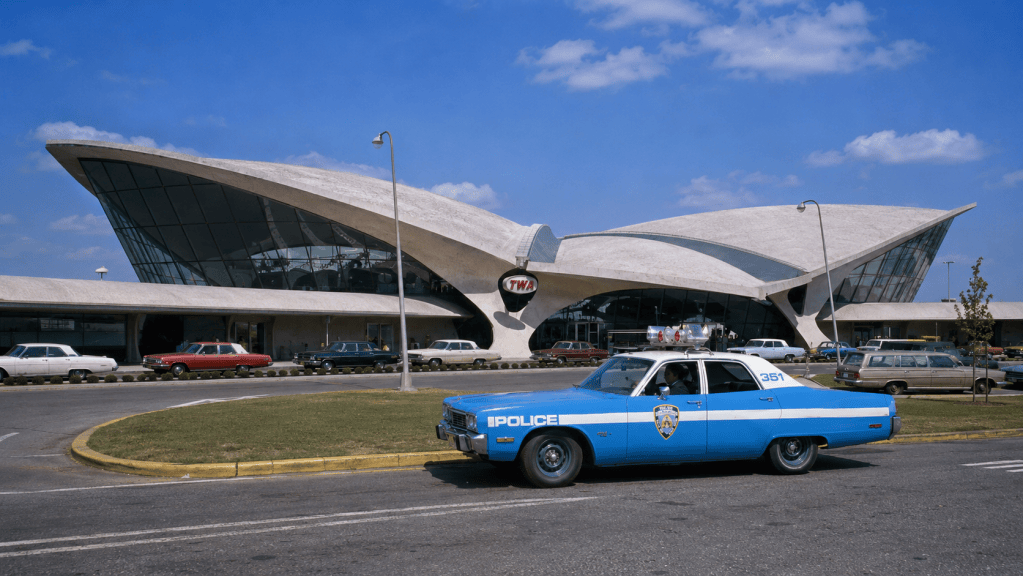
Right away, the movie feels different from its contemporary ‘Cannonball!‘, which has a meaner, more dangerous edge. Instead, ‘The Gumball Rally‘ plays like a polished caper flick. It is cleaner, brighter, and much better looking cinematically. Those exterior shots of NYC when the race begins are fantastic, with the cars slicing through Manhattan when the city still looked raw, dirty, and alive. Even the airport scenes have style, filmed at the swoopy old TWA Terminal at JFK, a Jet Age cathedral that makes everyone look cooler just by walking through it.
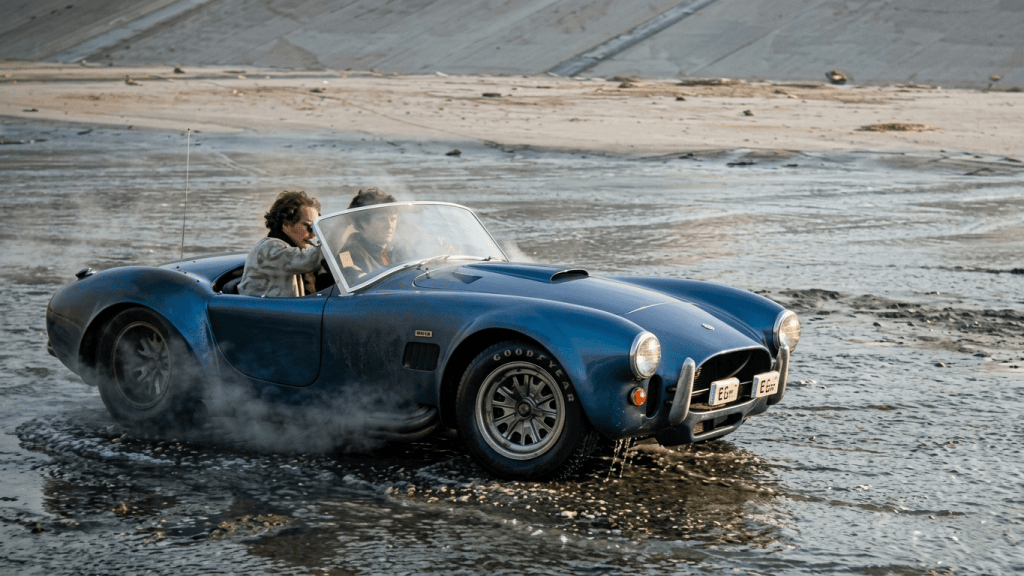
Michael Bannon, played by Michael Sarrazin, is the anti-authority leader. But his real identity is tied to his Shelby Cobra 427. Light, fast, and totally uncivilized, the Cobra is the perfect weapon for declaring war on catalytic converters and the 55 MPH speed limit. Bannon is more of a country-club rebel than a real road warrior. Still, the movie plants its flag as a post-oil-crisis manifesto with side pipes.
Raul Julia’s Franco Bertollini is pure Italian lover-racer caricature, but the Ferrari 365 GTS Daytona gives the stereotype horsepower. White silk scarf, outrageous hand gestures, flirting with every pretty woman; the whole thing should be unbearable, but Julia has enough charm to make the character breathe. The Ferrari team has every advantage, which makes them fun to watch but hard to root for.

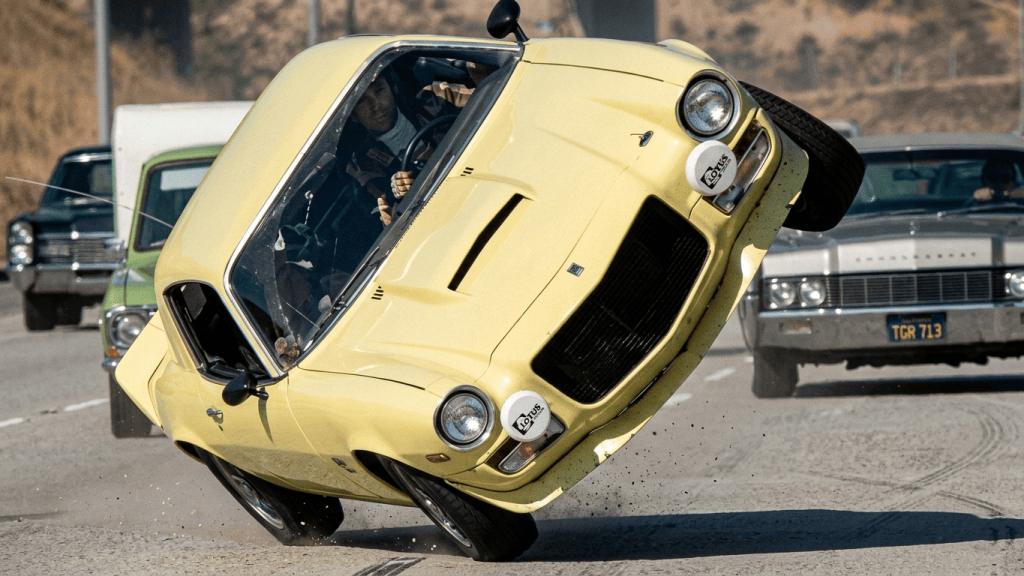
Gary Busey’s Gibson and Ace “Mr. Guts” Preston bring the southern-fried flavour in their 1970 Chevrolet Camaro Z/28. No European elegance, just bravado and Detroit muscle. These good-old boys are introduced as thrill-seeking stunt drivers on the short-oval circuit. They’re a reflection of parts of America that still exist today.
Then there’s Avila, played by Wally Taylor, in the Dodge Polara Police Cruiser. The fake cop car is a gimmick, a clever one, but still feels like the team is cheating. They turn on the lights and siren, and everyone moves out of their way. Even the racers comment about it feeling too easy. Partnered with Kandinsky, Avila is the only black man in the movie. But he has a real shot in the race, not just parked in the background as 1970s diversity furniture.

The actual villain is Roscoe, the cop trying to stop the race, but he’s more comic relief than a threat. That is where ‘Cannonball!‘ had the stronger centre of gravity. David Carradine brought danger and damage. He looked like the road had eaten part of him. ‘The Gumball Rally‘ has terrific cars and funny teams, but it lacks that road prophet, reeking of gasoline and burned rubber, making the madness feel personal. Bannon has a bargain-bin Peter Fonda vibe to him, just without the street cred.
Still, ‘The Gumball Rally’ works. It is a shiny, silly, beautifully filmed argument against boredom. Fast enough to kill you, slow enough to make you think you’re safe? That line says everything. In 1976, 55 MPH was the enemy. This movie was the getaway car.