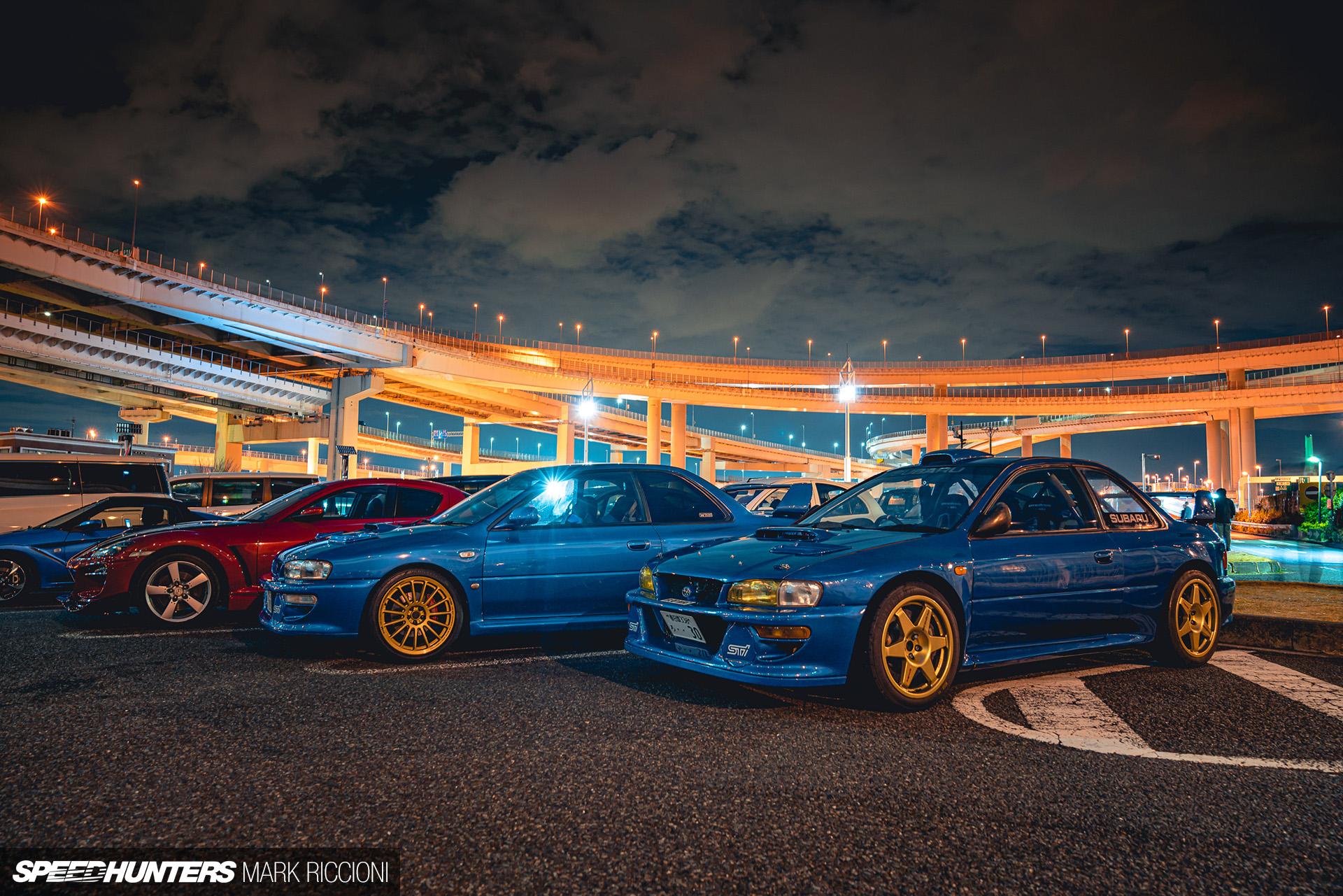
When Daikoku Parking Area opened beside Yokohama Bay Bridge in September 1989, Japan’s economy and auto industry were running at full boost. Nissan had just unleashed the R32 Skyline GT-R, Mazda introduced the Miata, and Honda’s NSX was waiting in the wings. Yet Daikoku was not built as a shrine to horsepower. It was an expressway rest area with vending machines and dramatic waterfront views, initially popular with couples on late-night driving dates. Then the gearheads discovered it.
Daikoku is enormous, accessible from several expressways and isolated from residential neighbourhoods inside Yokohama’s industrial port lands. Its towering highway ramps formed a concrete car-coliseum where exhaust notes echoed across Tokyo Bay before drivers disappeared onto the Wangan.


So, why doesn’t Toronto have a place like this? The GTA has a huge population of car enthusiasts, oceans of asphalt, and a history of automobile manufacturing. In the summer months, muscle cars, imports, lowriders, classics, tuners and trucks emerge every weekend in sufficient numbers to fill several convention centres. Yet there is no permanent place where Toronto car culture naturally converges.
The regular Friday night meet on Financial Drive comes closest. Hundreds of cars gather at the west-end spot between Highways 401, 403 and 407. Police and property owners are quite tolerant of the crowd —until some goof does a burnout, two-step or otherwise demands official attention. But Financial Drive is just an ugly suburban strip-mall parking lot. Despite how fondly gearheads remember the car meets at La Paloma in Woodbridge, it was no different. There was no glorious automotive architecture—just gathering places, not destinations. Daikoku is a cathedral by comparison.

The closest thing Toronto has which compares to Daikoku P.A. is actually under the Burlington Skyway. The bridge stands on industrial land, has dramatic views, highway access and no residential neighbours. Cars can gather and make a little noise without keeping families awake late at night. And since it’s public land, gearheads aren’t hogging valuable shopping-centre parking spaces. But there’s the catch—it’s under a bridge! There’s no diner, gas station, washrooms or vending machines.


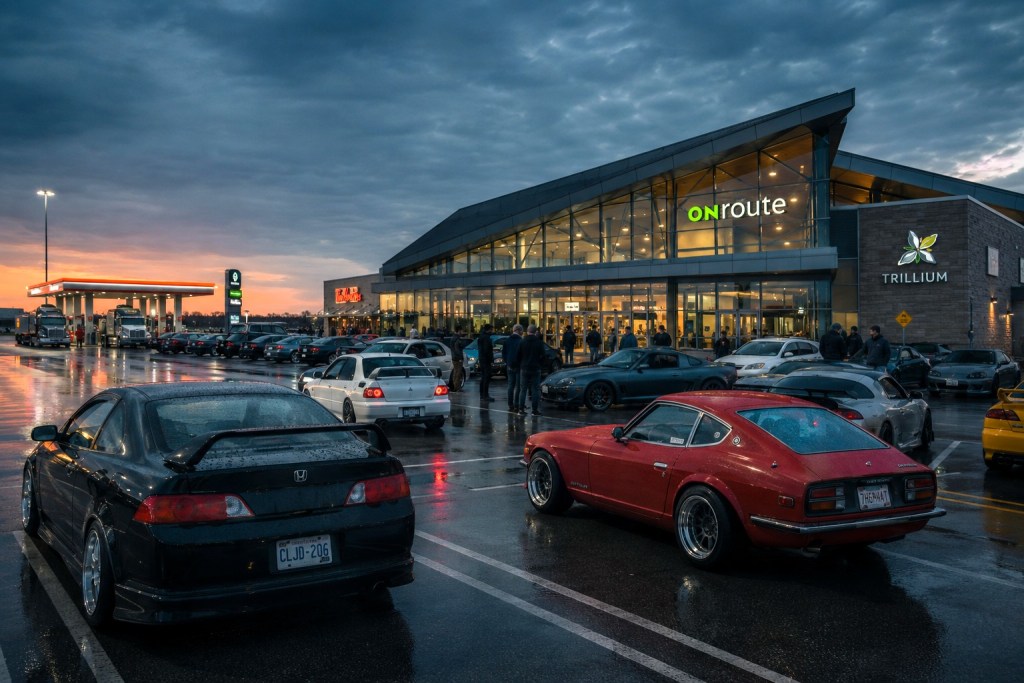
The closest structural equivalent to a local Daikoku would have to be an ONroute, one of those sprawling service plazas beyond the city limits. With highway access, washrooms and steady supplies of gasoline, nicotine and caffeine, all the ingredients are there. But Ontario’s twenty-two ONroute locations are remote rest stops designed to keep travellers moving, essentially drive-thru fast-food joints for cars. A large gathering of gearheads would almost certainly be viewed by management as an obstacle to customer turnover. One complaint about noise, loitering or trespassing, and the OPP would have a field day turning the parking lot into a roadside ticket office.
Toronto could create its own Daikoku tomorrow. The land exists. The highways exist. The enthusiasts are already here. But the moment a couple hundred cars begin gathering regularly, somebody would call it a nuisance, somebody else would call it a liability, and the police would be sent to scatter everyone before the place developed a culture of its own. In Japan, Daikoku became legendary because it was allowed to grow. Toronto would salt the land before anything could take root.