The 51st annual Toronto International Film Festival reached its final weekend on Saturday night, September 19, 2026, after 11 days of screenings, premieres and red carpets featuring 294 films from around the world.
Hundreds of thousands of moviegoers flooded downtown Toronto, while more than 800 actors and filmmakers appeared at nearly 100 red-carpet events. Among the festival’s biggest crowd-pleasers were Peter Farrelly’s ‘I Play Rocky’, which finished runner-up for the People’s Choice Award, and Sung Kang’s car-culture drama ‘Drifter‘, which made its world premiere at TIFF.


TIFF’s big Saturday night belonged to ‘Villeneuve: The Rise of a Legend’. The movie played twice, almost simultaneously. The 6:00 pm screening at the Princess of Wales Theatre was introduced by director Yan Lanouette Turgeon, who then had to hustle down the street for the 8:30 pm red-carpet gala at Roy Thomson Hall, where the stars, cameras and full TIFF circus were waiting.
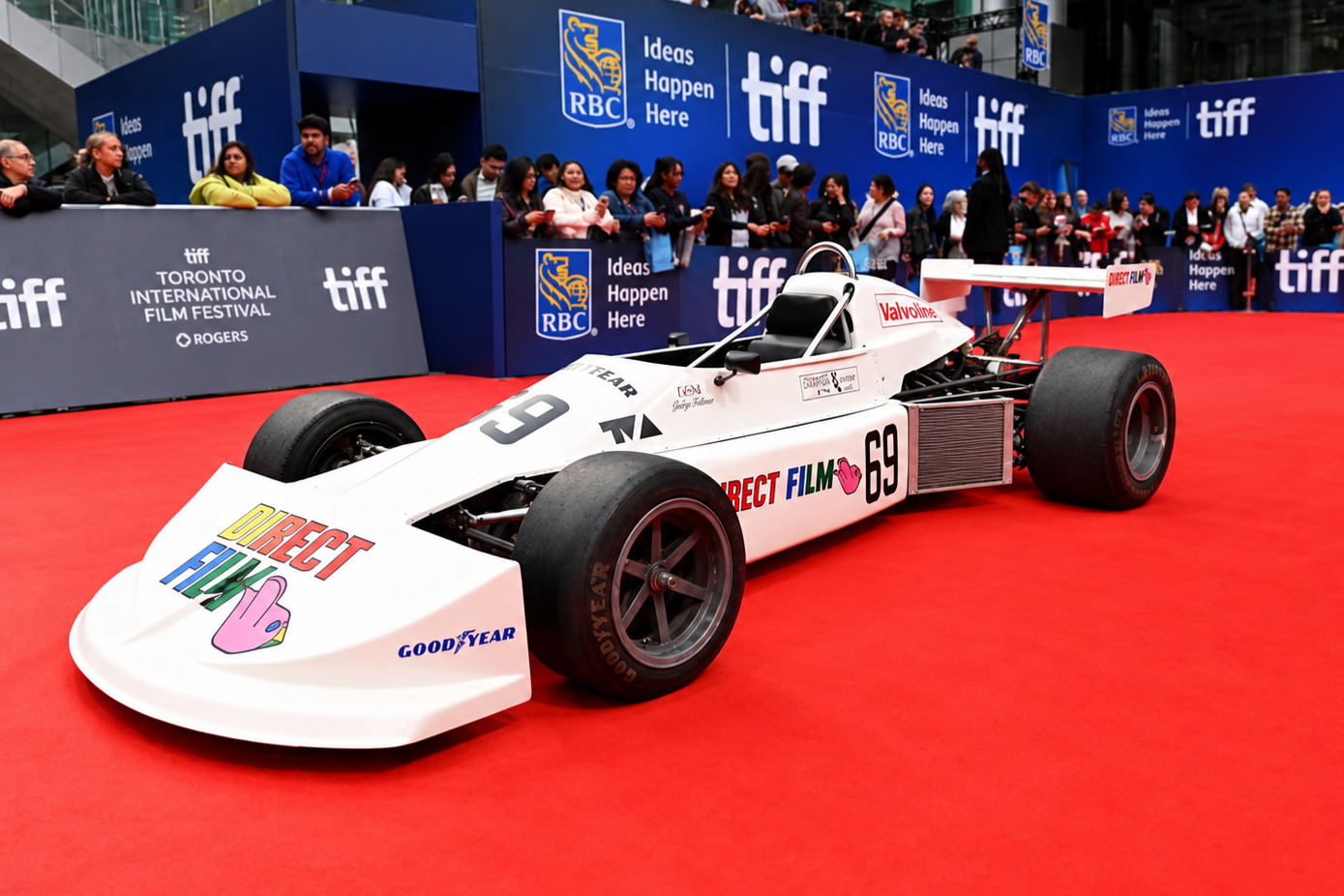
Meanwhile, the entire Demaras Racing family was wandering around downtown looking for a race car. Surely the producers of a movie about Gilles Villeneuve would bring something from his racing career to the premiere. A Ferrari 312T4? A Formula Atlantic car? Anything with slick tires and wings would do.

We searched around Roy Thomson Hall and neighbouring David Pecaut Square, then checked outside the Princess of Wales Theatre in case Gilles’ famous No. 69 Direct Film March-Ford was somehow boulevard parked at a meter on King Street. No luck.
Turns out the race car was there the whole time, hidden behind the red curtain at the Rogers Red Carpet stage. We had stood right in front of it without knowing! As showtime approached, we gave up the hunt and scurried across King Street quicker than a pigeon chasing a French fry.


The Princess of Wales Theatre is a spectacular place to watch a movie about race cars. Opened in 1993, the 2,000-seat theatre has red velvet seats, sweeping balconies and an old-world feel despite being barely three decades old. Row Q in the Dress Circle offered a great view of both the giant screen and the Frank Stella artwork surrounding what would normally be the stage.
The place feels almost absurdly upper-class for the story it was about to tell. Gilles Villeneuve was a working-class mechanic from Berthierville, Quebec, who went from racing snowmobiles in the freezing cold to Canadian open-wheel champion, then all the way to Formula 1.
No family fortune. No European pedigree. Just talent, mechanical ability and an unreasonable belief that he belonged at the top.

‘Villeneuve: The Rise of a Legend’ follows Gilles through those early years, long before the red Ferrari made him famous.
He first became a champion on snowmobiles, where sliding sideways was simply part of going fast. That loose, aggressive style followed him into race cars. Gilles would rotate the car early, get it pointed toward the exit sooner and jump back on the throttle while everyone else was still trying to make the corner.
But the real story is his self-belief. Gilles doesn’t merely hope he will become a professional racer. He seems absolutely certain of it. That certainty is so powerful that he is willing to gamble almost everything he owns, and almost everything his young family owns, on the belief that eventually the rest of the racing world will figure out what he already knows.


Racing has never been a cheap sport, and in Gilles’ era the road toward Formula 1 was still largely built for people with money, connections or both. Gilles had neither.
He wasn’t born into the motorsport establishment and there was no rich father writing cheques behind the scenes. So he substituted ingenuity for money. He fixed things himself, borrowed what he could, hustled for sponsors and drove hard enough that people eventually had no choice but to notice him. The film repeatedly puts Gilles against a system where the rich guys already have the cars, the transporters and the connections. His answer is to beat them anyway.

Of course, there is another way to look at all this: young Gilles could be viewed as a real asshole. He was already a husband and father, yet instead of building stability for his family, he sold the house and moved Joann and the kids into a motorhome so they could follow the racing circus around Canada.
Decades later, Jacques Villeneuve was brutally direct about what that obsession cost the family. Asked about his father’s absence in a recent interview, Jacques said, “Well, he wasn’t there at all.” He added that this was more normal at the time and should be judged in that context. Gilles may have been the one strapped into the cockpit, but Joann and the kids were taking the gamble with him. Without their willingness to live with that instability, there probably is no Gilles Villeneuve story.


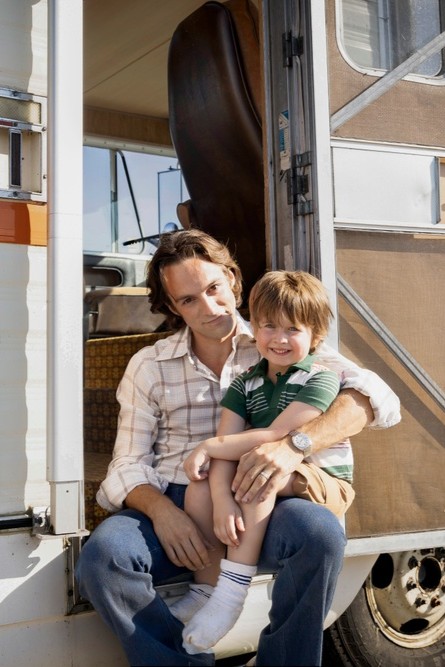
We follow him from snowmobiles to Formula Ford and then Formula Atlantic, a series Gilles becomes convinced can somehow be his doorway to Formula 1 even though it sits far outside the traditional European ladder.
Everything builds toward Trois-Rivières, where visiting Formula 1 drivers enter the Formula Atlantic race and Gilles gets the chance he has been waiting for. He doesn’t merely beat them. He embarrasses them by 10 seconds. The victory becomes the dramatic high point of the movie because suddenly this crazy plan works. But hindsight plays a dangerous trick on us. We already know Gilles makes it. That makes selling the house look visionary instead of reckless. Change the ending and this could just as easily have been the story of another racer who risked everything chasing a dream that never came true.

Then Ferrari enters the picture, and something strange happens to the movie. Gilles has finally reached the summit, yet anyone who knows his story can feel the temperature drop. The brighter his career becomes, the darker the film feels, because now we know the clock is running.
The filmmaker foreshadows this when Enzo Ferrari is introduced. He’s at home, waking up in his silk pyjamas, and on his bedside table is a framed photo of himself holding his infant son Dino, who died tragically at the age of 24. Soon another young man will enter Enzo’s life and become deeply important to him. For Gilles, arriving in Modena proves that every crazy decision was worth it. For the audience, it is brutal dramatic irony.
His dream has finally come true, and we know that means the end of his story is getting closer.


On the taxi ride downtown, Daniel mentioned reading that Jacques Villeneuve had already seen advance footage from the movie, and Jacques had said, “I was in tears, it was so poignant.” Jacques grew up inside this story. Sure, he’s an Indy 500 winner and F1 World Champion. But if two minutes of film punched through forty-plus years of memory, director Yan Lanouette Turgeon had clearly tapped into something real.
Compared with ‘Drifter’, which was greeted with polite applause for a first-time director who probably could have carved a killer 90-minute movie out of all that footage with a sharper editor, ‘Villeneuve’ was different.
The Princess of Wales crowd cheered and applauded right through the credits. By then the director had already zipped across the street to the gala, leaving behind the real target audience: gearheads in Players Forsythe CART jackets, old racing shirts and Formula 1 team hats. They laughed at the unbelievable parts, like Gilles selling the family home to go racing, because somehow the most ridiculous stuff was true.
And while this Canadian production obviously doesn’t have the mountains of money behind Stallone’s ‘Driven’ or Brad Pitt’s ‘F1’, that barely matters. Those vintage race cars on screen look real because they are real, and the movie is better for it.
‘Villeneuve’ isn’t good for a Canadian movie. This Canadian movie is good.