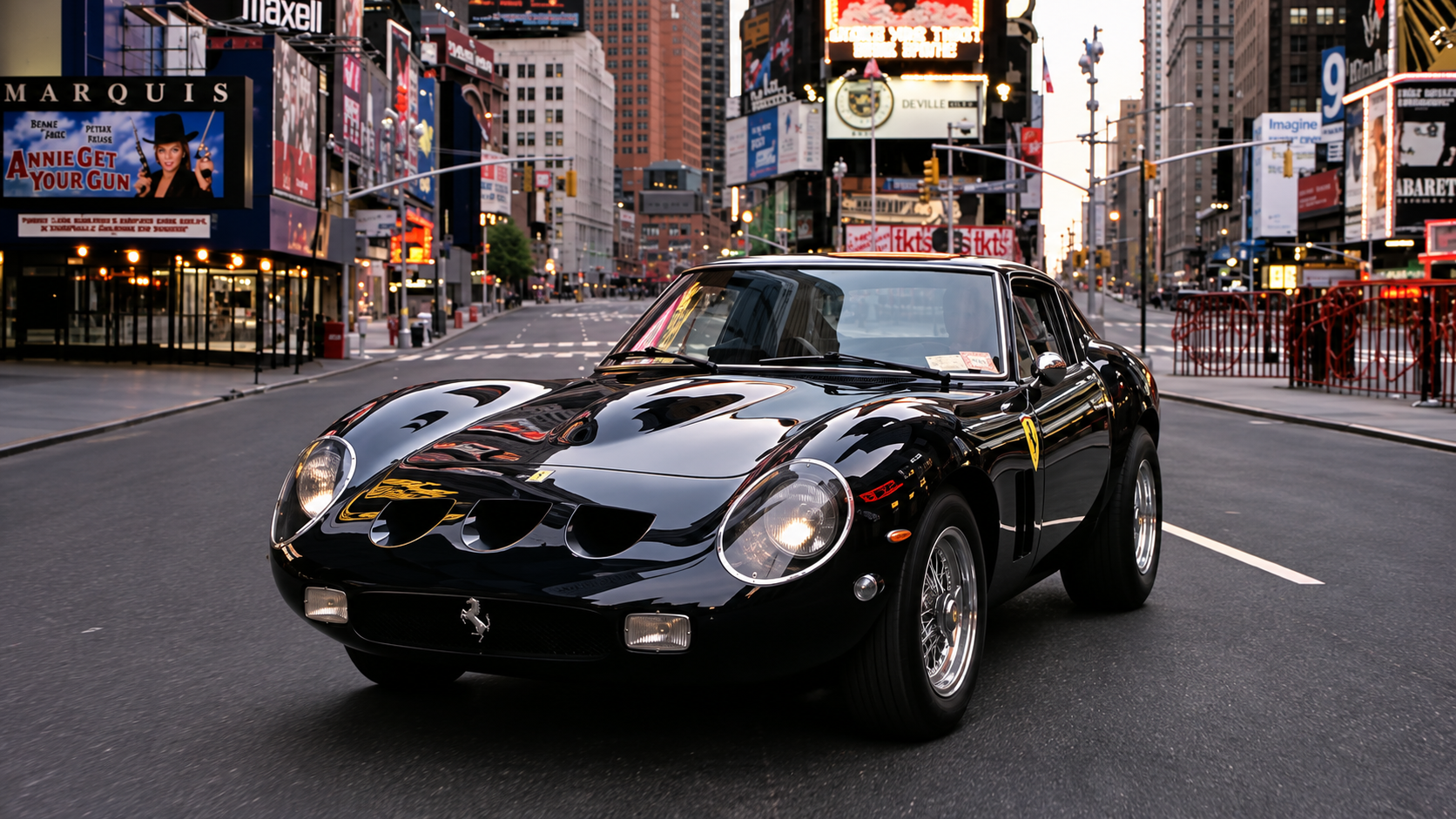
Remember that scene in ‘Vanilla Sky’ when Tom Cruise is driving through Manhattan in his Ferrari GTO, makes it to Times Sq. and finds it completely abandoned? It didn’t look like a bomb went off or anything; just that all the people were gone. The first time you see the movie, it’s not immediately obvious that it’s a dream sequence. It’s more like a dream come true.
Early morning, quiet Sunday, no pesky pedestrians around. Just you, the GTO and the wide-open boulevard. It could happen.


After watching this YouTube video from Architectural Digest, you’ll see that the dream is over. No more cruising down Broadway through Times Sq. Maybe it had become more of a nightmare for motorists and pedestrians alike. As New York architect Michael Wyetzner explains, sections of Broadway were converted from roads into public walkways, spaces designed for pedestrians.
The video begins in Times Square, where the competition for space had no winners. Cars couldn’t cruise through the intersection because pedestrians would jaywalk and interfere with traffic. Surely the enormous crowds were frightened by the huge numbers of taxis, trucks and cars all jockeying for limited space. Throw some cyclists into the mix, and it was a recipe for disaster. The area was never designed for this kind of density.
A 2009 experiment closing Broadway between 42nd and 47th Streets to car traffic produced interesting results. Fewer pedestrian injuries and, more importantly, increased revenues for local businesses thanks to greater foot traffic. Permanent plazas followed in 2014.
In nearby Herald Square, planters and café seating created a more neighbourhood-oriented gathering place. Wyetzner also explains ‘shared streets’ designed to slow motorists. Not through signs and speed bumps, but actual changes to the design of the road: adding curves, using cobblestone paving and, inexplicably, removing curbs. The video also explores the broader Broadway Vision plan, which aims to connect public spaces between Union Square and Columbus Circle.


Despite Wyetzner being a New York boy who grew up on subways instead of Subarus, the architect doesn’t resort to inflammatory anti-car language, like calling cars metal murder machines that belch toxic gases, so common in Toronto politics. Instead, he explores designs that allow pedestrians, cyclists and drivers to coexist. Yesterday’s article, “Segregation is the Solution: Toronto’s Traffic Issues,” proposes that cars, bikes and pedestrians should be separated. Here’s a reasonable alternative theory.