
For decades, lucky Canadians would celebrate their 16th birthday by getting their driver’s license (and a car if they were lucky). That piece of plastic gave the bearer the power of independence. I remember the day I got my license like it was yesterday. It was a symbol that childhood was behind me in the rearview and adulthood was now visible through the windshield, infinite roads ahead of me to explore.
There’s an old article on CNN called “Back when Owning a Car made you ‘a god’” that despite being written 10 years ago, and describing car culture 50 years ago, still resonates today. I found it surprising that I held the same values as those old-timers did, back in the day. When having a car really meant something. Here’s an excerpt.

There were two distinct groups of guys in high school back in the ’60s: Those who had cars, and those who didn’t. For the sake of your reputation, you didn’t want to be the kid without a car., says Brian McDaniels.
The car was the center of his social life. It was where he listened to his local radio station’s Top 40 hits for hours on end, where he ate countless meals with friends at the drive-thru, and where he had his first date with the girl of his dreams, the woman he eventually married.
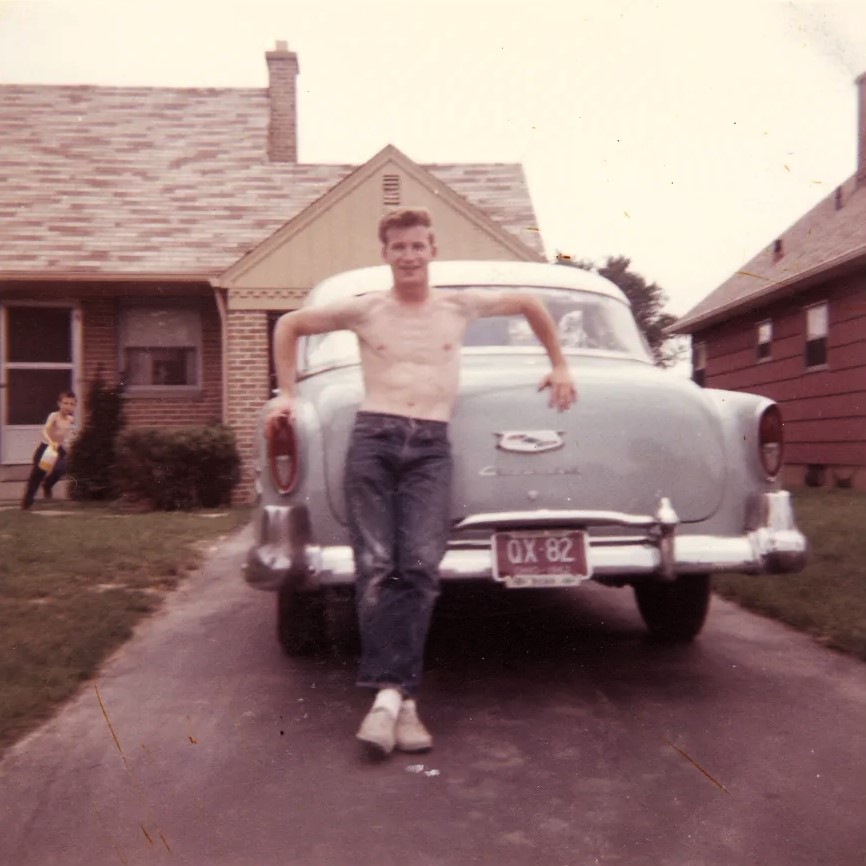
“When I got the car, it was really hard to describe the pride,” he McDaniels says. “To work for so long and then to get it. There was a certain culture when you got the car, you spent time with the car.”
It was a big deal for a teenager to actually own a car in the 1960s, as nearly 79% of American households owned fewer than two vehicles. Cars were the ultimate status symbol that set teens apart from their friends.


“Back then those who had cars were gods among people,” he says. “There was a lot of envy and admiration for those who had cars. People gravitated to those who had cars, and you’d want a car to have that status.” Freedom, independence, love and popularity were just some of the abstract ideas that teens pinned onto car ownership.
Jareen Imam, CNN
August 25, 2014
Car culture is my connection to other generations. I had the same coming-of-age moments as my parents, my teachers and mentors. It helped me relate.
When I was a teen in the 90s, the muscle cars were long gone. Yet we still drove our unique rides, blasting music through the car stereo, and hanging out in drive-thru parking past midnight. In your car you were the boss. Deciding where to go, what to listen to and who’d be lucky enough to cruise with you. Our cars gave us independence. And it didn’t matter what you drove…if you had a ride, you ruled the neighborhood.


The shared experience with previous generations has fostered my love for car culture. When I look back at motorists of the 50’s and 60’s, I feel totally jealous! They weren’t stuck with corporate chain-stores we have now. Those independent diners, drive-ins and even gas stations had character. They were originals.
Sometimes I worry that I’m part of the last generation to love cars, experience the pride of ownership and freedom cars provide. Seems the next generation is more interested in the latest iPhone and social media likes than the ‘street cred‘ of having your own car. Yes, driving a car replaces virtual interaction with actual experiences. Getting out of the online cocoon and having a real adventure exploring the city, meeting real people, not the artificially curated versions of humans seen on social media.
But better take your phone with you since all your music is in there and cars don’t even have CD players anymore.
Ohhh, those were the days. Analog cars were simple machines, anybody with the right tools could tear a car apart, fix whatever needed to be fixed, and then put everything together again. Working on cars brought kids closer to their dads and friends.
A driver’s license was a ticket to freedom, it was the most important document a teenager could get.
Funny story, my family belongs to the Seventh-day Adventist Church, and I spent my childhood listening to them talking about the end of the world and the second coming of Jesus. I used to think to myself, “I am so unlucky that I bet Jesus will come BEFORE I get my license”.
-“Jesus, please, could you postpone the armageddon until after I get my driver’s license and my car?” “Please”.
I’ve heard that getting a driver’s license at 16 is a uniquely Canadian / American experience. My wife tells me that in European countries with the driving age being 18, and cars being so expensive, it’s almost unheard of for a teenager to have their own car.
.
But reading your comments about Brazil make me think that she is wrong. I bet that teenagers all over the world try to get behind the wheel as early as possible. That license is important!
.
I was raised as Greek Orthodox, so I couldn’t understand most of the church service. But if I thought the end was near, I’d be praying for a rescheduling of the End Of Days for at least a week after my 16th birthday. At least let me get a weekend in there, oh Lord.
As a girl, I wasn’t quite as much into cars but the boys I dated certainly were. I now drive a sassy little Toyota Corolla hatchback which I love. What blows me away these days is that some young people are putting off getting their license. My nephew is 18 ½ and has no interest. I can’t imagine
Here’s a line I read in a similar article I researched.
.
“While the majority of teenagers who inherited and customized “hand-me-down jalopies” were young males, young females were by no means debarred from teenage automobility. Indeed, they were central to this style of youth culture. Part of teenage driving was to impress other male students about knowledge of and intimacy with car technology, but another part was to be seen cruising with a popular girl.”
.
I cannot imagine waiting until 18 for my DL. That is bonkers.
It definitely was past the time that females would have been excluded. Honestly, I was stupid enough to do a road race in the Charger to impress a boy but I backed off when I got up to 90. Not much of a risk taker back then.
You road raced a Charger…and yiu say you’re not a risk taker?
.
Yo, take a closer look in the mirror. Most people would NEVER be brave enoug to try that.
.
You got guts, lady!
Aw, shucks. I got guts! Guess that’s actually true!