
While watching the winter Olympics in February 2022, I wrote an article on about motor racing at the 1900 Paris Olympics. There was rumour at the time that electric kart racing would be added as a demonstration sport at the 2026 Los Angeles Olympics. Now, three-and-a-half years later, a fellow from France wrote to me that I’d gotten the name of the third-place finisher (in the Paris-Toulouse-Paris 1347 km Olympic Voiture race) wrong. The bronze medalist was Emile Voigt, not Carl Voigt. How odd to be debating the finishing order of a race from 125 years ago with a stranger from the other side of the world.
However, my new friend Julien lives in the town where Emile Voigt is buried, has researched him extensively, and even spoken with Voigt’s grandson. I was so glad that Julien took the time to be a guest writer for demaras.com and provided this detailed history of a legendary Frenchman.
– Chris Demaras
Émile Voigt: A Passion for Speed
– by Julien Massa (from Wasquehal, France)
Émile Voigt is a nearly forgotten adventurer of the Belle Époque, an era brimming with invention, culture, and adventure, is often remembered for its great artists, intellectuals, and pioneers. Yet, within its tapestry of illustrious personalities, Émile Voigt stands as a little-known figure whose multifaceted life journey intertwined with many of the era’s major sporting, technical, and human endeavours. Though largely forgotten today, Voigt was at the heart of significant events and developments that shaped the spirit of his time.
Early Life and Family Heritage
Born in Lille in 1871, in the shadow of the Franco-Prussian War, Émile Voigt’s early life was marked by both personal and societal upheaval. Taking the name of his stepfather—a Wasquehal spinning mill owner who contributed to the 1889 World’s Fair and passed away that same year in London—Voigt inherited both a legacy and a responsibility. At 22, following the loss of his mother, he found himself in charge of the family spinning mill, balancing business duties with his passion for sport and adventure.

Sporting Pioneer
Voigt was a keen athlete and sportsman, regularly training by cycling impressive distances such as Paris to Amiens. His competitive spirit shone early, with a third-place finish in the track speed event at the inauguration of the Buffalo velodrome in Neuilly-sur-Seine in 1892. He raced alongside contemporaries like Fernand Charron and participated in the burgeoning world of competitive cycling, helping to lay the foundation for sport as a spectacle.

Automobile Innovation and Entrepreneurship
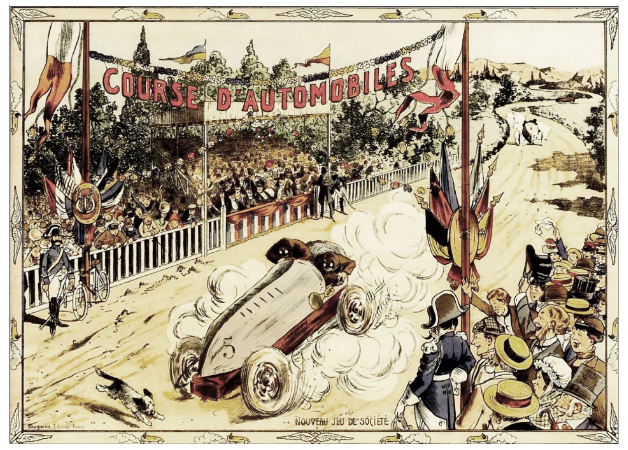
His passion for speed extended to the automobile. In 1898 he took part in the Paris-Amsterdam-Paris race, where for the first time vehicles specially designed for racing appeared. He also competed in the 1900 Olympic Games, securing third place in the Paris-Toulouse-Paris speed race, driving the very car used by Charron to win the Gordon Bennett Cup.

Motorsport Achievements and Tragedy
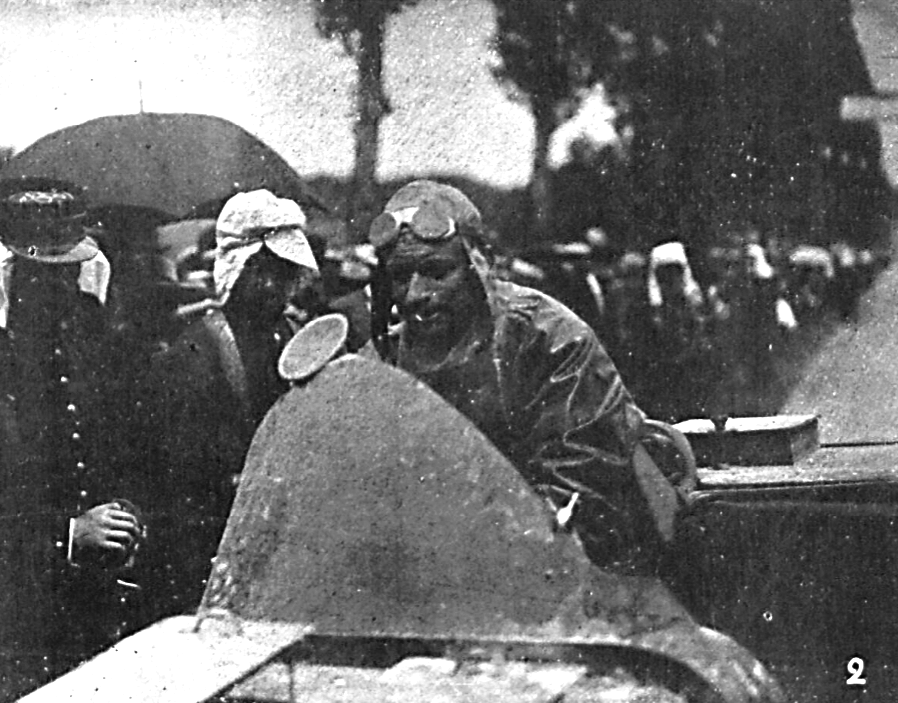
May 1903 saw Voigt compete in the infamous Paris-Madrid race, alongside legends such as Charles Rolls and Vincenzo Lancia. Finishing seventh in a race marred by tragedy—the death of Marcel Renault—Voigt further cemented his status among the elite of early motorsport. Voigt’s sporting versatility was remarkable: he was a cycle-ball player, a racehorse owner, and a member of both the Automobile Club de France and the Yacht Club de France. His broad interests connected him with many celebrated personalities of his era.
Inventor, Farmer, and Family Man
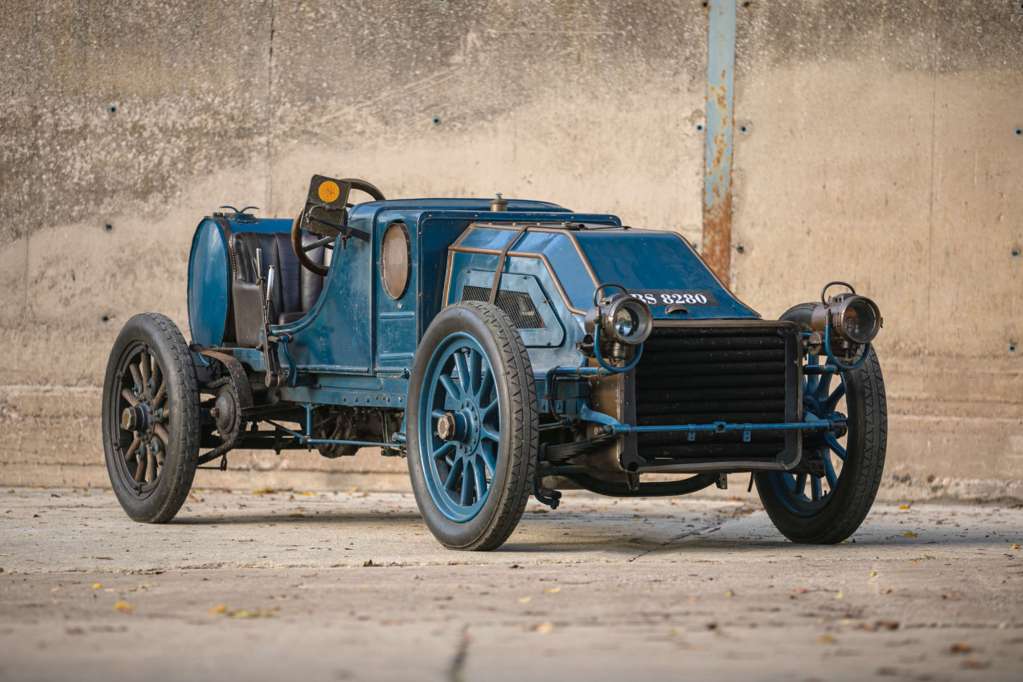
During the pioneer age of motoring, before the ‘racetrack’ had even been formulated, Emile Voigt and fellow racers Leonce Girardot and Fernand Charron were the driving force behind the world’s first automobile agency established 1898 – Charron, Girardot & Voigt, or CGV. Below is an image of their 1904 CGV 100hp Grand Prix race car.
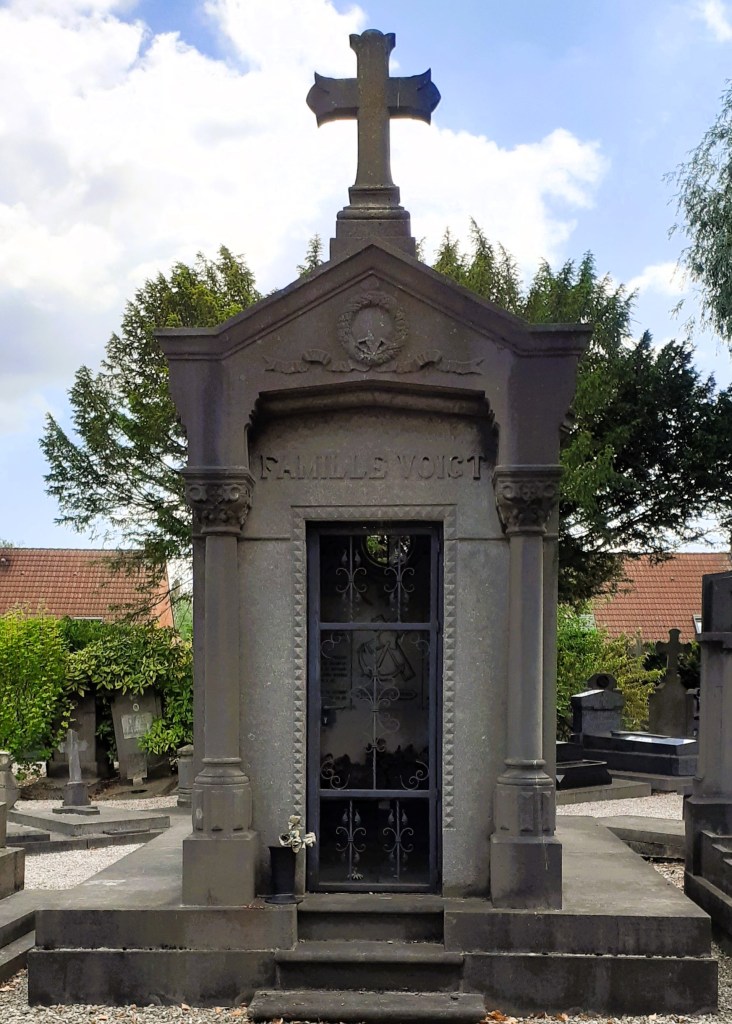
Voigt’s later years were spent in Montgaillard, where he embraced rural life as a farmer. Demonstrating his ingenuity, he designed a drilling system to raise water 25 metres on his estate, long before the arrival of municipal drinking water. He was remembered as a devoted father, accompanying his youngest daughter to school in a cart drawn by a thoroughbred horse, while using a racing car for longer trips. He died peacefully, surrounded by his grandson, Émile Vidaillac.
Conclusion
Émile Voigt’s extraordinary story is emblematic of the Belle Époque: a time of innovation, exploration, and spirited individuality. As a sportsman, inventor, entrepreneur, and family man, he participated in the great adventures of his age, leaving behind a legacy that deserves to be rediscovered. His life, rich with achievement and curiosity, is a reminder that history’s tapestry is woven as much by forgotten adventurers as by famous icons.
Great story!
Yes… full credit to Julien for a thoroughly researched , deep dive into a man who deserves to be remembered. A true adventurer.
Thank you for publishing this article. It is a recognition of automotive history and Émile Voigt.
Remember when the internet was like this? You would cross paths on the information superhighway with someone who shared an interest.
I’m very glad you agreed to write this article for demaras.com and keep the legend of Emile Voigt alive.
This is such a captivating account of a motorsports pioneer. No wonder the Fédération Internationale de l’Automobile (FIA) began as a French institution, before becoming a global one.