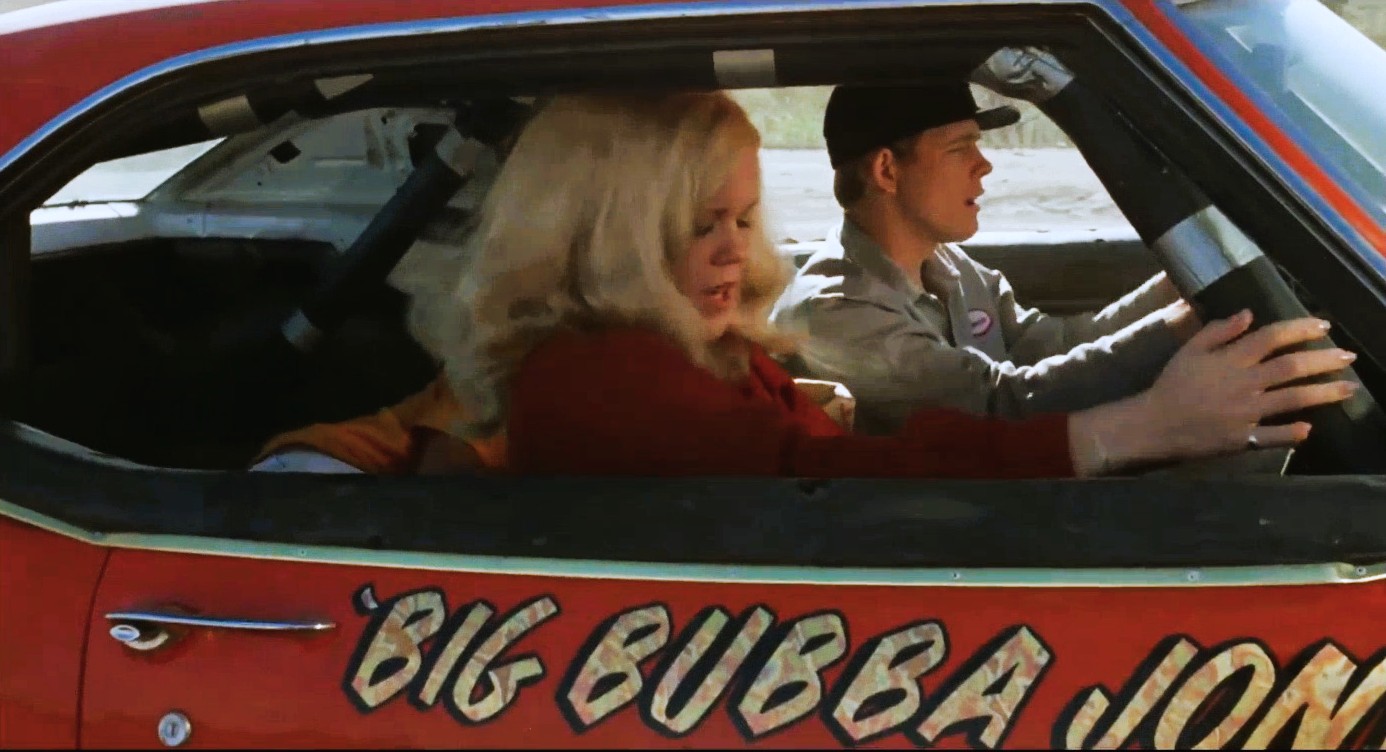
Before his Oscar in 2001 for Best Director, and long before his racing masterpiece “Rush” Ron Howard was a young actor (and former child star) looking for a way to get behind the camera instead. And car cinema played a big part. His opportunity came through Roger Corman, the famously frugal B-movie producer known for giving first-time filmmakers their start.
Back in 1976, Ron Howard was a big TV star; everyone knew him as fresh-faced Richie Cunningham on “Happy Days” alongside the Fonz.


Despite his success as an actor, Howard wanted to direct and approached Roger Corman with a script and a partial budget. Corman saw value in Howard’s rising popularity and offered him a deal: star in Eat My Dust!, a Corman-produced low-budget car-crash flick, and Howard would be given a shot at directing his own project later.
Howard didn’t take the role in “Eat My Dust!” because he loved the script, but the shrewd Howard understood the opportunity. Corman’s film school was built on proving you could deliver results with limited resources. If “Eat My Dust!” made money, Howard would earn the chance to step behind the camera.

The film “Eat My Dust!” is pure 1970s drive-in movie theater fodder. Ron Howard plays Hoover, a track rat who’s got the hots for Jane—but she’s only interested in race car drivers. To impress the pretty blonde girl, Hoover impulsively steals a Chevy Camaro stock car and takes off with Jane as the cops (including Hoover’s dad, the sheriff) try to chase them down. What passed for entertainment back in the day was a series of crashes, chases, and wild adventures as the duo pick up some friends and a radio and blast all over town. When the Camaro runs out of gas, the couple hide in a farmhouse, and even “do it” in the shower (whoa!).
There’s a famous scene in the movie where the ‘hero car’ was destroyed, but through Corman’s ingenuity, the footage was salvaged. During a chase scene, the Camaro was supposed to drive onto the roof of a shed from an elevated road. The shed was meant to collapse under the car’s weight, then the Camaro would drive off in a cloud of dust. But the stunt driver missed his braking point, and the Camaro slid across the roof before crashing nose-first into the dirt. Upon seeing the footage of the wrecked car, Corman advised the editor to use it—stopping the shot just before impact, then cutting to Hoover throwing the transmission into reverse. The footage was then run backwards, making it look like the car drove back up the shed and sped away.

Shot in 28 days—with Ron Howard’s scenes filmed in just 10 days between ‘Happy Days‘ episodes—on roughly a $300,000 budget, “Eat My Dust!” was designed to be efficient above all else. Tight budgets, quick shooting schedules, and a focus on action sequences that could be shot cheaply but still look like a million bucks on screen defined the production. By targeting a specific, eager audience—teenagers at the drive-in—the formula worked, and the movie brought in over $5 million at the box office. The strong return on investment showed that Corman was right about Howard’s ability to draw an audience.


True to his word, Corman allowed Howard to develop his own project, which eventually became ‘Grand Theft Auto‘ released the following year in 1977. While that film had a larger budget of about $600,000, its box office take of roughly $15 million was only made possible because of “Eat My Dust!” in the first place. By delivering a profitable B-movie and earning creative control and the director’s chair, Ron Howard launched his career.
Who would have thought a stolen Camaro, a busty blonde, and a deal with Roger Corman would lead to an Academy Award for best director?
With all the car shows and meet ups here in New England I don’t think car culture will disappear any time soon.
Just keeps on evolving.