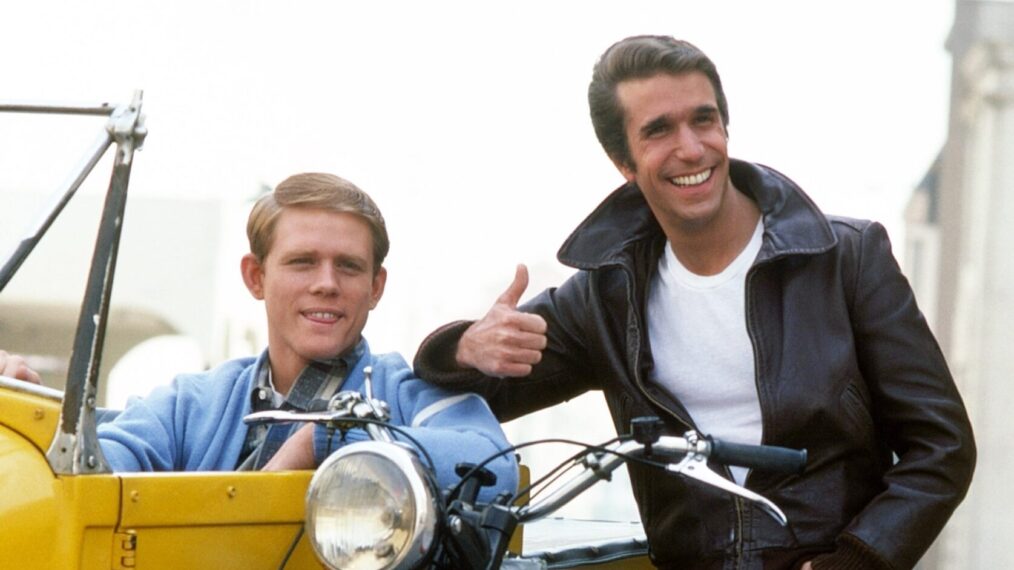
Ron Howard is one of those guys that’s been around movies for generations. Everyone has seen at least one of his films; from ‘Splash‘ (1984), ‘Backdraft‘ (1991), ‘A Beautiful Mind‘ (2001) to ‘Rush‘ (2013). A ’70s child would probably know him as Richie Cunningham from the TV show ‘Happy Days‘ as straight-laced Richie Cunningham, iconic character Fonzie’s wingman.
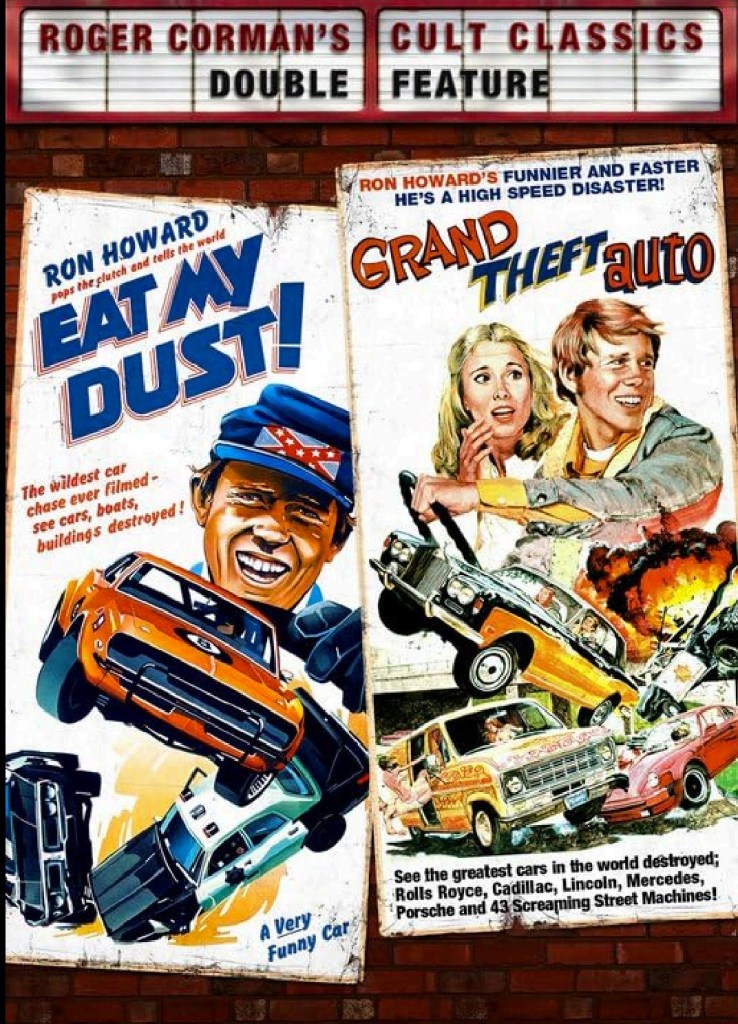
At the height of his popularity during the ‘Happy Days‘ years, Ron Howard wanted to be a director. Hollywood saw him only as TV actor, and wouldn’t give him a chance. Looking for a break, Ron Howard approached legendary B-movie producer Roger Corman. Wanting to direct his own original script called “Grand Theft Auto” young Ron Howard was given an offer. If he would agree to star in a Corman produced drive-in movie called “Eat My Dust!” then Corman would allow him to star in and direct “Grand Theft Auto“, Ever the shrewd individual, Corman knew he could leverage Howards popularity on TV into at least one money-making movie.
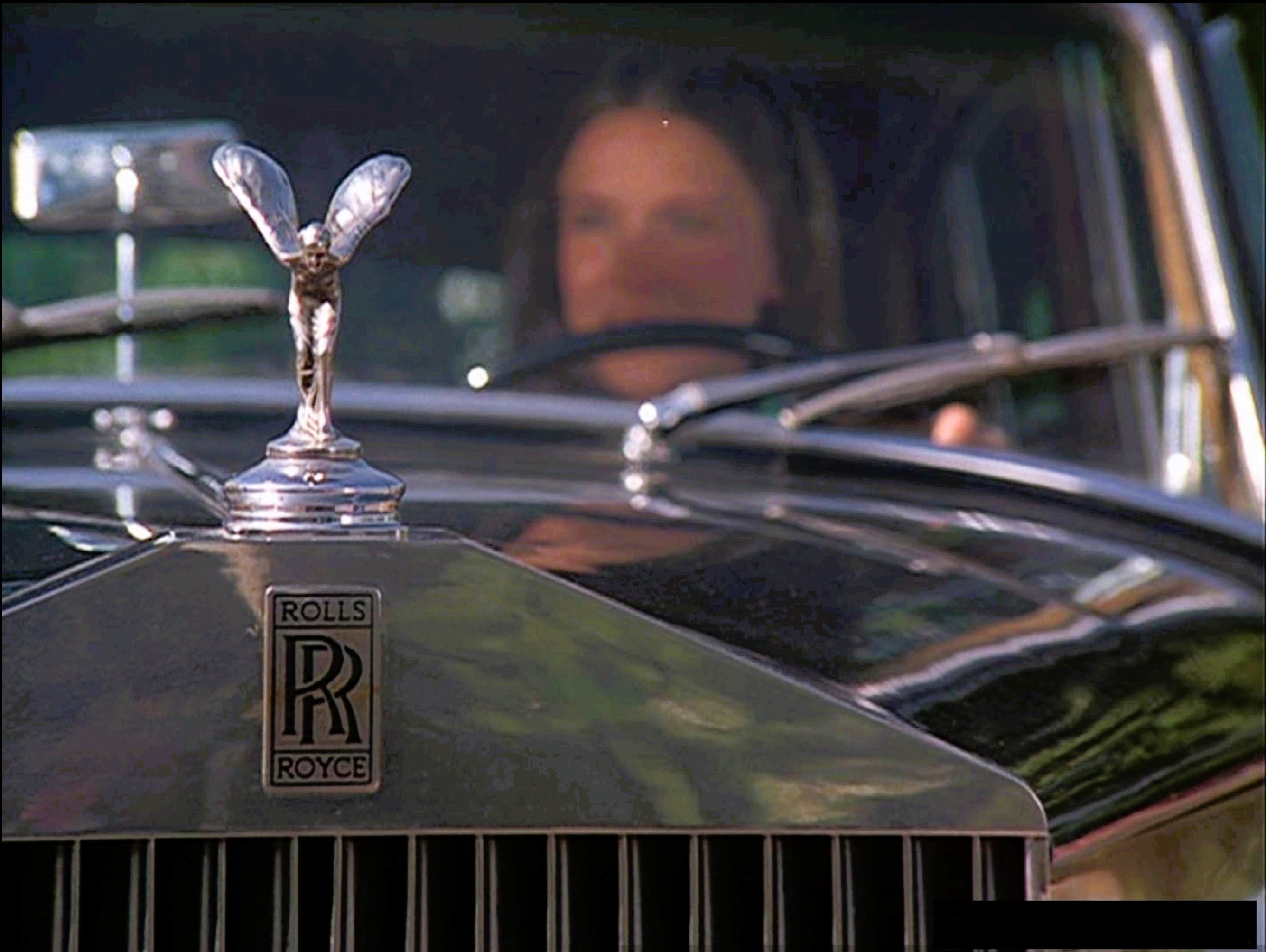
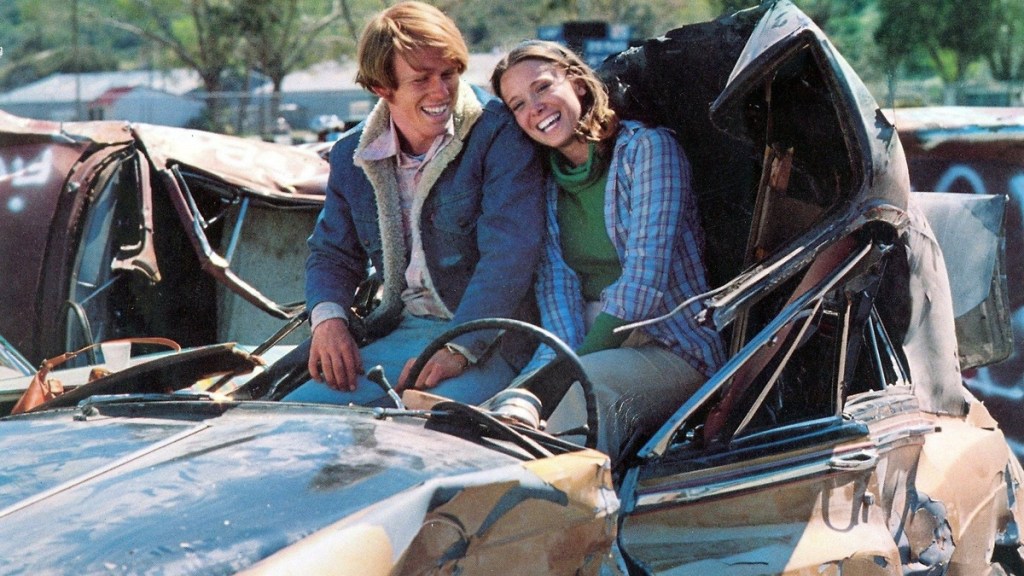
Released in 1977 “Grand Theft Auto” is car-crash cinema. It’s the story of a rich girl who steals her daddy’s Rolls Royce and runs off to Las Vegas to get married to her teenaged boyfriend, played by director Ron Howard. Her parents want her to marry the son of a wealthy family, but she rebels against her parents wishes and runs off. However, her angry parents, a jealous suitor, and a bunch of reward seekers are determined to stop her. The parents and the jilted suitor take off in hot-pursuit, determined to put a stop to the foolish shenanigans.
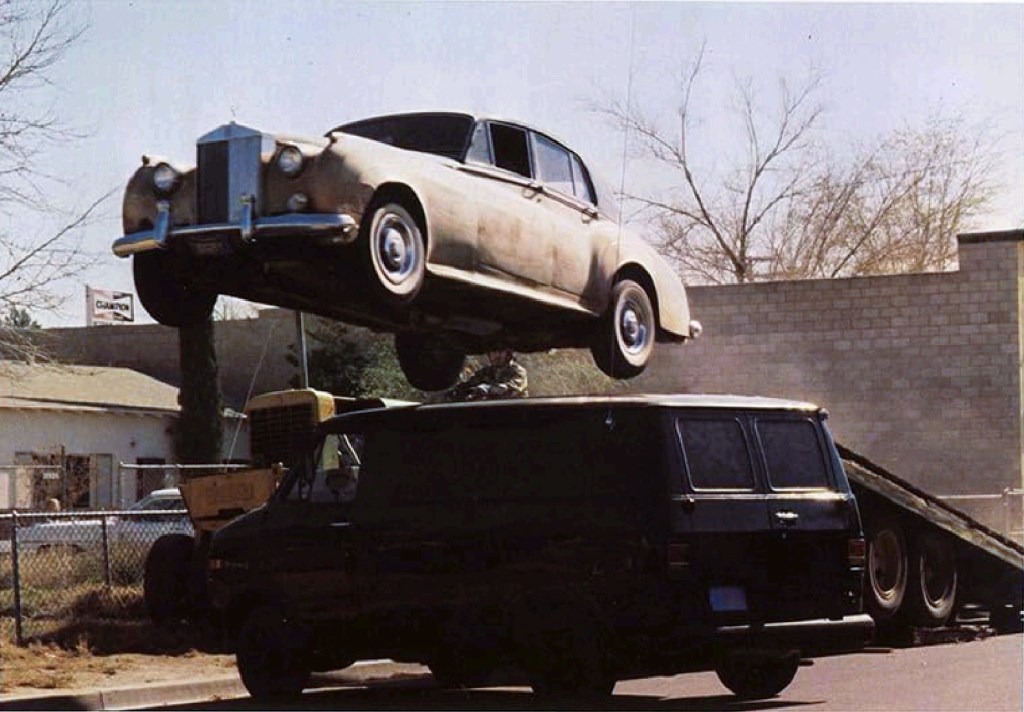
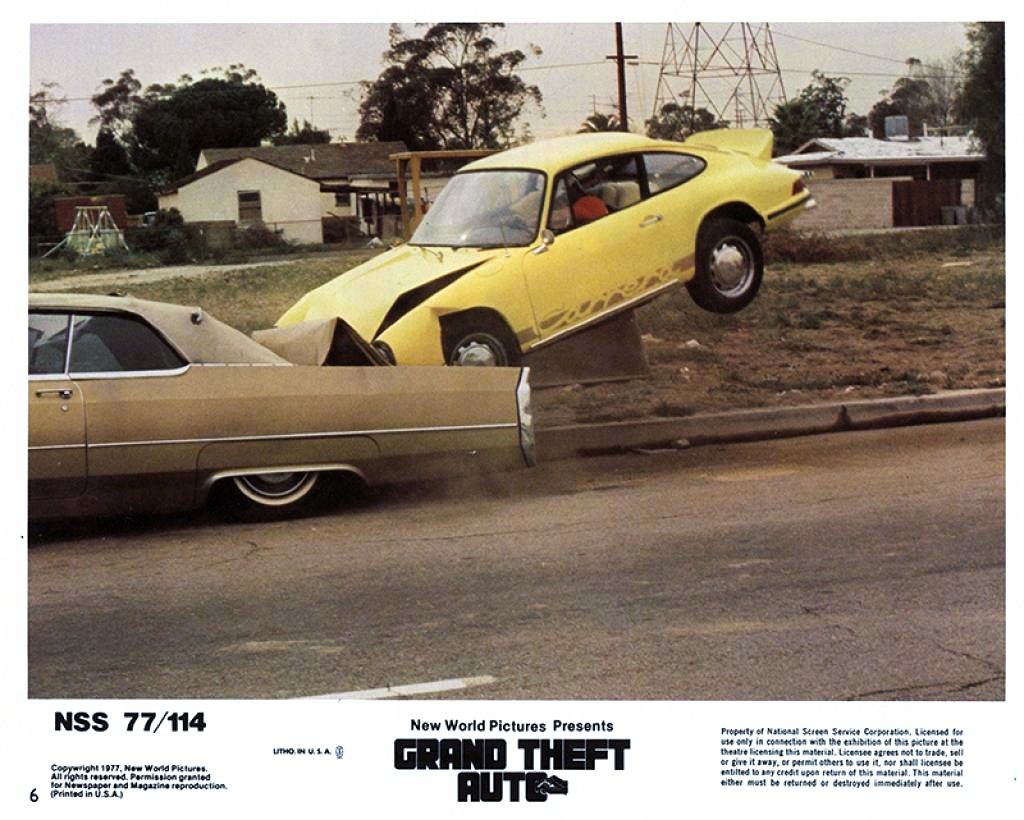
That’s pretty much it for plot, and all of that is established in the first 10 minutes. What follows is a series of chases and stunts, and more people join in to pursue the young love birds. When a big-money reward is offered to anyone who can stop the couple from making it to Las Vegas, the screen is filled with odd-ball characters trying to catch the kids. Car crashes, jumps, and exploding bridges the couple narrowly escape fill up most of the run-time. It’s arduous to watch all those classic cars get wrecked for a couple seconds worth of runtime, but it seems that’s what played at the drive-in during the ’70s.
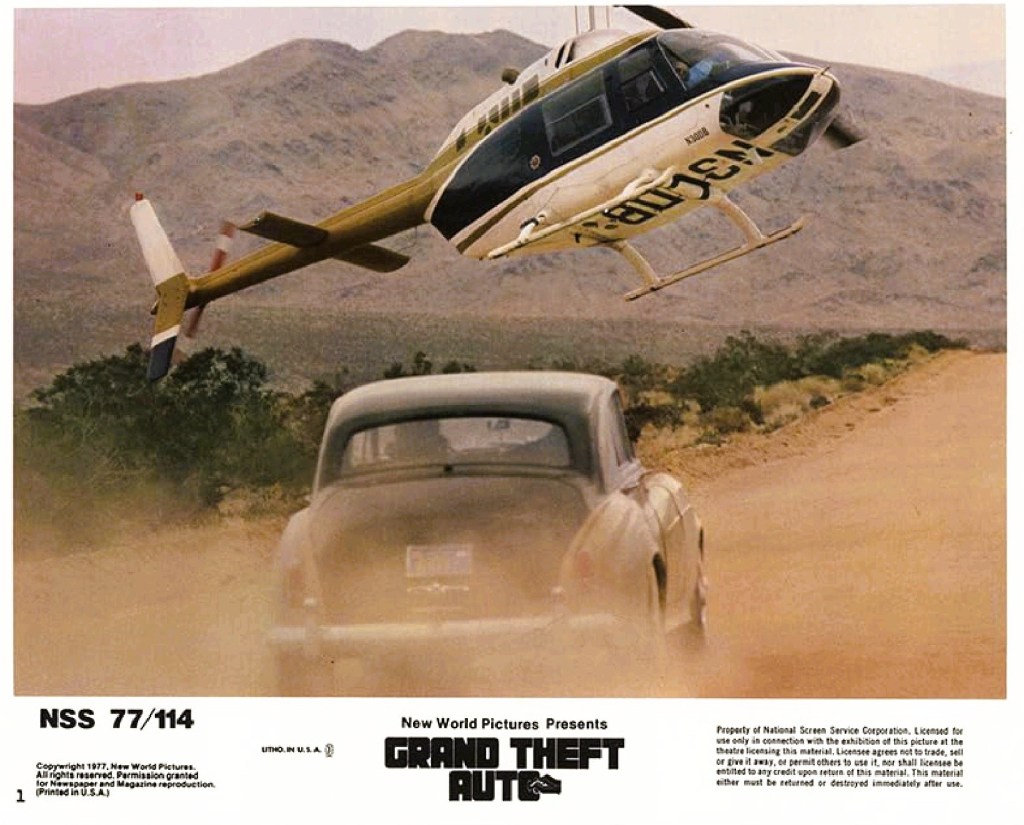
The high-point of the movie is the fame-hungry disk-jokey Curly Q Brown from the local TenQ radio station. He follows the couple through their entire journey, even hovering over their car in the TenQ helicopter like a roving reporter (the DJ is Don Steele, who also played the Race Announcer in Corman’s previous picture “Death Race 2000“). DJ Curly Q Brown has no sympathy for the couple, but just wants to keep the chase going because it’s getting him more listeners and followers. In a way, the DJ character, and the notoriety he brings the couple on the run, surely influenced the Oliver Stone picture “Natural Born Killers“. Both movies explore the media circus that follows a young couple trying to ‘escape’.
Is this movie really about the superficiality of society, showing the desperation people would go through to keep up with the gossip surrounding celebrities they only know through the media? Is it a coming of age picture, showing a young woman rebelling against the version of her life that her selfish parents have planned for her? Is it just a car crash movie where Richie Cunningham can only sleep with the pretty blonde girl if they get married first? Hard to say…
Fans of George Lucas would be certainly be impressed with his directorial debut in the 1971 futuristic film “THX 1138” with its vision of a dystopian society controlled by robot police. But watching this movie – expecting to see early moments of brilliance from the future director of “Rush” one of the greatest racing movies of all time – prepare for disappointment. This really is a bad movie with few redeeming qualities. It’s exactly the kind of crappy car-crash movie Roger Corman was making in this era. But, it did make $2.5 million on a $600K budget, and launched the career of an acclaimed director.