
This past weekend, the drive-in movie theatre celebrated its 93rd anniversary. Despite what many might expect, it was not born in the golden age of the automobile, with stereotypical tailfins, jukeboxes and teenage cruisers. The drive-in arrived before World War II, when the automobile was still becoming the centrepiece of everyday life, not yet the full-blown king of suburbia. On June 6, 1933, the drive-in theatre flickered to life for the first time in Camden, New Jersey.

The idea belonged to Richard Hollingshead Jr., a movie fan and auto-products salesman who believed people should be able to watch a film without leaving their cars. His first theatre, called Park-In Theaters, opened on Admiral Wilson Boulevard, just outside Camden. Admission was 25 cents per car, plus 25 cents per person, with no group paying more than one dollar. Opening night featured the British comedy Wives Beware, projected for an audience sitting behind windshields instead of in velvet cinema seats.

Hollingshead even patented the concept in 1933, after experimenting in his driveway with cars, ramps, a projector and a homemade screen. But the legal protection did not last. The courts later invalidated his patent, ruling that the concept was too broad to protect. Once the idea was free, drive-ins began popping up elsewhere across the U.S. The original theatre itself was far from a revered historical monument. Hollingshead sold it in 1935, and just a year later, the world’s first drive-in movie theatre was out of business, simply ahead of its time. Today, a vacant old furriers building from Zimmerman’s gives no indication what an important piece of car-culture history once stood there on Admiral Wilson Boulevard.

The drive-in movie theatre came to Canada a little later. The first Canadian drive-in did not open until after the war, when the Skyway Theatre launched in 1946 in Stoney Creek, Ontario. That timing mattered, as postwar prosperity, the growth of the suburbs and the rise of the family car created perfect conditions for this uniquely automotive night out. A drive-in was affordable, informal and wonderfully democratic. Babies could cry, kids could wear pajamas and nobody had to pretend a night at the movies was a formal occasion.
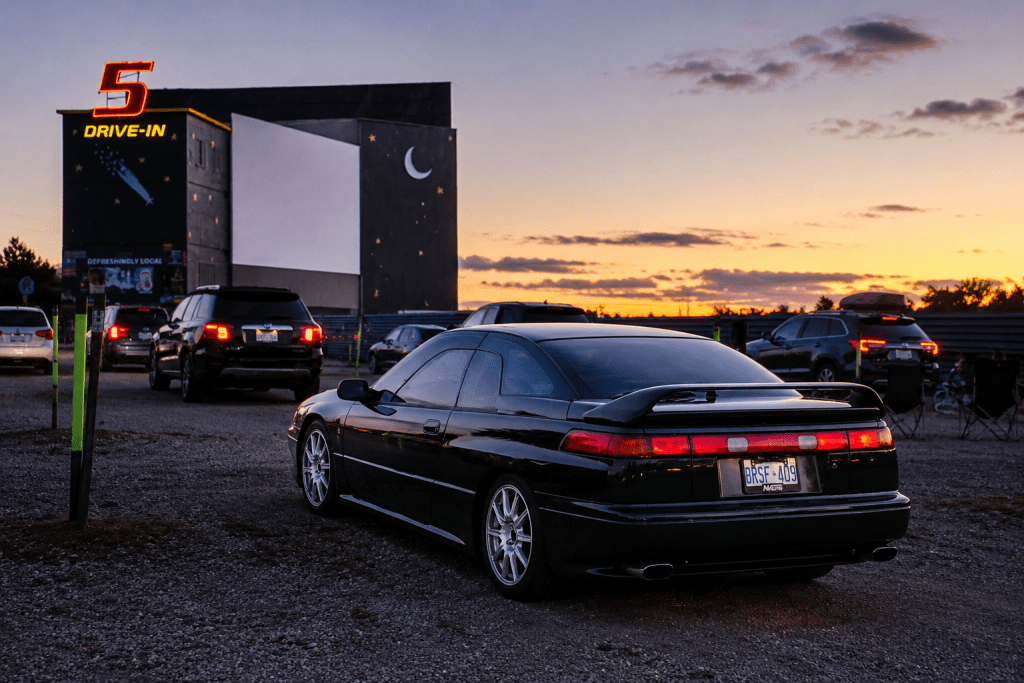
Compared with the rest of Canada, southern Ontario offered the perfect drive-in recipe: a large population, growing suburbs, expanding highways and plenty of edge-of-town land close enough to draw families in by car. Through the 1950s and 1960s, drive-ins became part of North American car culture. But by the 1970s and 1980s, the magic dimmed. Rising land values, indoor multiplexes, cable TV and later home video changed viewers’ habits, and many drive-ins simply went dark. Yet Ontario remains one of the strongest holdouts, with more operating drive-ins than California.
Between Ontario’s long history of automobile manufacturing and its local love of car culture, it is no surprise that so many drive-ins remain. There are even Retro Wednesdays at local drive-ins dedicated to classic cinema double features. Hopefully, we get a Fast & Furious double feature later in June.
I haven’t been to a drive-in in decades. They are few and far between around here now. As a child in the 60s it was a blast to go to them and have a playground to play in until dusk when we would hop in the backseat and enjoy some great movies.
For a variety of reasons, there were plenty of drive-ins around here. When I was a kid, there were two within the city limits! But as Toronto grew, those got bulldozed by progress.
I used to love them as a kid. The drive, the playground, getting to stay up late. Then as a young man, going to the drive in where you could smoke and drink and cause trouble. Now as an adult, I’ve taken my kids there countless times.
And as a gearhead, there’s just a special connection to car-culture from the golden age of motoring.
I agree