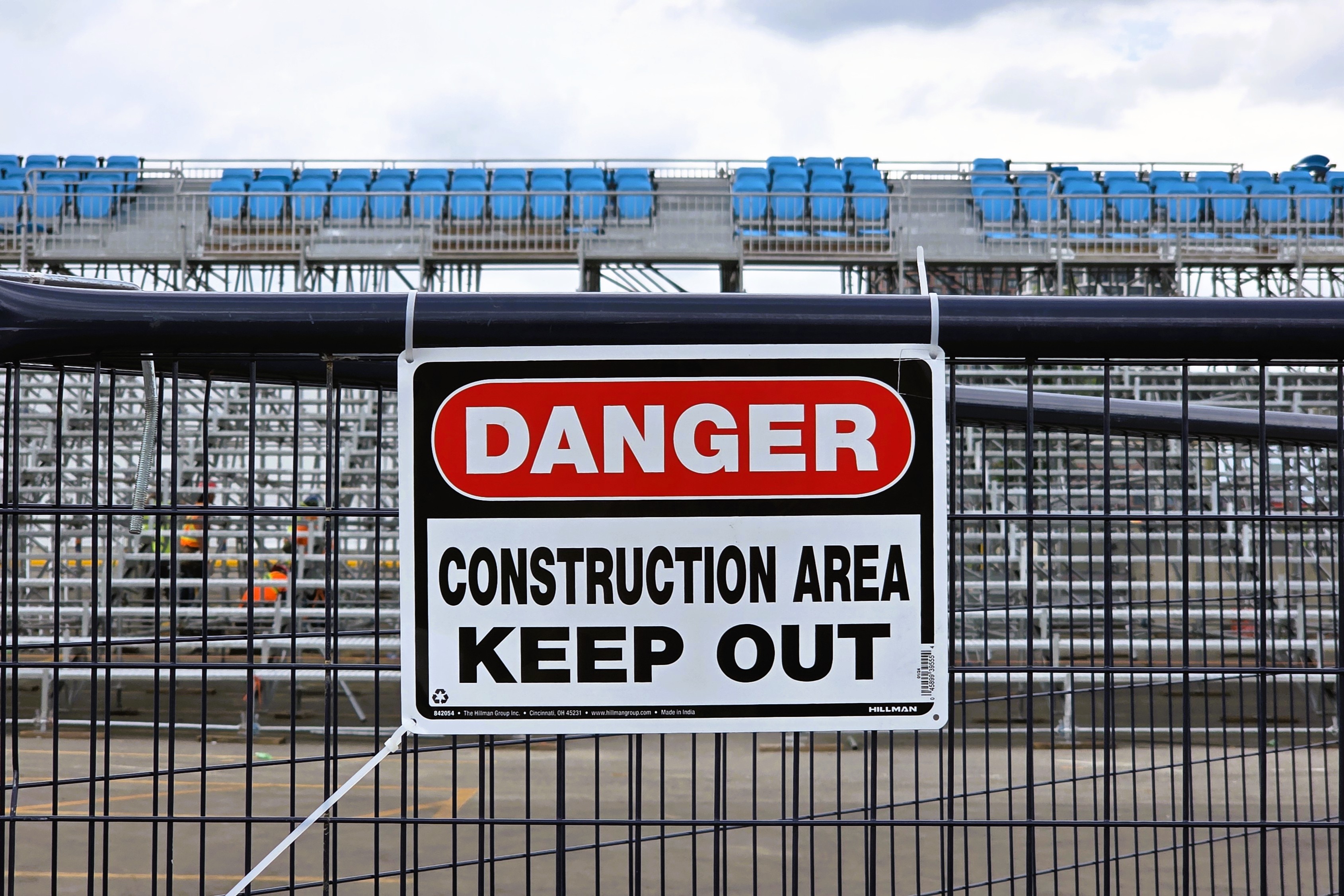
When the announcement came last year that the Indy Toronto would not return to Exhibition Place, a little piece of Toronto’s automotive soul died.
IndyCars had raced there since 1986, making Toronto one of the longest-running street races on the calendar and the crown jewel of Canadian motorsport. The history went back even further: Formula 1 once considered Exhibition Place after outgrowing Mosport, but Toronto City Council rejected the proposal and Montreal got the race instead. Years later, Molson revived the idea with IndyCar and, for nearly four decades, the sight of race cars blasting down Lake Shore Blvd with the Toronto skyline in the background became one of the iconic images of Canadian motorsport.
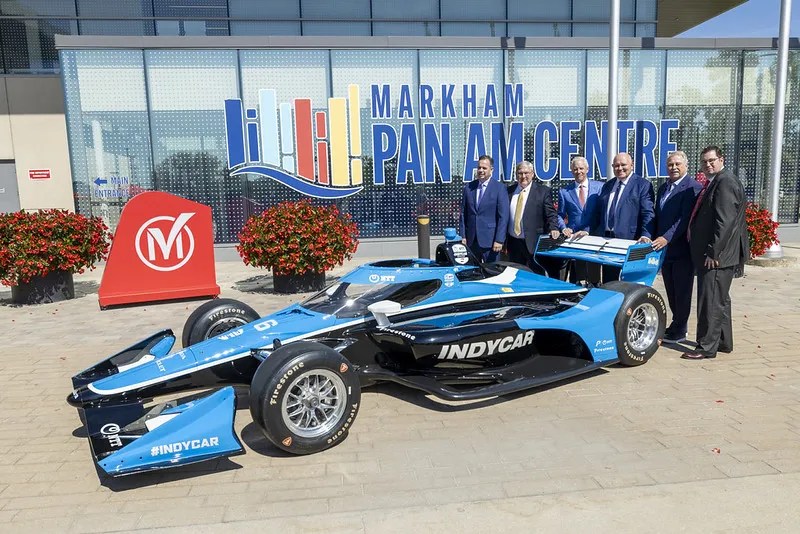


Exhibition Place was never perfect. The layout changed, grandstands disappeared during lean years, and the pavement somehow managed to become a recurring annual complaint. Still, the place had character. Then the 2026 FIFA World Cup arrived, bringing six matches to BMO Field and creating a scheduling and construction conflict with IndyCar.
Markham stepped in with a five-year deal, more room to work and unlike Toronto, Markham was a municipality eager to make the event its own. After the handshakes for the cameras, and Markham mayor Frank Scarpitti’s speeches, somebody still had to do the less glamorous part: actually build a race track!

On Thursday August 6, we drove to Markham to see how things were progressing, a week before the first IndyCar practice session. The good news is that the track itself looks promising. Fresh asphalt has been laid through the faster sections, the straights are substantial and several braking zones should give drivers a chance to pass. The new 3.5 km circuit has 12 turns and an unusual double-sided pit lane.
The less glamorous detail is that part of the final section and pit complex uses the Unionville GO station parking area, where commuters were still parking cars on Thursday. Some were presumably contributing that traditional suburban race-surface treatment known as leaking engine oil.


One straight runs beside the Amica Senior Lifestyles retirement home, whose residents are about to receive a complimentary lesson in what turbocharged Indy cars sound like at full throttle.
Elsewhere, the track passes the Markham Honda dealership, the YMCA, York University’s campus, and the Markham Pan Am Centre. None of these are bad facilities, but they feel like separate destinations sitting beside a race track rather than parts of one coherent event space. The Pan Am Centre will host official event functions and Unionville GO is a major transportation asset, yet the overall setting still feels disconnected.
That is the real contrast with Exhibition Place. Toronto’s old circuit was built inside a destination that already had history, architecture and identity. The Princes’ Gates, heritage buildings, Coca-Cola Coliseum, the Bandshell and the lakefront all told you exactly where you were.
Markham Centre, by comparison, feels like a downtown still under construction. It is not the middle of nowhere. It is the middle of somewhere that has not finished becoming somewhere yet. There are new buildings, broad roads, condos, institutional facilities and large spaces waiting for the next phase of development. You cannot manufacture decades of patina with fresh asphalt and sponsor banners.


That does not mean the Markham race will fail. Far from it.
The grandstands will be finished, sponsor banners will go up, food vendors and paddocks will fill the empty spaces, and thousands of fans will bring noise and colour to a site that currently feels unfinished. Certainly the organizers will have the circuit ready, and the racing itself might be great. But our visit answered one question while raising another.
Markham has built a race track. What it has not yet built is a race place. Exhibition Place had nearly forty years to become one. Markham has one week.