First in a two-part series about Formula Vee racing in Brazil by special guest writer; gearhead, petrolhead and all around car-guy, Rubens Junior. His history with hot rods, VWs and race cars is unparalleled. Check out his website, www.TheClassic Machines.com
~ by Rubens Junior ~
The Formula Vee is, perhaps, the most important “school class” in the history of motorsport. It was created from the necessity of having an affordable single-seater category to receive the young drivers coming from go-karts, and help them continue their development. The Formula Vee was officially born in the USA, in 1964 and quickly spread all over the world.
In South America, in the 1950s and early 60s, if a driver wanted to race a single-seater the only option was to import a retired Formula 1 car from Europe and run it to the ground. Those cars were not known for being reliable, and blown engines would be replaced by American-built V8s; in other words, it was complicated, expensive, and unreliable.
We were thrilled when we heard about the Formula Vee and no other South American country embraced the new class more enthusiastically than Brazil.
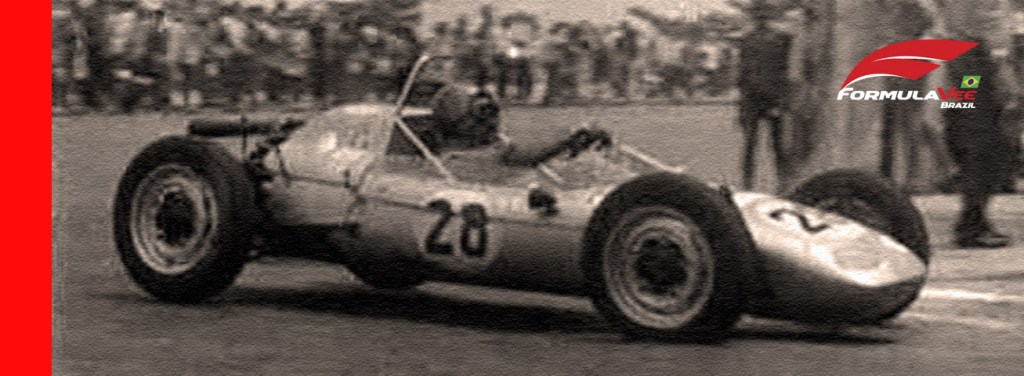
The saga of the very first “Made in Brazil” Formula Vee started in 1965, when Alexandre Freitas, a Brazilian businessman, went to the USA, looking for a partner to start building the little race cars in South America. He got impressed with the model from Autodynamics, a small race car garage, located in Marblehead, Massachusetts. The company offered him a license to build its cars for $8,000 Dollars (over $100,000 in today’s money), but he didn’t have that much cash in his pocket at the time. He bought a brand new Formula Vee instead, and shipped it to Brazil.

As soon as the car came to his shop, Freitas built his own model, with every detail copied from the Autodynamics he brought from the USA. This clone was presented to the public in 1966 at the São Paulo Auto Show. He called his Formula Vee the ‘Aranae‘. Pictured above is Freitas at the wheel with a member of his team.
10 years later, Freitas declared during an interview that he never brought the car from the USA, instead, he bribed the Autodynamics security guard to allowed him inside the shop, where Freitas took the most important measurements, and wrote them down on a piece of paper. Even his business partners at the time declared Freitas’ crazy story was clearly a lie, just a way to spice up his narrative.

At the same time, the Fittipaldi brothers, Emerson and Wilson Jr., were also developing their own Formula Vee. At this point, the boys had already established their reputation as talented drivers and also as competent builders. Their car, however, was not involved in sketchy operations. The Fittipaldi brothers called it Fitti-Vee (pictured above), and it was the result of their experience building go-karts and other race cars. Notable attention was given to the aerodynamics, resulting in a car that looks modern when compared with its main rival, the Aranae.

The first Brazilian National Formula Vee Championship was organized in 1967. There were cars from other constructors as well but they didn’t come close to the two dominant brands, the Fitti-Vee and the Aranae.

The picture above shows Ludovico Perez, at the wheel of his Aranae Formula Vee. As you probably noticed, the livery of the car is a copy of the Lotus F-One of the time.
The First Phase
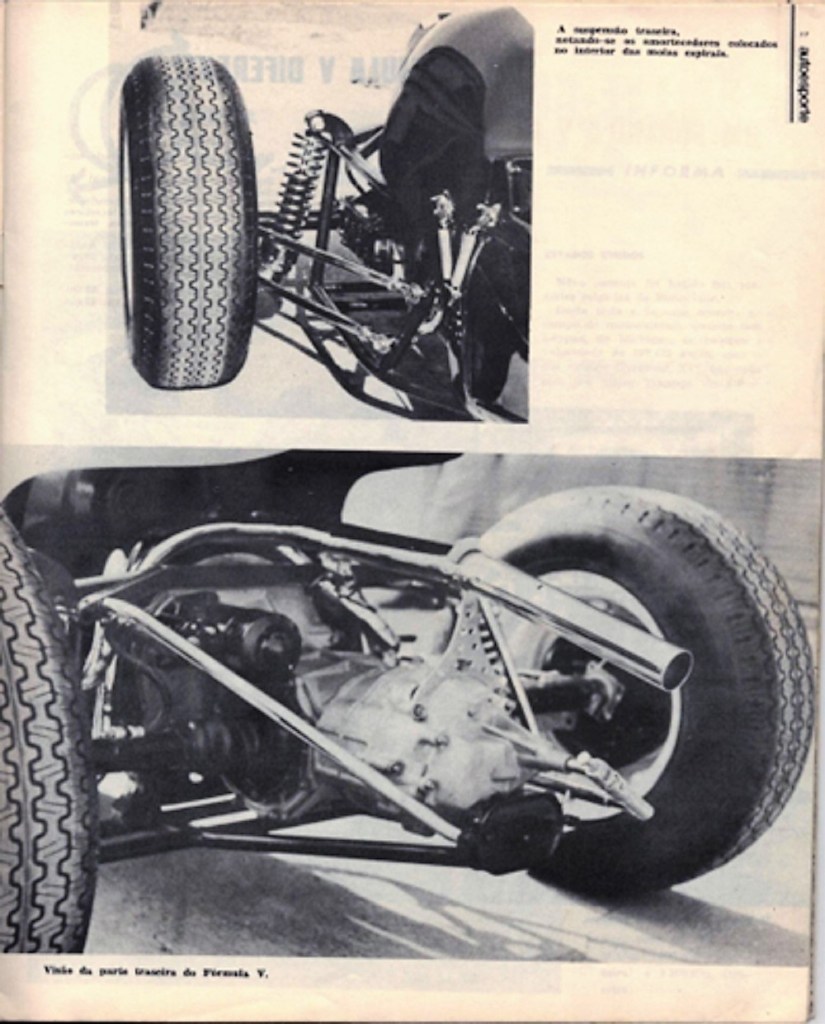
The first phase of the Brazilian Formula Vee happened from 1967 to1970. During this time, most of the races took place in Interlagos, Sao Paulo, and Jacarepagua, in Rio de Janeiro. The cars were powered by the 1200cc, air-cooled VW engine, with a power output of around 35 HP. In 1967 the Brazilian VW had already released the 1300cc engine with 5 extra horses, but the 1200cc was much cheaper and the spare parts were plentiful. To keep the class affordable, the teams used the original 15 inches Beetle steel rim, wrapped with radial street tires, most commonly Pirelli Cinturato. The original VW drum brake system was also used.
By the end of the 1970 season, the Interlagos race track was shut down, for some much-needed improvements. All the races were transferred to Rio de Janeiro, giving the championship an aura of a “local tournament”. Most of the teams from São Paulo quit the competition and even Volkswagen lost its interest in Formula Vee. The most celebrated Brazilian single-seater class died as quickly as it was born.
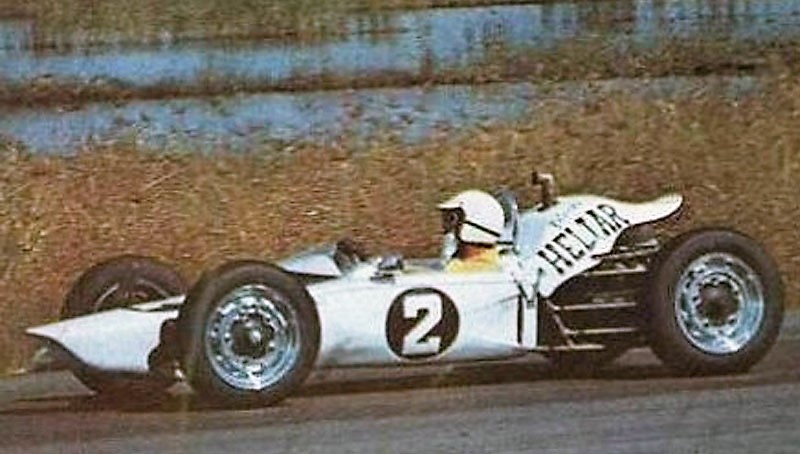
Many believe the so-called First Phase accomplished its mission, the Fittipaldi brothers, accompanied by José Carlos Pace (picture above, driving a white Fitti-Vee) moved to Europe and all of them found their path to Formula One. Emerson would become World Champion in 1972 and in 1974, and Wilson Jr quit driving to start the first and only Brazilian Formula 1 team, Copersucar (1975-1982). Sadly Carlos Pace died in a helicopter accident in 1977; at the time he was a well-established Brabham driver.
4 thoughts on “Brazilian FV: Autodynamics, Fitti-Vee and Aranae Formula Vee”