
Back in the summer of 2016, one of the coolest race cars ever showed up at Mosport and the Demaras Racing family was there to see it. Looking like The Concord on four wheels, the Delta Wing was the most revolutionary car since the STP Turbine Car that ran at Indianapolis in 1967.
Chris, and a very young Daniel, waited in line to see the car up close, and take pictures with former IndyCar racer Katherine Legge, who was then piloting the race car from outer space. A year later, the car was gone from the grid…never to be raced again.


The Delta Wing never did race at Indianapolis, but by 2012 it was racing at Le Mans. Four years later it was in IMSA and then sent to the dustbin of racing history. To understand what happened to this revolutionary car that threatened the status-quo, read Rubens Junior’s full article on The Classic Machines. Here is a small excerpt.
The Panoz/Nissan Delta Wing
~ by Rubens Junior ~

It Looks Like a Jet Fighter
The creator of this project is the British race car designer and engineer Ben Bowlby. He is the leading character of this story, a lateral thinker and the leader of his team. Bowlby based his concept on the idea that a much narrower front facia can immensely improve its aerodynamics and make the car a lot lighter.
The first real opportunity for Bowlby to see his project become a reality came in 2009 when Chip Ganassi saw it as an attractive new car for the F-Indy. At this time, Formula One and WEC were trying new and revolutionary designs for their vehicles, and F-Indy was slowly opening its doors for something similar. To make the project become a reality, a consortium was assembled: Chip Ganassi Racing, Dan Gurney and his All American Racers team, Duncan Dayton of Highcroft Racing, and Panoz built the prototype and showed it at the 2010 Chicago Auto Show, and needless to say, the Delta Wing was a success among the visitors.
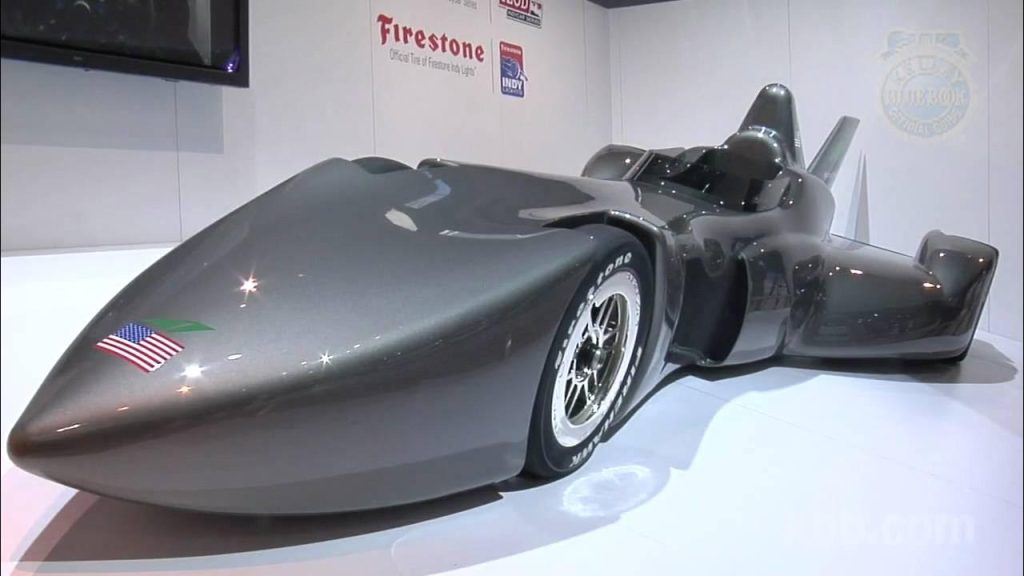
According to the initial tests, the Delta Wing proved slightly faster on straight and corner speeds than a 2009 Dallara IndyCar on both ovals and road/street courses with half as much weight, engine power and fuel consumption. The original prototype measured an unusually narrow 2.0 feet (61 cm) front track and a more traditional 1.7 meters (5 ft 7 in) rear track. The downforce comes from air passages on the car’s underbody, eliminating the need for front and rear wings.
Panoz used a chopped Aston-Martin LPM1 chassis to build the car, and it was powered by a 300 hp, four-cylinder, turbocharged Chevy engine assembled by Ray Mallock Engineering.

The Delta Wing was scheduled to debut for the 2012 season, giving the team time for the necessary tests and improvements. Unfortunately, the car proved too radical for F-Indy, and Chip Ganassi decided to use a more conservative project from Dallara.
Next Stop: Europe
Bowlby didn’t give up when F-Indy closed its doors on the Delta Wing. Instead, he presented his project to the World Endurance Championship (WEC) in Europe and quickly received an invitation to compete in the Garage 56, an experimental class of the 24 Hours of Le Mans, for the 2012 edition.
The WEC is a place where automakers pour a considerable amount of money to have a spot on the grid; if Bowlby wants to make a splash, he would need a few heavy-weight partners. The first one to jump into the wagon was Michelin; the French tire company fell in love with the Delta Wing and promised to produce the exclusive tires for the car, according to the specifications from Bowlby and Panoz.

The next step in this endeavour was to find an engine supplier with deep pockets, willing not only to provide the drivetrain but also help in developing the entire car and contribute to the costs of participating in Le Mans.
Rumor has it that Michelin insisted on having a French automaker as a partner, and Renault initially answered the call. The only problem was that they were already deeply involved in F-One, and the company’s CEOs decided to pass the project to their Japanese partner, Nissan.
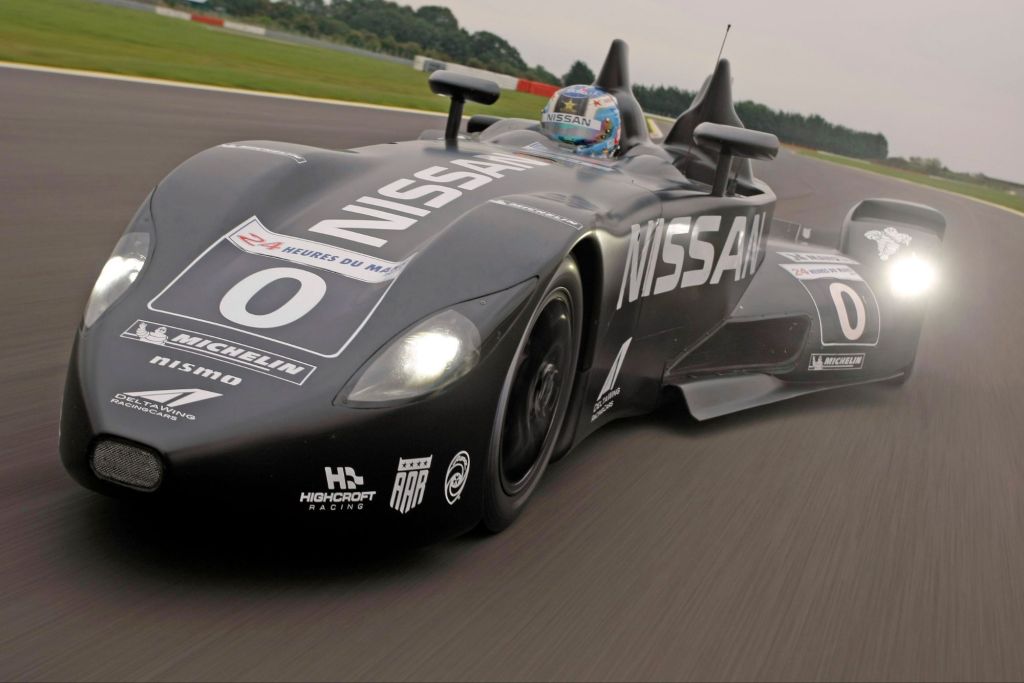
With little tradition in motorsport and not very keen on revolutionary projects, Nissan reluctantly accepted the challenge. The company provided a 1.6-liter, four-cylinder, turbocharged engine found in the Nismo version of the Nissan Juke, capable of producing 350 hp.

Even if the car was being initially developed in the USA, the North America Nissan was not involved in the project. At the Delta Wing’s first test, at Buttonwillow in the California desert in March of 2012, Nissan of Europe brought a few engines, a couple of drivers, and a handful of engineers. They were so concerned about the Delta Wing crashing on the first turn that they de-badged the engines, put all their employees in plain clothes, taped over logos, and denied all involvement.
At the end of the day, the car performed quite well and Nissan felt confident to apply its logo all over it.
Since the Delta Wing would be competing under the experimental Garage 56 (racing for technological advancement, not for points and glory), there was no minimum weight rule to follow, and the team took full advantage of this. Each 4-inch-wide and 23-inch-tall front wheel and tires can be lifted with a finger, literally. The front brake rotors are the same size as those found on mopeds (keep in mind that most of the breaking goes to the rear axle). The team even gave up on the 6-speed transmission for a 5-speed just because it was lighter.
In full race trim, the car checked at just under 1,100 pounds; by comparison, the weight of the 2011 Le Mans-winning Audi R18 TDi was nearly 2,000 pounds.
The excerpt above barely scratches the surface. Rubens Junior has done a deep dive into the history of the Delta Wing from its roots as a potential new IndyCar, to a Garage 56 experimental at Le Mans, through the nasty divorce with Nissan, then on to IMSA racing where the Demaras Racing family first encountered the car, to it’s eventual demise. The Delta Wing just flew too close to the sun.
That is SUCH a cool car. Too bad that design didn’t catch on. Really unique and futuristic.
I was already a racing enthusiast when this car was introduced, but I had no idea the detailed history of the Delta Wing that my friend RUBENS JUNIOR put together in his article.
.
.Very cool concept, too bad it didn’t take off,