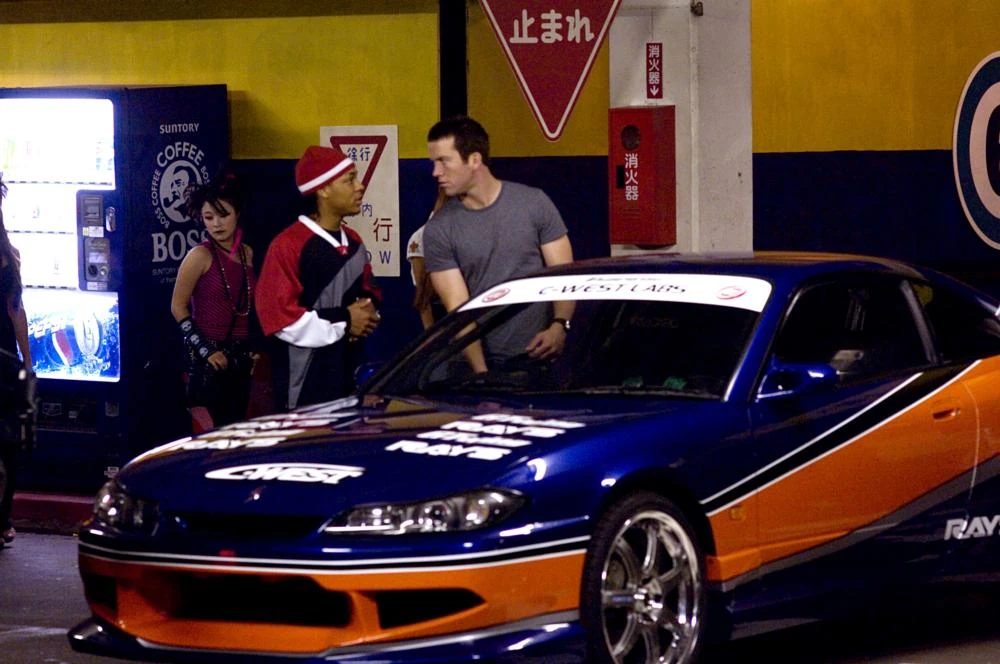
Depending on who you ask, “The Fast & The Furious: Tokyo Drift” is either a cornerstone of car culture, or the absolute worst film in the F&F film series. For the third installment in the F&F series, none of the original cast returned, which concerned Universal Pictures. It seemed the series might morph into a direct-to-video anthology of international car culture stories, however “Tokyo Drift” escaped that fate, and got its theatrical release on June 16, 2006.
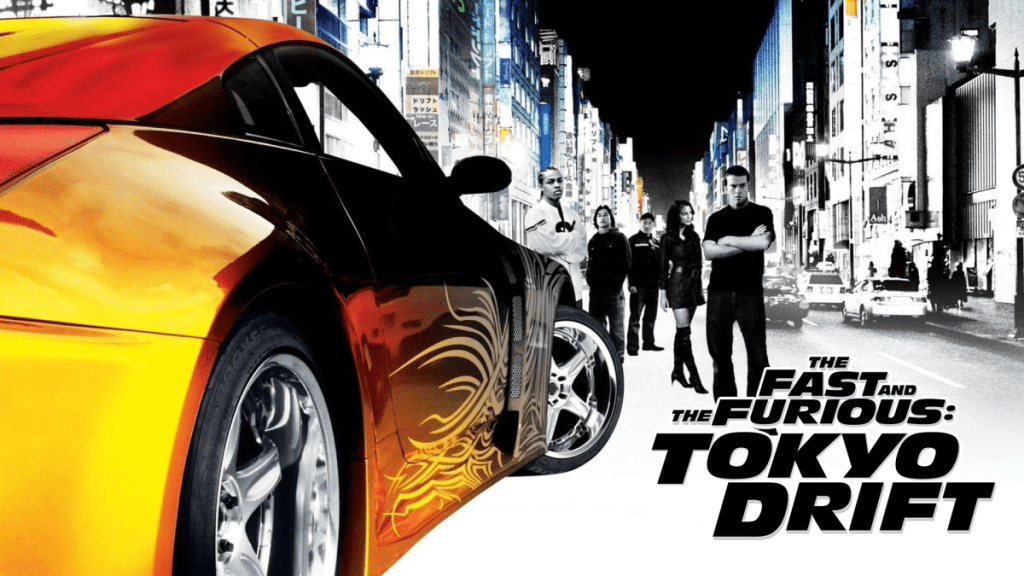
This film is the story of street racer Sean, who is sent to live with his estranged father in Japan. Sean is facing jail time for his hooligan behaviour behind the wheel, and makes a run for it rather than facing the consequences of his actions. In Tokyo, outsider Sean finds solace in the city’s underground drifting community.
From there, “Tokyo Drift” is a standard boy meets girl, boy loses girl, boy gets girl back by defeating the Drift King racing down the side of a mountain with the Yakuza watching story.
The JDM car scene and the city of Tokyo itself are major reasons people love this movie. In North America we never even got the Nissan Silvia, Nissan Skyline, or Toyota AE-86; legendary cars in the Japanese car scene. In 2006, tuner culture was at its height, and custom cars by VeilSide and Vertex filled the screen in this movie. Tokyo is shown as a neon-lit megalopolis where street racers rule the highways, and police are powerless to chase them. It’s like the wild west in the far east.

While drag racing is featured prominently in FF1, the drifting in FF3 made this foreign form of motorsport look exhilarating and exciting on screen. The scenes of Sean learning to drift look completely realistic, and far from the exaggerated scenes in other F&F films when a driver pushes the NOS button. Seeing a drift race in a Tokyo parking garage looks authentic, because it was all filmed in-camera without CGI. Director Justin Lin communicated the thrill of drifting to a global audience that had never been exposed to it before. And 20+ years later, the cultural impact of “Tokyo Drift” continues, as the motorsport discipline continues in popularity at events like CSCS Racing in Canada and Formula Drift in the US.
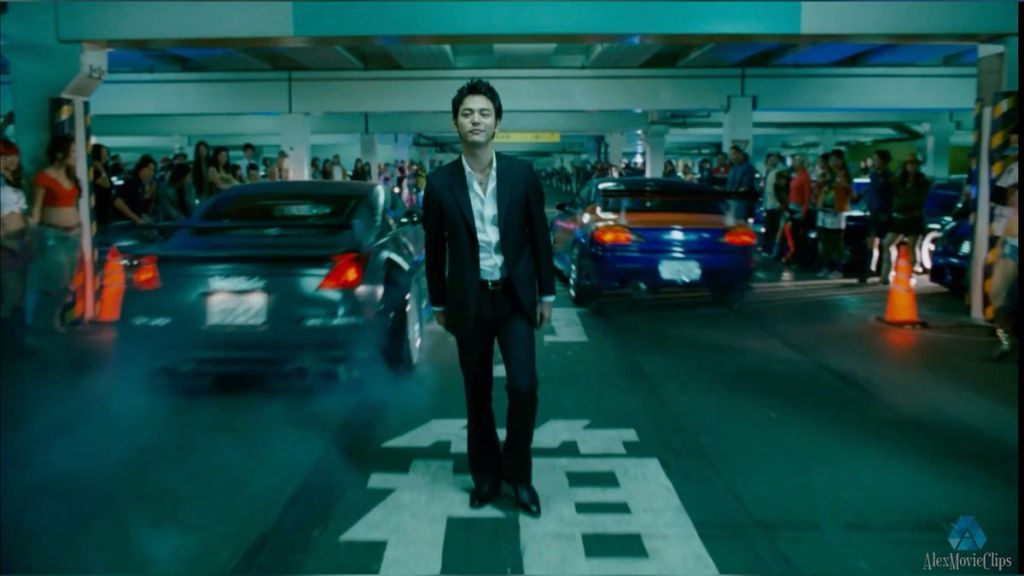
The themes that “Tokyo Drift” explores take it beyond the realm of ‘action movie’. The main theme is xenophobia, as young Sean tries to find his place in Japanese society, traditionally so closed off to foreigners. The young American doesn’t speak the language, struggles with cultural differences, and is initially rejected by peers he meets in the underground drifting scene.
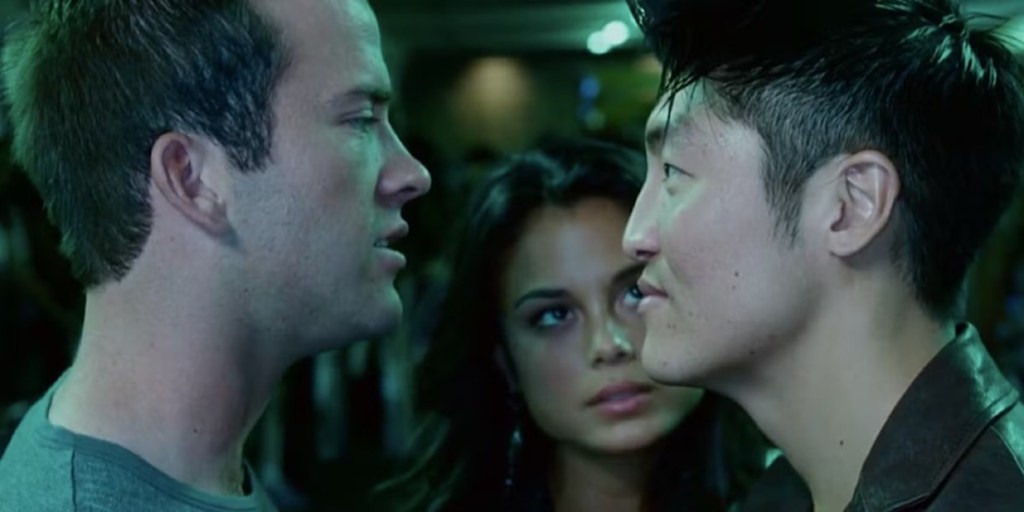
Local hero Takeshi (DK) takes an immediate dislike to Sean when he sees girlfriend Neela chatting with classmate Sean. Takeshi calls Sean a gaijin (外人) which is a derogatory term in Japanese meaning more than foreigner or non-Japanese, but untrustworthy. This is juxtaposed with the acceptance that the film’s breakout character Han Seoul-Oh shows Sean, impressed by the young man’s bravery and cocky attitude.
The other theme that runs through the film is the importance of personal responsibility. In the opening scenes of “Tokyo Drift” we see Sean running away from his problems. He’s just wrecked his car and gotten busted for street racing again. His single mom has had to uproot them repeatedly to keep Sean away from trouble, yet he keeps finding it. This time, Sean’s mother actually has sex with the arresting officer in the interrogation room, just to get her son released from custody.
Sean creates nothing but trouble for his mother, so she puts him on a flight out of the country to save him.
Yet during his time in Japan, Sean grows as an individual. He develops a close relationship with his surrogate family, made up Han’s rag-tag drift crew. Through his determination and effort to become a drifter, he earns the respect of the people around him.
When the intense rivalry between Sean and Takeshi results in Han’s death after a horrific crash, Sean doesn’t leave town or run from his problems again. He remains in Tokyo and bravely meets with the Yakuza affiliated uncle of Takeshi to settle the conflict.
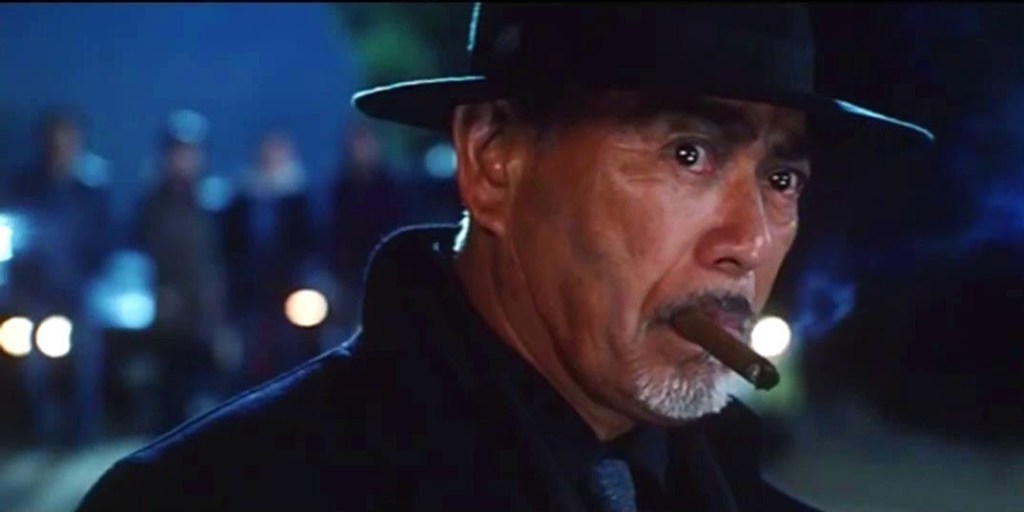
Negatives about “Tokyo Drift” revolve around it’s use of tired old tropes so common in Hollywood movies, and the primarily ‘stock’ characters.
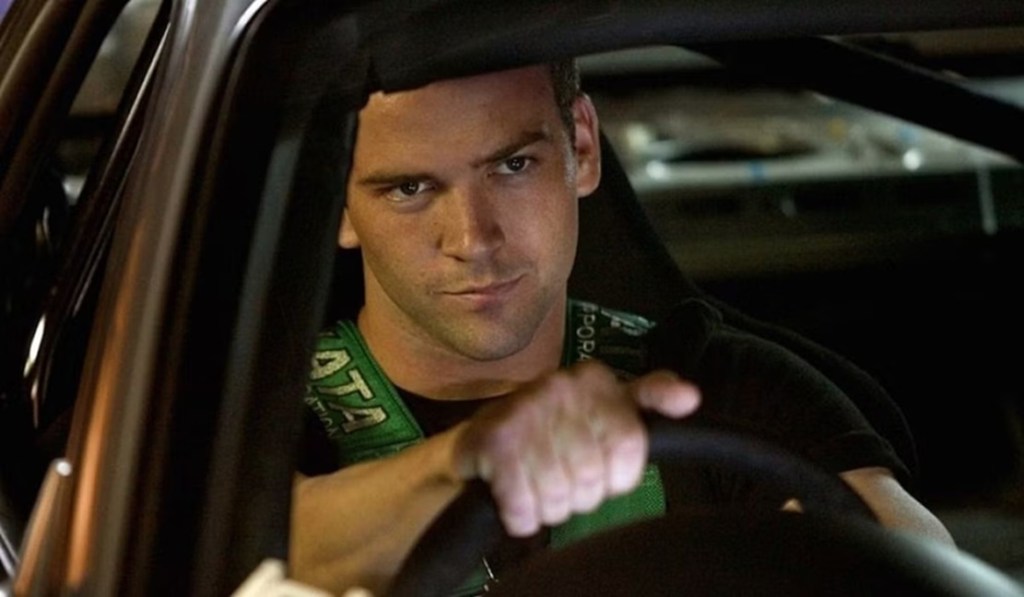
Protagonist Sean isn’t very impressive in any way, but follows the ‘white savior’ trope. Sean crashes his car nearly every time he races, and truly doesn’t deserve all the attention he gets, so it’s odd how the crew try so hard to help a racer with little talent. His Alabama accent is just irresistible to the hot girl in his class, despite not being a good looking guy (unlike actor Paul Walker from the first two F&F films).
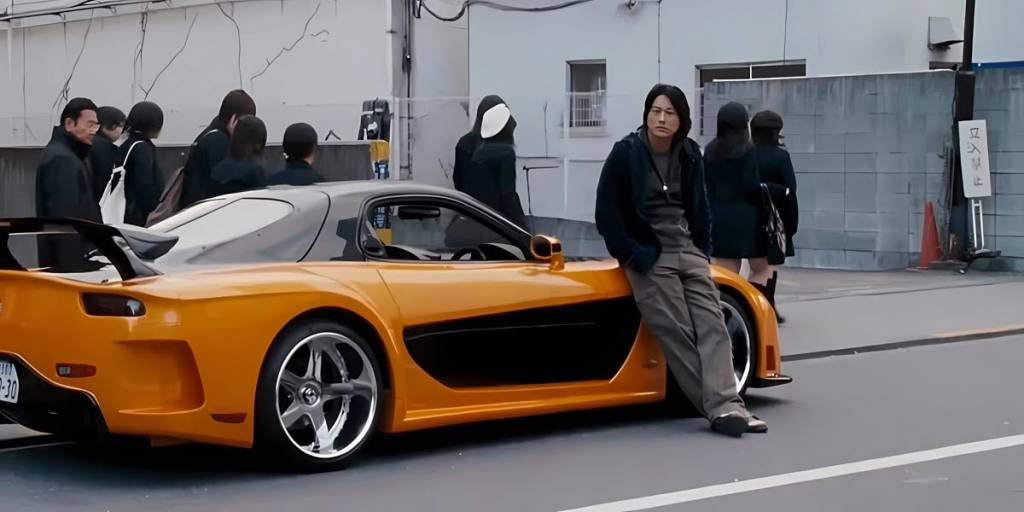
The cool guy in the movie is undoubtedly Han. Despite his death in the second act, Han was the breakout character in the film, and proved so popular that producers set future F&F movies chronologically before the events of “Tokyo Drift” just so Han could be added to the cast.
There was an air of mystery about Han. The character was cool, like a Korean version of ‘Fonzie‘. Yet the character falls into the old trope of the Asian master dispensing pearls of wisdom to his young protege. At least director Lin is aware of this and has Han deliver the hilarious line “There is no ‘wax-on, wax-off’ with drifting. You learn by doing it.” clearly a reference to Mr. Miyagi from “The Karate Kid“.
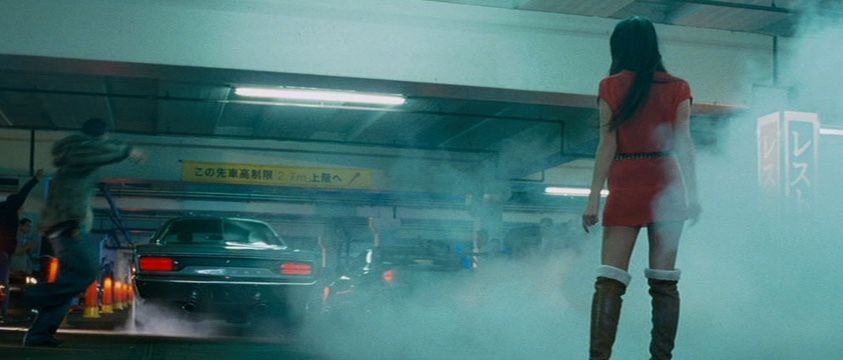
If there is one serious criticism of “Tokyo Drift” it would have to be reserved for the female characters in the movie. Compared to tough girl Letty in FF1, and aggressive racer Suki in FF2, the female lead of Neela in FF3 is just the hot chick that Takeshi and Sean fight over. Sure, she has a nice Mazda RX-8 and she can drift… but she can’t stand up for herself! In the opening and closing scenes, Sean competes in races against rivals; and in both races the women are prizes to be won. Neela is one of those prizes.
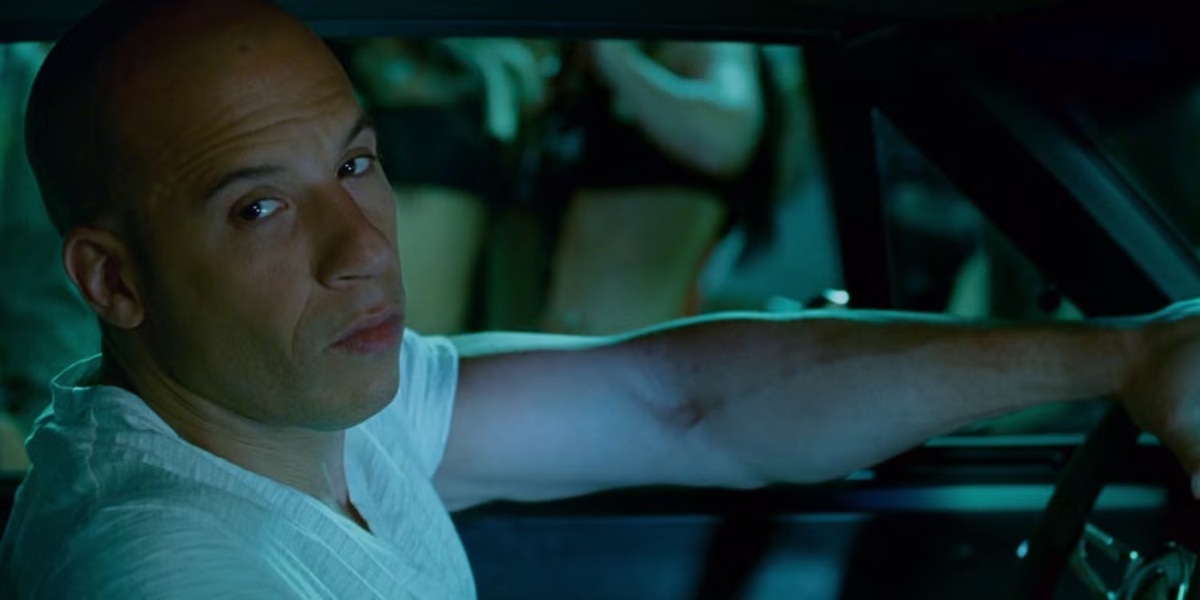
Despite Vin Diesel’s cameo as Dom Toretto at the end of “Tokyo Drift” the biggest criticism was that it had no connection to the F&F series. None of the original cast returned. And moving the setting from the United States to Japan seemed to irk some critics. It just wasn’t part of the same universe.
“Tokyo Drift” was seen as a stand-alone film that just shared the series’ name for marketing reasons..
The influence of the Japanese drift movies “Shuto Kousoku Trial” on “Tokyo Drift” is extremely clear. In fact, “Shuto Kousoku Trial” producer Keiichi Tsuchiya (the real Drift King of Japan) does much of the stunt driving in “Tokyo Drift” and briefly appears as a fisherman on a dock, rolling his eyes as Sean learns to drift.
Considering all the criticisms of “Tokyo Drift” and it’s less than impressive box office results, the scene was set for the rebirth of the series. In 2009, the return of the original cast for FF4 “Fast and Furious” gave the series a new lease on life, with is tagline ‘New Model. Original Parts.‘.
I’ve never seen any of the movies, and had no idea until your posts that the cast fluctuates so much. I just assumed they were all Vin Diesel / Paul Walker vehicles (ba dum DUM).
I did NOT intend that pun. I swear.
You would never do that…
It’s actually quite interesting to see all of the movies back to back. I’ve been doing these private screenings at the cinema, and we’ve included short films that were not shown in theatres, but rather, DVD extras.
It’s been quite the experience and trip down memory lane for some of us!
The RX-8 reminded me of the Bass Hunter music video “Angel of the Night” in which Bass Hunter races an orange and black RX-8 to win the girl: https://youtu.be/DC9Ar8gYNa4. As a little side note: the girl they are racing for in real life was a Persian porn star. She is in more than one of Bass Hunter’s music videos. I came across that tidbit when I was getting info on one of Bass Hunter’s songs I was using for a parody.
Hmmm… this may require further research.