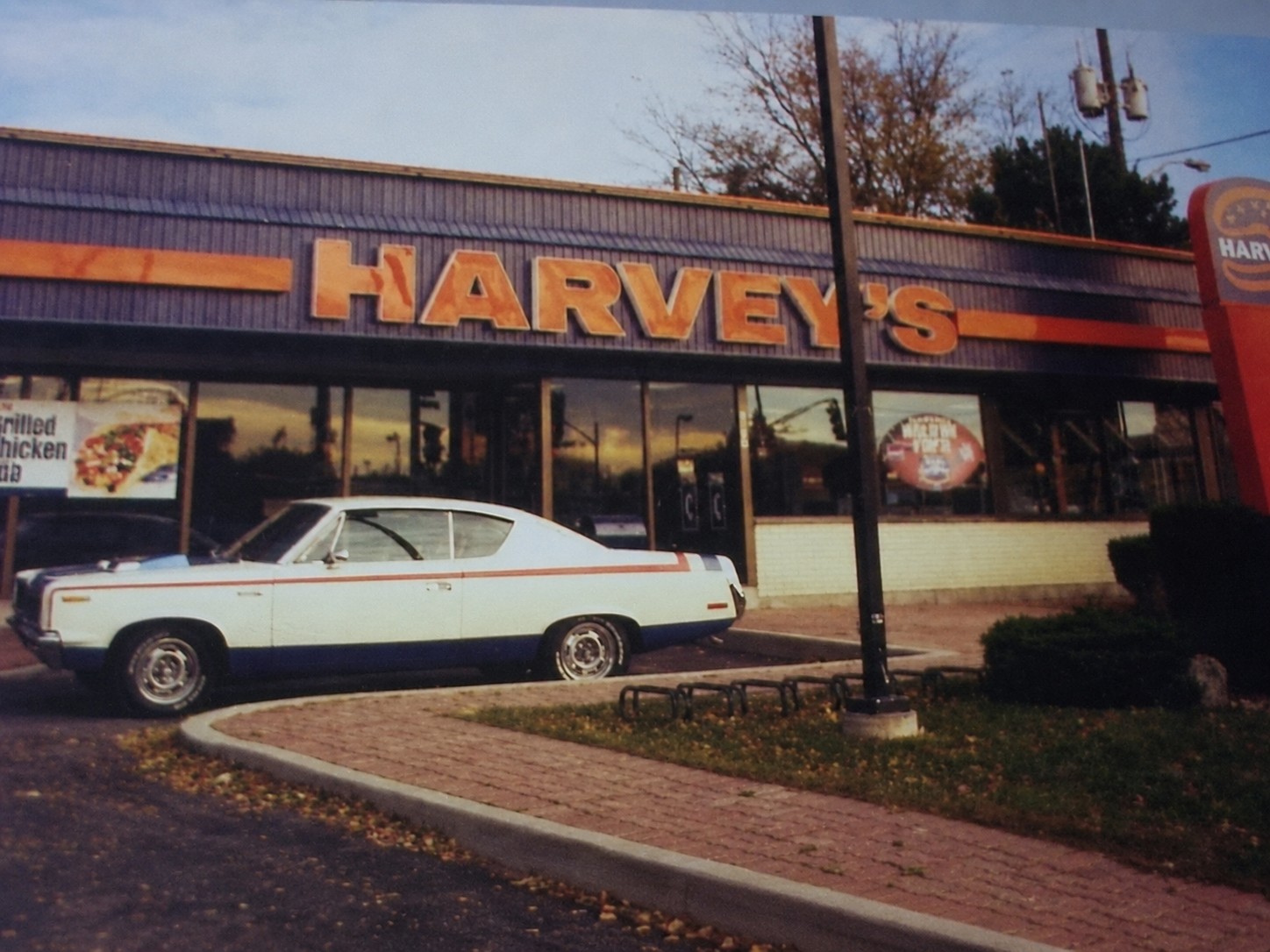
How Toronto Lost the Burger-Joint Hangout
~ by Chris Demaras
When I was a kid, I couldn’t wait to turn sixteen and start hanging out at Arnold’s from ‘Happy Days‘. Hollywood had sold me the idea that every Friday and Saturday night, I would end up at the local burger joint where all the cool kids hung out. I saw it in ‘American Graffiti‘ and again in ‘Grease‘. Cruise the strip with friends, then head to the spot to order hamburgers and milkshakes. We’d spend the evening leaning against the car, talking about the bigger turbo and front-mounted intercooler just installed on my ride.
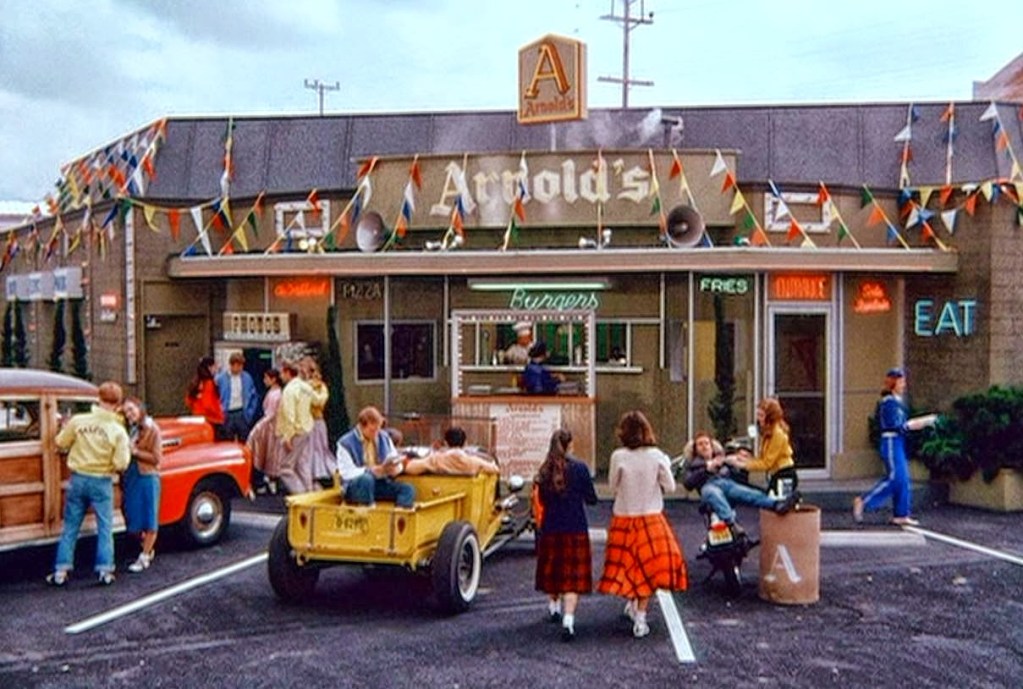
When I turned sixteen and went looking for the spot — it wasn’t even there. Sure, Toronto had Johnny’s Hamburgers, Harry’s Drive-In and Square Boy on the Danforth. Those old-school joints were great for late-night munchies, but they were not the gearhead gathering-place that Hollywood had promised me. Maybe those diners where the parking lot also served as the social centre just didn’t exist. Had I been sold a Hollywood fantasy?
That’s when I learned about the infamous Harvey’s at Jane Street and Falstaff Road.

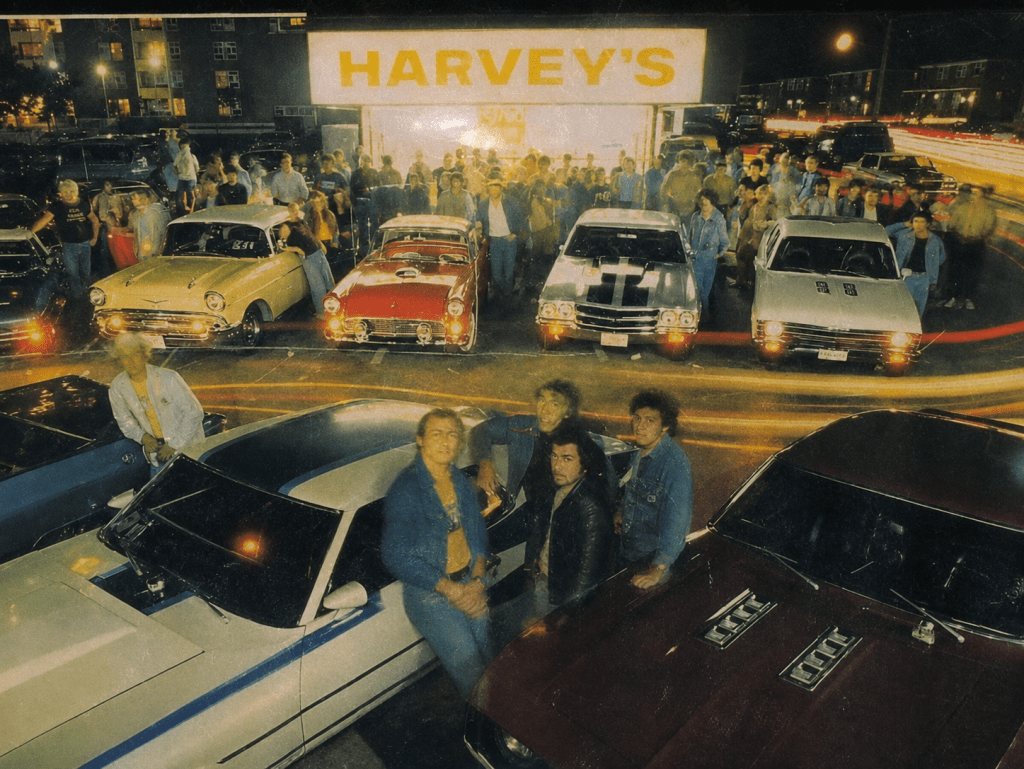
Just south of Hwy 401 this Harvey’s became the mecca of the muscle-car crowd in Toronto from the late ’60s to the mid ’70s. This place was way more than a spot where gearheads grabbed some grub. It was a clubhouse, makeshift workshop, and unofficial meeting place for anyone who had the need for speed. This was where street racers met to arrange the night’s contests on Hwy 400. For a while, Harvey’s gave car culture a home.
The restaurant embraced the scene and served up Toronto car culture on a platter. Among the most popular items on the menu were window decals and white windbreakers with the Harvey’s chef presenting a hot rod on a plate beneath the slogan “Home of the Hot Ones”. Instead of calling the cops on a parking lot full of modified cars, Harvey’s doubled down and put the gearheads on the merchandise.
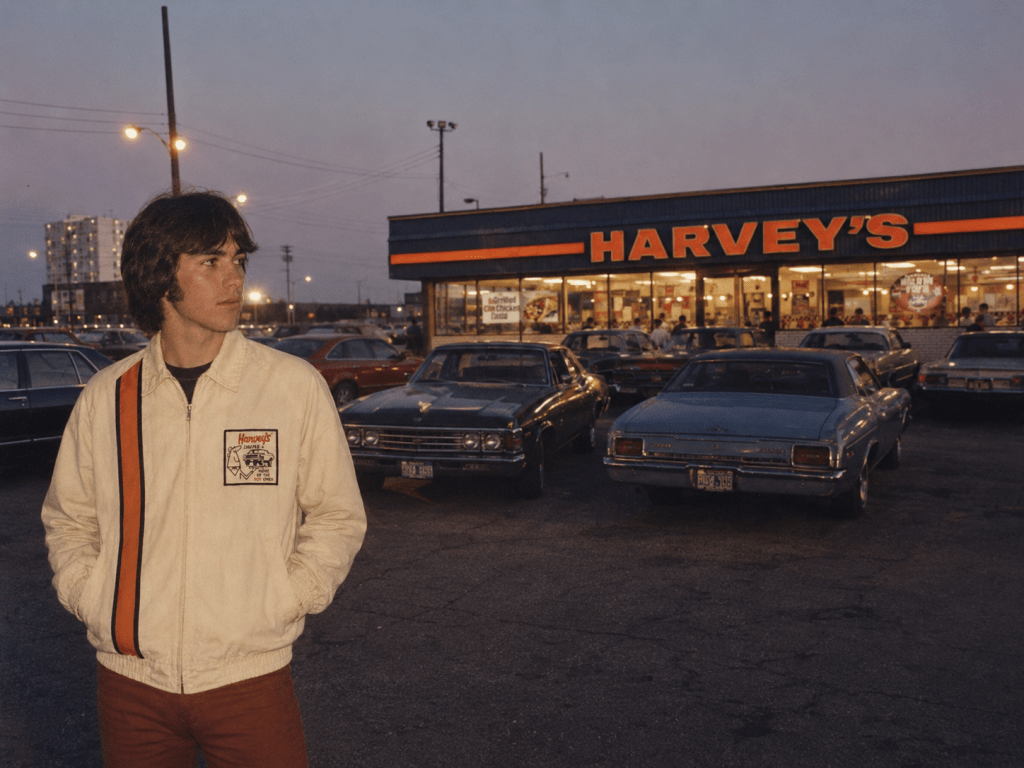
The parking lot developed its own social hierarchy. According to the story printed on the back of Larry Fisher’s commemorative print, the best spaces at the front of Harvey’s were reserved for the hottest cars, the toughest drivers and the longest-serving regulars. A newcomer could not simply roll in and claim the front row. Supposedly, the back lot belonged to the hot rod mechanics who would do valve jobs beneath the parking-lot lights. Drinking a beer in the back lot was overlooked, but scratching someone else’s paint was not. The place had rules, traditions and status, even if none of them appeared on the sign.
There was usually at least one car sitting with its hood open, exposing a Hemi or a modified 440 Six-Pack to the crowd. The owners of this Harvey’s must have been car crazy too, because they even sponsored a 1957 Chevy Bel Air drag car that ran at Cayuga.

How did such a cool place disappear? Part of it was changing economic conditions. Back then, the burger joint wanted the cars and the commotion. The commotion was the attraction. It made this Harvey’s look like the most exciting place in town. But as costs increased, the modern fast-food restaurant became dependent on rapid turnover. The drive-thru became the lifeline, and cars clogging the parking lot hindered how quickly customers could order, reach the pickup window and leave. Gearheads hanging out were no longer seen as automotive atmosphere. They were just in the way of progress.
The changing suburban landscape accelerated the decline. Vast shopping centres and oceans of asphalt were designed to move shoppers efficiently, not encourage young people to linger. Property managers became less tolerant of parking-lot gatherings, especially when nervous neighbours complained that the crowds looked intimidating.
At the same time, Toronto’s car community became more scattered. The casual idea of dropping by Harvey’s to see who was there gave way to organized meets with posted locations, designated hours, lawn chairs and rules. Social media could summon a crowd almost anywhere, but only temporarily.
Modern restaurants usually see a car gathering as an occupation of their property. This Harvey’s treated the enthusiasts as part of its identity. But increasingly hostile attitudes toward cruising and parking-lot gatherings will make sure that we won’t see the return of the regular burger joint car meet any time soon.
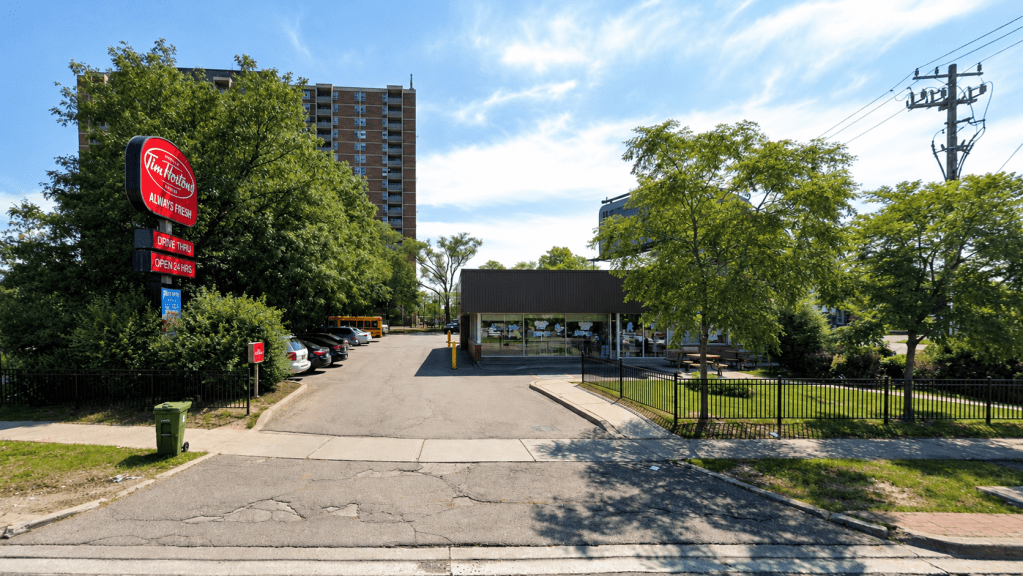
Gearheads and young people never stopped wanting to gather around cars. What vanished was the permanent neighbourhood meeting place: somewhere you could visit without checking social media first, because you knew the cars would already be there. Eventually, even the Harvey’s vanished. For a while, the building became the Sunrise Caribbean Restaurant. Today it is just another soulless Tim Hortons. But look closely at the roadside sign and you can still recognize the shape of the old Harvey’s hamburger logo.
The “Home of the Hot Ones” is gone. Its ghost is still standing beside the road.
I am glad to have lived in the time of drive-in hopping. The first pic of that Torino is beautiful
Love this! It was sandpits for us or abandoned airports 🙂
Sandpits? Sorry, we’re going to have to call ‘time’ on this play and ask for a clarification.
What sandpits?!
I our area we grew up in a lot of construction took place 50 and 60 years ago leaving tracks of prior construction projects open where we would drive to and chill or raise hell with cool cars there were Jack in the Boxes and McDonald’s fast food places but not for the cooler kids 🙂